Search for natural anxiety relief and you will find a long list of promises. Some ideas have solid research behind them. Others have very little, and a few can even cause harm. Sorting one from the other is hard when you are already feeling anxious.
This guide rates common ways to reduce anxiety naturally by the strength of the evidence. That way you can spend your energy on what is most likely to help. If you want guidance alongside these steps, anxiety support with an AHPRA-registered practitioner is available by phone or video.
Can you reduce anxiety naturally?
Yes. Many people can reduce anxiety naturally with regular exercise, slow breathing, mindfulness, good sleep and cutting back on caffeine and alcohol. These approaches work best for mild to moderate anxiety and as support alongside therapy. They rarely work overnight, but steady practice adds up.
“Natural” does not always mean safe or effective. The best natural approaches are ones you can practise safely every day and that research has tested in controlled trials.
How to reduce anxiety naturally: what the evidence says
Natural approaches vary widely in how well they ease anxiety, and some popular ones have little evidence behind them. This table summarises the research on popular natural approaches. Strong evidence means several good-quality reviews agree. Limited evidence means results are early, mixed or based on small studies.
| Approach | What research shows | Strength of evidence |
|---|---|---|
| Physical activity | Reduces anxiety, depression and distress across many groups | Strong |
| Mindfulness-based therapy | Moderate reduction in anxiety, larger in people with anxiety disorders | Strong |
| Slow breathing | Lowers stress and anxiety compared with control groups | Moderate |
| Better sleep | Poor sleep worsens anxiety, and improving sleep helps mood | Moderate |
| Cutting caffeine and alcohol | Reduces jitteriness, panic and next-day anxiety | Moderate |
| Yoga | Small benefit for elevated anxiety, unclear for diagnosed disorders | Limited to moderate |
| Time in nature | Linked with lower stress, though trials are small | Limited |
| Diet changes | Healthy eating supports wellbeing, effects on anxiety still unclear | Limited |
| Herbal products and supplements | Mixed results, quality varies, some interact with medicines | Limited, use caution |
1. Move your body regularly
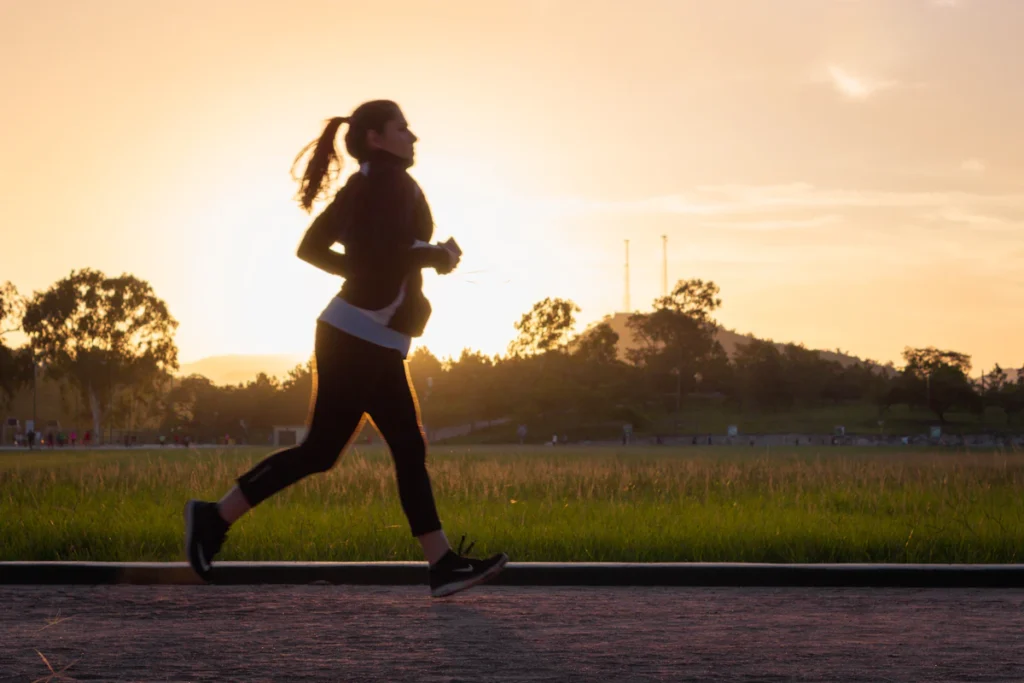
Exercise is one of the most effective natural ways to ease anxiety. A 2023 overview of 97 reviews found physical activity reduced symptoms of anxiety, depression and psychological distress, with benefits across ages and health conditions (Singh and colleagues, 2023).
Exercise burns off stress hormones, improves sleep and gives your body a safe experience of a racing heart. Walking, swimming, cycling, dancing and strength training all count. Aim for activity you enjoy enough to repeat.
2. Practise mindfulness
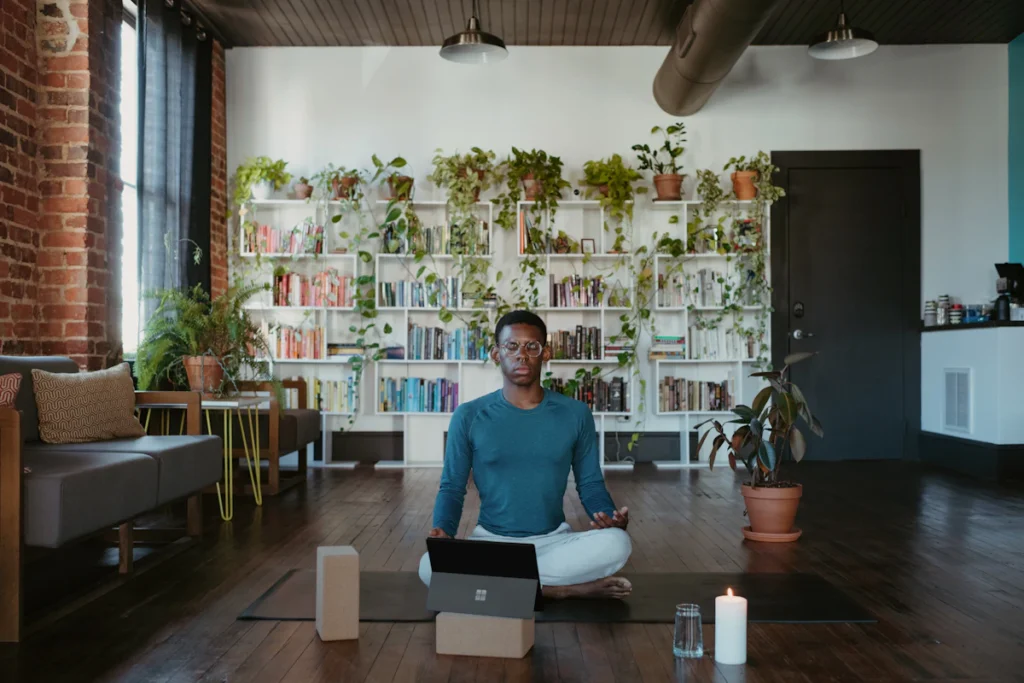
Mindfulness means paying attention to the present moment on purpose, without judging it. It helps you step back from anxious thoughts rather than getting swept away. A meta-analysis of 39 studies found mindfulness-based therapy reduced anxiety, with larger benefits for people with anxiety disorders (Hofmann and colleagues, 2010).
Start with five minutes a day. Sit comfortably, notice your breath, and gently bring your attention back each time it wanders. Wandering is normal and part of the practice.
3. Slow your breathing
Slow, steady breathing activates the parasympathetic nervous system, which means the body’s rest-and-digest mode. A 2023 meta-analysis of randomised trials found breathwork lowered stress and anxiety (Fincham and colleagues, 2023). Try breathing in for four counts and out for six for a few minutes.
Our guide to breathing and relaxation techniques walks you through several methods.
4. Protect your sleep
Anxiety and poor sleep feed each other. A tired brain reacts more strongly to threat, and worry keeps you awake. Improving sleep is one of the most natural ways to lower your anxiety baseline. Aim for regular sleep and wake times.
- Keep the same wake time every day.
- Get morning daylight.
- Stop screens 30 to 60 minutes before bed.
- Write tomorrow’s worries down before you sleep.
- Get up if you cannot sleep, and return when drowsy.
5. Cut back on caffeine and alcohol
Caffeine can mimic anxiety, causing a racing heart, shakiness and restlessness. Sensitive people may notice panic after just one or two strong coffees. Try cutting back gradually to avoid headaches. Alcohol may feel relaxing at first, but it disrupts sleep and often raises anxiety the next day.
Alcohol may calm you briefly, but it raises anxiety the next day and disrupts sleep. Read more in our guide to anxiety after drinking.
6. Try yoga or tai chi
Yoga combines movement, breathing and focus. A meta-analysis found yoga helped people with raised anxiety levels (Cramer and colleagues, 2018). The benefit was not clear for people with a diagnosed anxiety disorder. It is safe for most people and worth trying if you enjoy it.
7. Spend time outdoors
Time in green spaces, near water or simply outside is linked to lower stress. The research is still developing, but a daily walk in a park combines movement, daylight and a change of scene. That is a lot of benefit for little cost.
8. Eat regularly and well
Skipping meals can cause low blood sugar, which brings shakiness and irritability that feel like anxiety. Regular meals with vegetables, wholegrains, protein and healthy fats support steady energy. Evidence that specific diets treat anxiety is still limited, so focus on regular, balanced eating rather than strict rules.
9. Stay connected
Talking with people you trust eases the load of anxiety and offers new perspective. Loneliness is linked to higher anxiety. Even a short call or a coffee with a friend counts. Shared activities, such as a walk or a class, can make connection easier when talking feels hard.
What about herbal remedies and supplements?
Many herbal products and supplements are marketed for anxiety. Research on them is mixed, product quality varies, and some can interact with prescribed medicines or affect other health conditions. Natural products can still have side effects. Always tell your GP or pharmacist what you take.
Before trying any herbal product or supplement, talk to your GP or pharmacist, especially if you take other medicines, are pregnant or have a health condition. Truewell does not recommend specific products.
When natural approaches are not enough
Natural approaches work best as part of a wider plan. If anxiety is moderate to severe, lasts for weeks or stops you doing things, psychological therapy is recommended. Australian and New Zealand psychiatry guidelines name cognitive behavioural therapy (CBT), a structured talking therapy, as a first-line option (Andrews and colleagues, 2018).
Many of the steps above fit naturally into CBT. A practitioner can help you build them into a plan that suits your life. For more everyday tools, see our anxiety coping strategies.
When to get help
Seek support if anxiety is not improving after a few weeks of steady self-help, or if it is affecting work, sleep or relationships. Truewell’s AHPRA-registered practitioners offer CBT-based support by phone or video anywhere in Australia. Start your eligibility check online. If you are in crisis or feel unsafe, call 000, or phone Lifeline on 13 11 14, 24/7.
The bottom line
- Exercise and mindfulness have the strongest evidence for reducing anxiety naturally.
- Slow breathing, good sleep and less caffeine and alcohol also help.
- Yoga, nature and diet may help, but the evidence is weaker.
- Herbal products and supplements need caution and advice first.
- For ongoing anxiety, combine natural steps with psychological support.
Pick one approach from the top of the table and try it every day for two weeks. Then notice what has changed.
Sources checked (November 2026): Singh and colleagues (2023); Hofmann and colleagues (2010); Fincham and colleagues (2023); Cramer and colleagues (2018) and Andrews and colleagues (2018).
References
- Singh B, Olds T, Curtis R, et al. Effectiveness of physical activity interventions for improving depression, anxiety and distress: an overview of systematic reviews. Br J Sports Med. 2023;57(18):1203–1209. doi:10.1136/bjsports-2022-106195
- Hofmann SG, Sawyer AT, Witt AA, Oh D. The effect of mindfulness-based therapy on anxiety and depression: a meta-analytic review. J Consult Clin Psychol. 2010;78(2):169–183. doi:10.1037/a0018555
- Fincham GW, Strauss C, Montero-Marin J, Cavanagh K. Effect of breathwork on stress and mental health: a meta-analysis of randomised-controlled trials. Sci Rep. 2023;13(1):432. doi:10.1038/s41598-022-27247-y
- Cramer H, Lauche R, Anheyer D, et al. Yoga for anxiety: a systematic review and meta-analysis of randomized controlled trials. Depress Anxiety. 2018;35(9):830–843. doi:10.1002/da.22762
- Andrews G, Bell C, Boyce P, et al. Royal Australian and New Zealand College of Psychiatrists clinical practice guidelines for the treatment of panic disorder, social anxiety disorder and generalised anxiety disorder. Aust N Z J Psychiatry. 2018;52(12):1109–1172. doi:10.1177/0004867418799453
This article is general information for an Australian audience and is not medical advice. Always talk to a registered health practitioner about your own situation. If you are in crisis or feel unsafe, call 000 or Lifeline on 13 11 14 (24 hours, 7 days).
Last reviewed: November 2026: By Truewell Clinic Team