You have probably noticed it after a long walk: your head feels clearer and the knot in your stomach has loosened. That is not your imagination. Moving your body is one of the most reliable tools for easing anxiety, and you do not need to be fit to benefit.
This guide explains the link between exercise and anxiety, which workouts help most, and how to start when you feel nervous. For support alongside it, anxiety support with an AHPRA-registered practitioner is available by phone or video. If you were searching for anxiety breathing exercises, see our guide to breathing and relaxation techniques.
Does exercise help anxiety?
Yes. Regular exercise reduces anxiety symptoms, both in everyday stress and in diagnosed anxiety disorders. It works as a stand-alone habit for mild anxiety and as a helpful addition to therapy for moderate to severe anxiety. Benefits can start after a single session and grow with regular practice.
A meta-analysis of trials in people with anxiety and stress-related disorders found exercise reduced anxiety more than control conditions (Stubbs and colleagues, 2017). A broad 2023 overview across many populations reached a similar conclusion (Singh and colleagues, 2023).
Exercise and anxiety: why moving helps
Exercise helps through several pathways at once. It burns off stress hormones, releases chemicals that lift mood and improves sleep. It also teaches your brain that a racing heart and fast breathing are safe. Together, these effects make exercise one of the best-supported self-help tools for anxiety.
- Uses up stress hormones. Activity burns off the adrenaline that keeps you on edge.
- Retrains your alarm. A racing heart during exercise is safe, which teaches your brain that these sensations are not dangerous.
- Releases mood chemicals. Endorphins and endocannabinoids, natural brain chemicals, lift mood and ease tension.
- Improves sleep. Active days lead to deeper sleep, which lowers anxiety the next day.
- Breaks the worry loop. Focusing on movement gives your mind a rest from rumination.
- Builds confidence. Reaching small goals helps you feel more capable.
Best types of exercise for anxiety
The best exercise for anxiety is the one you will keep doing. Different types work in slightly different ways. Aerobic exercise, strength training, yoga and walking in nature all have research support. Mixing types keeps things interesting and helps you stick with it.
| Type | Examples | Why it helps |
|---|---|---|
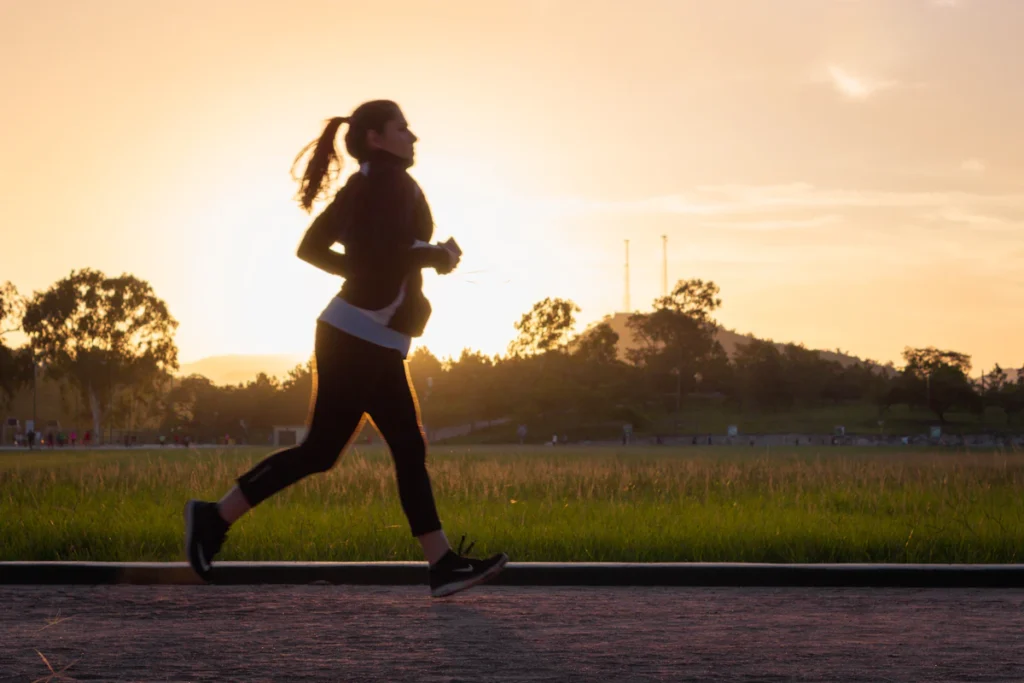
| Aerobic (cardio) | Brisk walking, running, cycling, swimming, dancing | Burns off adrenaline and gets you used to a faster heartbeat |
| Resistance training | Weights, body-weight exercises, resistance bands | Shown to reduce anxiety in trials, builds strength and confidence |
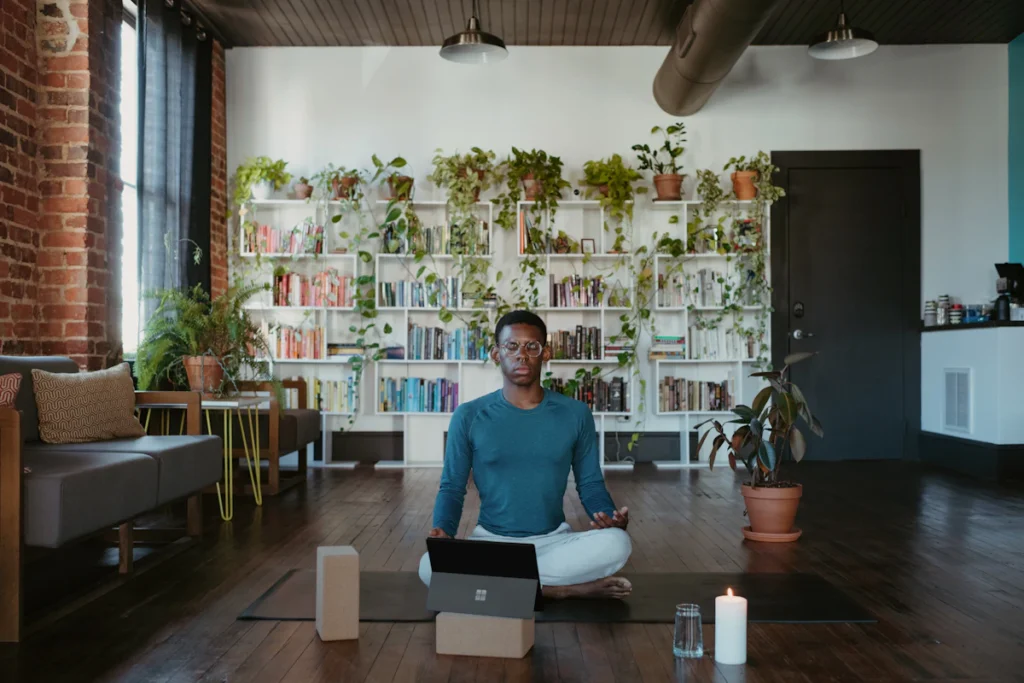
| Mind-body movement | Yoga, tai chi, Pilates | Combines movement with slow breathing and focus |
| Team and social sports | Netball, soccer, walking groups | Adds connection, which also protects mental health |
| Outdoor activity | Bushwalking, beach walks, gardening | Adds daylight and green space |
Strength training deserves a special mention. A meta-analysis of 16 randomised trials found resistance training reduced anxiety, with stronger effects in healthy adults (Gordon and colleagues, 2017).
How much exercise do you need for anxiety?
Australia’s physical activity guidelines recommend adults aim for 150 to 300 minutes of moderate activity a week. They also suggest muscle-strengthening activities on at least two days. That is about 30 minutes on most days, which can be split into shorter blocks.
Any amount is better than none. Even a 10-minute brisk walk can take the edge off anxiety for a few hours. Moderate intensity means you can talk but not sing.
Workouts for anxiety: a simple starter week
This example plan is gentle enough for beginners. Adjust it to your health and fitness. It uses short sessions, rest days and a mix of activities so your body adjusts without strain. Check with your GP first if you have a heart condition or other health concerns.
| Day | Activity | Time |
|---|---|---|
| Monday | Brisk walk | 20 minutes |
| Tuesday | Body-weight strength: squats, wall push-ups, lunges | 15 minutes |
| Wednesday | Yoga or stretching video | 20 minutes |
| Thursday | Brisk walk or bike ride | 25 minutes |
| Friday | Body-weight strength | 15 minutes |
| Weekend | Something fun outdoors, such as a swim or bushwalk | 30 minutes or more |
Check with your GP before starting if you have a heart condition, chest pain, or another health concern.
What if exercise makes my anxiety worse?
Some people with anxiety find that a racing heart, sweating or breathlessness during exercise feels like the start of a panic attack. This is common, and it usually eases with gradual practice. Starting gently and building up over weeks teaches your body these sensations are safe.
- Start with gentle activity, such as walking, and build up slowly.
- Remind yourself that a fast heartbeat during exercise is normal and healthy.
- Increase intensity a little each week.
- Warm up for 5 to 10 minutes so your heart rate rises gradually.
- Cool down slowly rather than stopping suddenly. A sharp drop in effort can bring on a wave of anxiety.
- Try not to watch your heart-rate tracker during sessions. Constant checking can fuel the worry.
- If you have never had a heart check and the fear keeps returning, ask your GP for one.
Over time, your brain learns these sensations are safe. That is a useful lesson for anxiety in general.
Gym anxiety: how to get started
Gym anxiety is feeling nervous about using a gym, often from fear of being watched or not knowing what to do. It is very common, especially for beginners. Planning your session, going at quiet times and starting with simple equipment can make the first visits much easier.
- Visit at quieter times, such as mid-morning or early afternoon.
- Go with a friend for the first few sessions.
- Write a short plan before you go so you know what to do.
- Book an introductory session with a qualified trainer.
- Start at home or outdoors if the gym feels like too much for now.
If fear of being judged affects many parts of your life, our guide to social anxiety may help.
Exercise and anxiety: making it a habit
Anxiety can make it hard to get started. Plan your activity for a set time, lay out your shoes the night before, and set a tiny minimum, such as five minutes. Most days, once you start, you will keep going.
Track how you feel before and after each session. Seeing the difference written down is a strong motivator. For other lifestyle approaches, see how to reduce anxiety naturally.
When to get help
Exercise is powerful, but it is not always enough on its own. Seek support if anxiety is frequent, intense, or stops you doing things you value, even with regular activity. Therapy and exercise work well together, and many people use both.
Truewell’s AHPRA-registered practitioners can help you combine healthy habits with proven psychological skills, by phone or video. See if you are eligible online. If you are struggling to stay safe, call 000, or Lifeline on 13 11 14 is there 24/7.
The bottom line
- Regular exercise reduces anxiety, including diagnosed anxiety disorders.
- Aerobic, strength and mind-body exercise all help.
- Aim for 150 to 300 minutes of moderate activity a week, but any amount counts.
- Starting gently helps if exercise sensations feel like panic.
- The best workout is one you enjoy and can repeat.
Put on your shoes and take a 10-minute walk today. Notice how your body and mind feel when you get back.
Sources checked (November 2026): Stubbs and colleagues (2017); Singh and colleagues (2023); Gordon and colleagues (2017); Australian Department of Health (2026) and Andrews and colleagues (2018).
References
- Stubbs B, Vancampfort D, Rosenbaum S, et al. An examination of the anxiolytic effects of exercise for people with anxiety and stress-related disorders: a meta-analysis. Psychiatry Res. 2017;249:102–108. doi:10.1016/j.psychres.2016.12.020
- Singh B, Olds T, Curtis R, et al. Effectiveness of physical activity interventions for improving depression, anxiety and distress: an overview of systematic reviews. Br J Sports Med. 2023;57(18):1203–1209. doi:10.1136/bjsports-2022-106195
- Gordon BR, McDowell CP, Lyons M, Herring MP. The effects of resistance exercise training on anxiety: a meta-analysis and meta-regression analysis of randomized controlled trials. Sports Med. 2017;47(12):2521–2532. doi:10.1007/s40279-017-0769-0
- Australian Government Department of Health, Disability and Ageing. Physical activity and exercise guidelines for all Australians. Accessed November 2026.
- Andrews G, Bell C, Boyce P, et al. Royal Australian and New Zealand College of Psychiatrists clinical practice guidelines for the treatment of panic disorder, social anxiety disorder and generalised anxiety disorder. Aust N Z J Psychiatry. 2018;52(12):1109–1172. doi:10.1177/0004867418799453
This article is general information for an Australian audience and is not medical advice. Always talk to a registered health practitioner about your own situation. If you are in crisis or feel unsafe, call 000 or Lifeline on 13 11 14 (24 hours, 7 days).
Last reviewed: November 2026: By Truewell Clinic Team