
OCD therapy · Phone or video
OCD treatment for thoughts that won’t let go
Checking the door again. Replaying a conversation for hours. A thought so upsetting you would never say it out loud. OCD keeps you stuck in a loop where doubt leads to a ritual, and the ritual only buys a few minutes of relief. Nothing you tell us will shock your practitioner. CBT-based therapy, by phone or video, helps you step out of the loop.
- No referral needed
- $0 first consultation
- Phone or video, Australia-wide

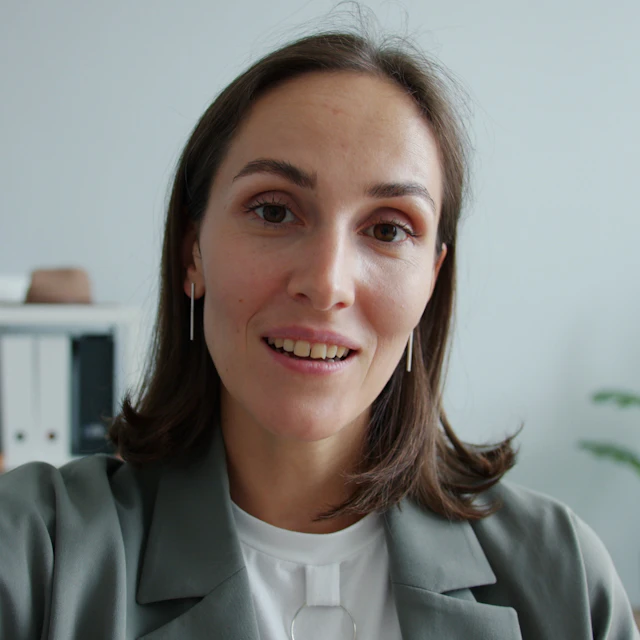 Your telehealth consult
Breaking the OCD cycle
How OCD treatment breaks the cycle
Obsessive-compulsive disorder runs on a cycle. An intrusive thought, image or urge sets off intense anxiety or doubt. A compulsion, such as checking, cleaning, counting, seeking reassurance or mentally reviewing, brings brief relief. That relief teaches your brain the ritual is needed, so the cycle tightens.
The most studied treatment is cognitive behavioural therapy (CBT) with exposure and response prevention (ERP), where you gradually face triggers without doing the compulsion. A large review of clinical trials found CBT produced large improvements in OCD symptoms (Öst et al., 2015). Your OCD therapy with Truewell follows three phases.
OCD in Australia
3.6 percent
of Australians aged 16 to 85 had obsessive-compulsive disorder in the past year, about 1 in 28 people.
Source: Australian Bureau of Statistics, National Study of Mental Health and Wellbeing, 2020–2022.
01
Name the obsessions and rituals
Your practitioner helps you list what triggers you, the thoughts that follow and everything you do to get relief, including hidden mental rituals and reassurance seeking. Seeing the full cycle on paper is often a relief in itself.
02
Practise facing doubt without the ritual
Using CBT-based ERP techniques, you build a ladder of small, manageable challenges. Each step means sitting with uncertainty a little longer without checking, cleaning or seeking reassurance, until the anxiety fades on its own.
03
Strengthen progress and plan for setbacks
Follow-ups track how much time OCD takes up each day. As rituals shrink, you learn to spot new ones early. If you need intensive ERP with a psychologist or a psychiatrist’s input, we help arrange the referral.
Forms of OCD
OCD shows up in many forms
The themes change from person to person, but the cycle of obsession and compulsion stays the same. These are common ones.
Checking
The loop
Going back to check locks, the stove or emails again and again, still not feeling sure.
How therapy breaks it
Gradually cutting checks while learning to tolerate the “what if” feeling.
Contamination and cleaning
The loop
Fear of germs, illness or dirt, with long washing or cleaning routines.
How therapy breaks it
Planned, step-by-step exposure to feared contact, with less washing each time.
Intrusive thoughts ("Pure O")
The loop
Unwanted violent, sexual or blasphemous thoughts that horrify you, often with hidden mental rituals.
How therapy breaks it
Understanding that thoughts are not intentions, and dropping the mental reviewing that keeps them loud.
Relationship OCD
The loop
Constant doubt about whether you love your partner or whether they are “the one”.
How therapy breaks it
Reducing reassurance seeking and comparison, so doubt loses its urgency.
Order and "just right" feelings
The loop
Arranging, counting or repeating until things feel exactly right.
How therapy breaks it
Leaving things “not quite right” on purpose, in steps you choose.
Health and harm worries
The loop
Fear you might cause harm or have a serious illness, with checking, avoiding or searching for answers online.
How therapy breaks it
Cutting back on checking and online searching, and building tolerance for uncertainty.
Recognising OCD
Is it OCD, or just being careful?
OCD treatment may help if you:
- Have thoughts, images or urges that keep coming back and feel distressing
- Spend more than an hour a day on rituals, checking or mental reviewing
- Ask others for reassurance, then need it again soon after
- Avoid places, objects or people because of what might happen
- Know the fear does not fully make sense, but cannot shake it
- Have tried to stop on your own and found the loop pulls you back
When you need more support
If you are having thoughts of suicide or self-harm, phone 000 or Lifeline on 13 11 14 straight away. Online appointments cannot respond to emergencies.
If OCD stops you leaving home, eating or caring for yourself, you may need intensive or face-to-face treatment, and we will help you arrange it.

Online OCD therapy
Why OCD therapy works well at home
Many OCD triggers live at home: the stove, the front door, the bathroom. Online therapy lets you practise where the loop actually happens.
01
Practise with real triggers
Work on checking or cleaning rituals in the same rooms where they happen, with your practitioner guiding you.
02
Easier to say the hard thoughts
Taboo or frightening thoughts can feel impossible to say face to face. Many people find a call easier.
03
No hunting for an OCD clinic
Specialist OCD clinics are limited and often city-based. Start now from anywhere in Australia, and be referred on if needed.
A meta-analysis found remote CBT for OCD, including by video and phone, led to large reductions in symptoms (Wootton, Clinical Psychology Review, 2016).
Getting help for OCD
Starting OCD therapy with Truewell
1
Answer the pre-screen
About 30 seconds of confidential questions to check that our service suits what OCD is doing in your life.
2
Choose a time
Book a slot that fits your week. Our team contacts you once the booking is confirmed, and your practitioner is then available on your booked date.
3
Describe the cycle
In about 20 minutes, your first consult covers your obsessions, the rituals that follow and how much time they take. Your practitioner then sets up a detailed consultation.
4
Start your exposure plan
If clinically appropriate, you get a step-by-step plan with follow-up dates in your patient portal. Switching practitioner is fine if the fit is not right.
Your practitioner
Who you'll speak with
An AHPRA-registered healthcare practitioner who uses CBT-based exposure work for OCD. With your consent, they can keep your GP or psychologist updated on your OCD treatment.

What to have ready
- A rough idea of how much time rituals take each day
- The situations you avoid because of OCD
- Any current medicines and their doses
- Details of any OCD treatment you have had before
- Concession card details, if you have a card
You will be asked to sign a pre-consent form first. Read how it works for each step.
Transparent pricing
What OCD treatment costs
Your first OCD consult is free. Follow-up therapy sessions are a fixed $29, with fees shown upfront.
Initial consultation
$020 minutes
Your assessment and first plan, at no cost.
Follow-up consultation
$2910–15 minutes
Each review of your progress and care plan.
Concession card holders*
15 percentoff
Applies to eligible concession card holders.
*Commonwealth Health Care Card or Seniors Health and Pensioners Concession Card holders.
Any other costs related to your care are discussed with you before anything goes ahead. Prices current as of November 2026. See transparent pricing.
OCD treatment options
OCD psychologist, OCD clinic or online therapy?
People often look for an OCD psychologist, OCD specialist or OCD clinic in Sydney, Melbourne or Brisbane. Here is how the main routes to OCD treatment compare.
| Option | Referral needed? | Cost | How you access it | Best for |
|---|---|---|---|---|
| GP | No | Varies by practice | In person or telehealth | A first check, a mental health plan and referrals |
| Psychologist | Not to book privately | Private fees vary | In person or telehealth | Structured CBT with ERP over a set number of sessions |
| Psychiatrist | Yes, usually from a GP | Specialist fees vary | In person or telehealth | Severe or complex OCD and specialist diagnosis |
| Specialist OCD clinic | Usually | Public or private, waits vary | Mostly in person | Intensive ERP programs for severe OCD |
| Truewell online OCD therapy | No | $0 first consult, $29 follow-ups | Phone or video, Australia-wide | CBT-based therapy with ERP techniques and regular progress checks |
You can keep a psychologist or psychiatrist you already see. With your consent, Truewell shares updates so your OCD care stays consistent.
Questions about OCD
OCD treatment FAQs
Have an OCD question we have not answered? Our patient support team is here to help.
What is the best treatment for OCD?
CBT with exposure and response prevention (ERP) has the strongest research support. It works by gradually facing triggers while resisting the compulsion, so anxiety drops without the ritual. Your first consult looks at your symptoms and how much they affect daily life to plan the right approach.
Does having a disturbing thought mean I want to act on it?
No. Intrusive thoughts in OCD are unwanted and go against what you value, which is exactly why they are so distressing. Having a thought is not the same as wanting it or acting on it.
What is exposure and response prevention?
ERP means facing a feared situation in small, planned steps, then not doing the ritual that usually follows. Over time your brain learns the feared outcome does not happen, or that you can cope with the doubt.
Will ERP be overwhelming?
It should not be. You and your practitioner build the steps together, starting with something you rate as manageable. You never have to do a step you have not agreed to.
Can OCD be treated online?
Yes. Research shows therapy for OCD delivered by video or phone can reduce symptoms a lot, and working at home lets you practise with real triggers.
Can OCD be cured?
Many people get to the point where OCD takes up little of their time and no longer runs their life. Symptoms can flare under stress, so treatment also teaches you how to handle setbacks.
Do I need to take medication for OCD?
No. Our OCD care is built on CBT-based therapy, ERP techniques and regular reviews, and you make every decision about your care.
Can I book OCD treatment directly?
Yes, no referral is needed. Your information is kept confidential under our Privacy Policy, and video consults run over a secure, encrypted connection.
What should I do if I feel unsafe?
Call 000 if you are in danger. Lifeline is available 24/7 on 13 11 14. A booked telehealth consult cannot act as an emergency service.
Free first consult
Step out of the OCD loop
Answering the pre-screen takes about 30 seconds. If our service suits you, you can book your first OCD consult.
This page is general information only and is not a substitute for professional advice, diagnosis or treatment.
Last reviewed: November 2026 by Truewell Clinic Team
References
- Australian Bureau of Statistics. National Study of Mental Health and Wellbeing, 2020–2022. Accessed November 2026.
- Healthdirect Australia. Obsessive compulsive disorder (OCD). Accessed November 2026.
- SANE Australia. Obsessive-compulsive disorder. Accessed November 2026.
- Öst LG, Havnen A, Hansen B, Kvale G. Cognitive behavioral treatments of obsessive–compulsive disorder. A systematic review and meta-analysis of studies published 1993–2014. Clin Psychol Rev. 2015;40:156–169. doi:10.1016/j.cpr.2015.06.003
- Wootton BM. Remote cognitive–behavior therapy for obsessive–compulsive symptoms: a meta-analysis. Clin Psychol Rev. 2016;43:103–113. doi:10.1016/j.cpr.2015.10.001
- National Institute for Health and Care Excellence. Obsessive-compulsive disorder and body dysmorphic disorder: treatment (CG31). Accessed November 2026.