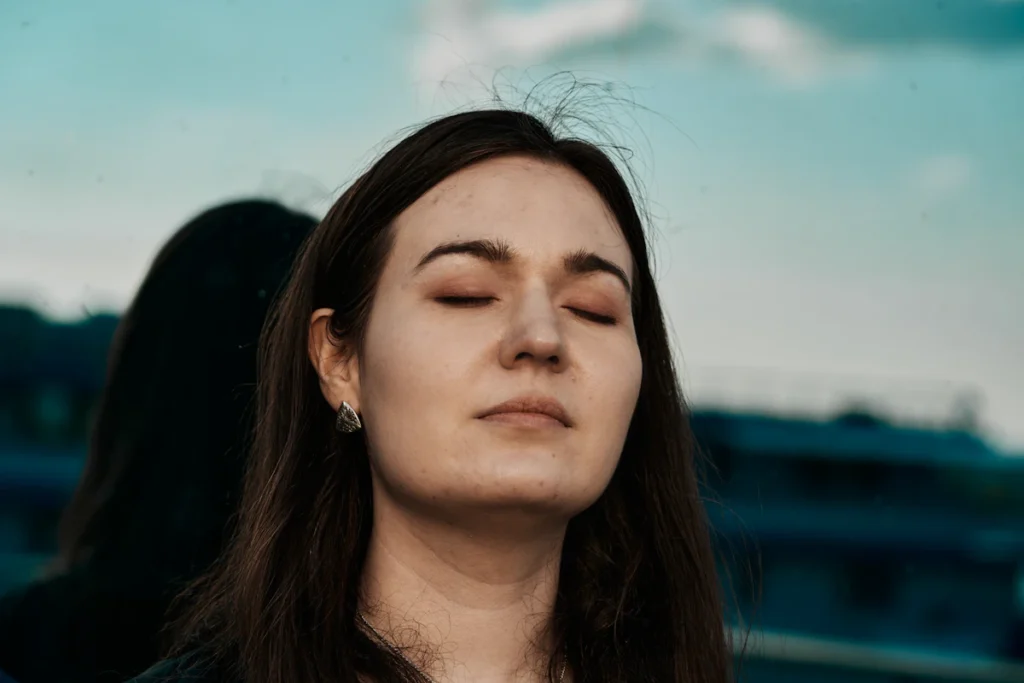

Anxiety is not one single condition. One person dreads social events, another fears a panic attack on the train, and a third worries about everything all day. These are different types of anxiety, and knowing which one fits can make support more targeted.
This guide walks through each type in plain language, with signs and everyday examples. If you recognise yourself, anxiety support with an AHPRA-registered practitioner is available by phone or video across Australia.
How many types of anxiety are there?
Health professionals recognise seven main types of anxiety disorder in the DSM-5-TR. They are generalised anxiety disorder, social anxiety disorder, panic disorder, agoraphobia, specific phobia, separation anxiety disorder and selective mutism. Two more categories cover anxiety caused by a substance or by a medical condition.
Each type centres on a different fear. What they share is that the fear is out of proportion to the situation, lasts for months, and gets in the way of daily life. Many people have more than one type at once.
Anxiety disorders are common. Large population surveys suggest up to 33.7 percent of people have one at some point in their life (Bandelow and Michaelis, 2015). In Australia, anxiety is the most common group of mental health conditions, according to the ABS, 2020–2022. Women are affected more often than men, and most anxiety disorders begin in childhood, the teenage years or early adulthood.
Which type of anxiety do I have?
The quickest clue to your type of anxiety is what you fear most and what you avoid. Use this table as a rough guide, not a diagnosis. Many people see themselves in more than one row, and a health professional can help you sort it out.
| Main fear | What you tend to avoid | Type it may point to |
|---|---|---|
| Many everyday things going wrong | Uncertainty, decisions, unplanned change | Generalised anxiety disorder |
| Being judged or embarrassed | Speaking up, phone calls, parties | Social anxiety disorder |
| The next panic attack | Exercise, caffeine, places linked to past attacks | Panic disorder |
| Being trapped without help | Crowds, public transport, leaving home alone | Agoraphobia |
| One object or situation | Needles, flying, heights, certain animals | Specific phobia |
| Harm coming to loved ones | Being apart from them | Separation anxiety disorder |
| Having a serious illness | Medical news, or constantly checking your body | Health anxiety |
Generalised anxiety disorder (GAD)
GAD is ongoing, hard-to-control worry about many everyday things, such as work, money, health or family. The worry happens on most days for at least six months. It often comes with restlessness, tiredness, poor concentration, muscle tension and broken sleep.
Example: You lie awake running through tomorrow’s tasks, then worry about your parents’ health, then your bills. Our full guide to generalised anxiety disorder covers symptoms and treatment.
Social anxiety disorder
Social anxiety disorder is an intense fear of being judged, embarrassed or rejected in social situations. People may avoid speaking up, eating in front of others or meeting new people. It usually starts in the teenage years. Without treatment, it often lasts for years.
Example: You rehearse a simple phone call for an hour, then replay it afterwards looking for mistakes. Read more in our guide to social anxiety.
Panic disorder
Panic disorder involves repeated, unexpected panic attacks. These are sudden surges of intense fear with a racing heart, breathlessness, shaking or a sense of doom. The key feature is ongoing fear of the next attack, which leads people to change their behaviour.
Example: After an attack at the supermarket, you start shopping online and keep checking your pulse. For more on what an attack involves, see our guide to anxiety attacks.
Agoraphobia
Agoraphobia is fear of places or situations where escape might be hard, or help unavailable, if panic strikes. Common examples are public transport, crowds, open spaces, shops and being away from home alone. In severe cases, a person may rarely leave home.
It often develops alongside panic disorder, but it can occur on its own.
Specific phobias
A specific phobia is a strong, lasting fear of one object or situation. The fear is much bigger than the real danger, and the person goes out of their way to avoid it. Common examples include heights, animals, flying and needles.
- Animals: spiders, dogs, snakes
- Natural environment: heights, storms, deep water
- Blood, injection or injury: needles, medical procedures
- Situations: flying, lifts, tunnels, driving
- Other: choking, vomiting, loud noises
Specific phobias respond especially well to gradual exposure, which means facing the fear in small, planned steps.
Separation anxiety disorder
Separation anxiety disorder is excessive fear about being apart from people you are close to. It is common in young children but can also affect adults. Someone may worry constantly that harm will come to a partner or child, or avoid being alone.
Selective mutism
Selective mutism mostly affects children. A child speaks comfortably at home but cannot speak in certain settings, such as school, even though they want to. It is linked to social anxiety, not defiance or shyness alone. Early support gives the best results.
Other types of anxiety you may hear about
Some conditions involve strong anxiety but sit in other categories or are not formal diagnoses. You may still see them in articles and online searches. Examples often include conditions linked to trauma, obsessions or health worries, which share many anxiety symptoms.
| Name | What it means | Where it fits |
|---|---|---|
| Health anxiety | Ongoing fear of serious illness | Illness anxiety disorder or somatic symptom disorder |
| Obsessive-compulsive disorder (OCD) | Unwanted thoughts and repeated rituals | Its own category since DSM-5 |
| Post-traumatic stress disorder (PTSD) | Fear and reliving after trauma | Trauma and stressor-related disorders |
| Substance-induced anxiety | Anxiety caused by alcohol, drugs or withdrawal | Anxiety disorder category |
| Anxiety due to a medical condition | Anxiety caused by a health problem, such as an overactive thyroid | Anxiety disorder category |
| Performance anxiety | Fear before exams, speeches or performances | Often a form of social anxiety |
Our guide to health anxiety explains that type in detail.
Levels of anxiety: mild, moderate and severe
Any type of anxiety can range from mild to severe. Severity depends on how strong the symptoms are, how often they happen and how much they limit your life. Severe anxiety, sometimes called high anxiety or debilitating anxiety, can make work, study or leaving home very hard.
Health professionals often use the GAD-7, a seven-question checklist, to measure severity (Spitzer and colleagues, 2006).
| GAD-7 score | Severity | What it can look like |
|---|---|---|
| 0 to 4 | Minimal | Everyday nerves that pass |
| 5 to 9 | Mild | Noticeable worry, but life mostly goes on as usual |
| 10 to 14 | Moderate | Worry affects sleep, focus or plans most weeks |
| 15 to 21 | Severe | Anxiety dominates the day and limits daily life |
A score is a starting point for a conversation, not a diagnosis.
How are the types of anxiety diagnosed?
A GP or mental health professional asks what you fear, when it started, how long it lasts and what you avoid. They may use questionnaires and check for physical causes, such as thyroid or heart problems. Pinning down the type helps choose the right focus for treatment.
Treatment for different types of anxiety
Most types of anxiety respond to cognitive behavioural therapy (CBT), a structured talking therapy. The techniques are adjusted to each type, following Australian and New Zealand guidelines (Andrews and colleagues, 2018). Treatment length depends on the type and how severe it is.
- GAD: working with worry, uncertainty and tension
- Social anxiety: testing feared judgements and dropping safety behaviours
- Panic and agoraphobia: learning that body sensations are safe, then returning to avoided places
- Specific phobias: step-by-step exposure, often in only a few sessions
- Children: CBT with parents involved
When to get help
Seek support if fear or worry has lasted weeks, keeps growing, or makes you avoid places, people or tasks. You do not need to know which type you have before you ask for help. Working that out is part of the first conversation.
Truewell’s AHPRA-registered practitioners support people with many types of anxiety, by phone or video. Take the eligibility check online. If you ever feel unsafe or think about ending your life, call 000 immediately, or Lifeline on 13 11 14, 24/7.
The bottom line
- There are seven main types of anxiety disorder, each centred on a different fear.
- GAD, social anxiety and panic disorder are among the most common.
- Many people have more than one type.
- Severity ranges from mild to severe and can be measured with the GAD-7.
- CBT works for most types, with techniques matched to each one.
Write down the situations you avoid most. That list often points straight to the type of anxiety you are dealing with.
Sources checked (November 2026): ABS (2020–2022 data); Andrews and colleagues (2018); DSM-5-TR (2022); Bandelow and Michaelis (2015) and Spitzer and colleagues (2006).
References
- Australian Bureau of Statistics. National Study of Mental Health and Wellbeing, 2020–2022. ABS; 2023. Accessed November 2026.
- Andrews G, Bell C, Boyce P, et al. Royal Australian and New Zealand College of Psychiatrists clinical practice guidelines for the treatment of panic disorder, social anxiety disorder and generalised anxiety disorder. Aust N Z J Psychiatry. 2018;52(12):1109–1172. doi:10.1177/0004867418799453
- American Psychiatric Association. Diagnostic and Statistical Manual of Mental Disorders, Fifth Edition, Text Revision (DSM-5-TR). Washington, DC: APA; 2022.
- Bandelow B, Michaelis S. Epidemiology of anxiety disorders in the 21st century. Dialogues Clin Neurosci. 2015;17(3):327–335. doi:10.31887/DCNS.2015.17.3/bbandelow
- Spitzer RL, Kroenke K, Williams JBW, Löwe B. A brief measure for assessing generalized anxiety disorder: the GAD-7. Arch Intern Med. 2006;166(10):1092–1097. doi:10.1001/archinte.166.10.1092
This article is general information for an Australian audience and is not medical advice. Always talk to a registered health practitioner about your own situation. If you are in crisis or feel unsafe, call 000 or Lifeline on 13 11 14 (24 hours, 7 days).
Last reviewed: November 2026: By Truewell Clinic Team