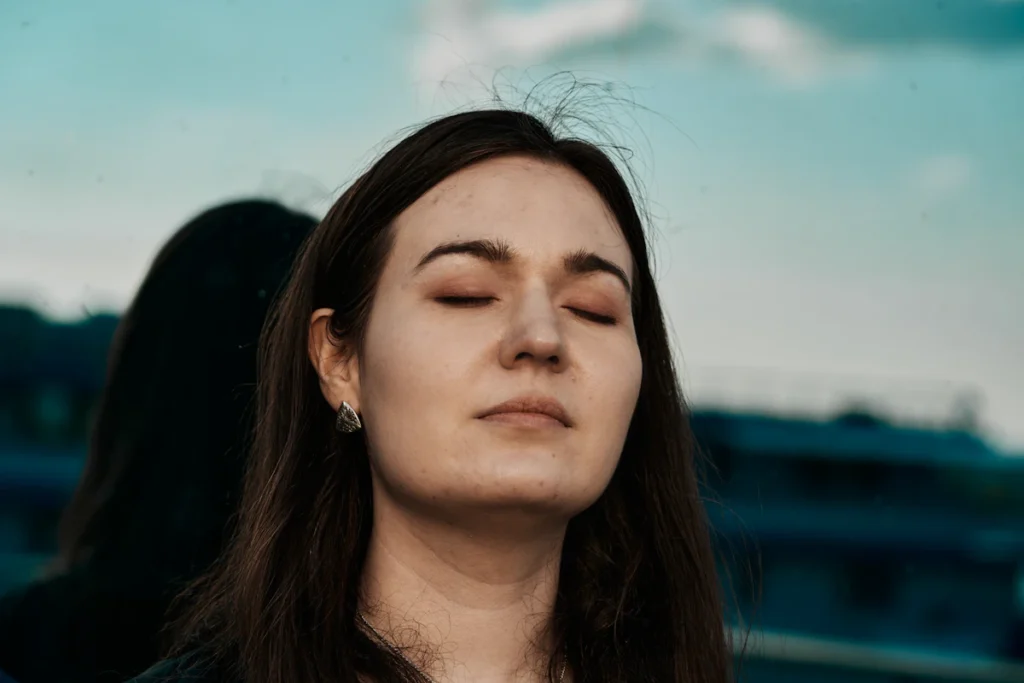

Some days the worry is loud: racing thoughts, a tight chest, a sense that something will go wrong. Other days everything feels flat and heavy, and even small tasks seem pointless. If you swing between the two, or feel both at once, you are far from alone.
Anxiety and depression are separate conditions, but they share roots and often travel together. Understanding how they connect makes it easier to find support that helps with both. Truewell offers anxiety support with an AHPRA-registered practitioner by phone or video, and that support can cover low mood too.
Can you have anxiety and depression at the same time?
Yes. Anxiety and depression very often occur together, and many people meet the criteria for both. When they overlap, symptoms tend to be stronger and last longer than either condition alone. Treatment can still work well, especially when it targets both at once.
Survey data from 26 countries show the overlap clearly. About 63 percent of people with generalised anxiety disorder had also had a mood disorder such as depression at some point (Ruscio and colleagues, 2017). In Australia, about 17.2 percent of people aged 16 to 85 had an anxiety disorder in the past year. That figure comes from the Australian Bureau of Statistics (ABS), 2020–2022.
Signs of anxiety and depression together
When anxiety and depression combine, you may notice signs of both. Worry and tension sit alongside low mood and loss of interest. Many people swing between restless tension and heavy tiredness, sometimes within a few hours. That mix can feel confusing, because the two conditions seem to pull in opposite directions.
| Anxiety signs | Depression signs | Shared signs |
|---|---|---|
| Constant worry or dread | Low or empty mood most of the day | Poor sleep |
| Feeling on edge or restless | Loss of interest or pleasure | Tiredness and low energy |
| Racing heart, tight chest | Feeling worthless or guilty | Trouble concentrating |
| Avoiding feared situations | Withdrawing from people | Irritability |
| Fear of what might happen | Hopelessness about the future | Changes in appetite |
A simple way to think about it: anxiety is often fear about the future, while depression is a heavy sense that things will not get better.
Why do anxiety and depression happen together?
Anxiety and depression share many of the same risk factors and brain systems. Both involve the brain’s stress response, emotion centres and areas that regulate mood. Genes, early life experiences and ongoing stress raise the risk of both. Having one condition also raises the chance of developing the other.
- Shared genes. Family and twin studies show overlapping genetic risk, especially between generalised anxiety and depression.
- Long-term stress. Months of strain can wear down mood as well as raise worry.
- Thinking patterns. Dwelling on problems, called rumination, feeds both conditions.
- Life events. Loss, illness, trauma or loneliness can trigger both.
How anxiety can lead to depression, and back again
Anxiety often comes first. Living with constant worry is exhausting, and avoiding situations shrinks your life. Over time, fewer good experiences and more self-criticism can lower your mood until depression sets in. The path can run the other way too, when low mood brings worry about the future.
It can work the other way too. Depression drains energy and confidence, so everyday tasks start to feel threatening. Worry about falling behind, letting people down or never feeling better then grows. Each condition can keep the other going.
- Worry leads you to avoid people or activities.
- Avoidance means fewer rewarding moments.
- Mood drops and energy fades.
- Low mood makes challenges feel harder, so worry grows.
Breaking the cycle at any point helps. Small steps back towards valued activities are one of the most effective places to start.
What is mixed anxiety and depressive disorder?
Mixed anxiety and depressive disorder is a diagnosis in the World Health Organization’s ICD-11. It describes people who have symptoms of both anxiety and depression for at least two weeks, but neither is strong enough on its own for a separate diagnosis. It still causes real distress and deserves support.
Many others have two full diagnoses, such as generalised anxiety disorder and major depression. Either way, the approach to support is similar.
How are anxiety and depression diagnosed?
A health professional asks about your mood, worry, sleep, energy and how long symptoms have lasted. They may use short questionnaires to measure severity and track progress. They will also check for physical causes, such as thyroid problems, and ask which symptoms came first. This helps shape a treatment plan that targets both.
- GAD-7. Seven questions about anxiety over the past two weeks.
- PHQ-9. Nine questions about depression over the past two weeks.
- K10. The Kessler Psychological Distress Scale, which means a 10-question measure of overall distress.
A GP may also check for physical causes such as thyroid problems or anaemia, which can affect mood and energy.
Treatment for anxiety and depression
Anxiety and depression can be treated together, and improving one often helps the other. Cognitive behavioural therapy (CBT), which means a structured talking therapy, is a first-line psychological treatment for both in Australian and New Zealand guidelines. Your plan is tailored to whichever condition is causing the most distress.
Transdiagnostic CBT
Transdiagnostic CBT targets the patterns that anxiety and depression share, such as avoidance, worry and rumination. A large meta-analysis found these treatments reduced both anxiety and depression (Newby and colleagues, 2015). This approach means you do not need a separate program for each condition.
Behavioural activation
Behavioural activation means planning small, meaningful activities to lift mood and break avoidance. It is simple, practical and well suited to people who feel stuck.
Medicine
Some people talk with their GP or psychiatrist about medicine as part of their care. Truewell practitioners focus on talking therapies and do not write prescriptions.
How to cope with anxiety and depression day to day
Small, steady actions help both conditions. Aim for progress, not perfection. Depression drains motivation and anxiety drives avoidance, so tiny goals work better than big ones. Choose one action from this list each day, and count it as a win once it is done. Over a few weeks, these steps build momentum.
- Keep a basic routine. Regular wake times and meals give your days structure.
- Do one small thing you value. A short walk, a call or a hobby counts.
- Move your body. Physical activity eases symptoms of both anxiety and depression.
- Notice rumination. When you replay problems, shift to a practical task.
- Limit alcohol. It can worsen low mood and next-day anxiety.
- Stay connected. Tell one trusted person how you are really going.
For more practical tools, see our anxiety coping strategies. If stress is feeding your symptoms, our guide to stress and anxiety may help.
When to get help
Seek support if low mood or worry has lasted two weeks or more, or is affecting your work, relationships or sleep. Also reach out if you have lost interest in things you used to enjoy. Your GP is a good first step.
Truewell’s AHPRA-registered practitioners support people living with both anxiety and low mood, by phone or video across Australia. You can find out if you are eligible online. If you have thoughts of suicide or self-harm, call 000 now or talk to Lifeline on 13 11 14, 24/7.
The bottom line
- Anxiety and depression often happen together and can feed each other.
- They share risk factors such as genes, long-term stress and rumination.
- Questionnaires such as the GAD-7 and PHQ-9 help measure both.
- CBT and behavioural activation can treat both at the same time.
- Small daily actions help break the cycle.
Choose one small activity you used to enjoy and schedule 10 minutes of it this week. Doing it before you feel like it is part of how mood recovers.
Sources checked (November 2026): ABS (2020–2022 data); Ruscio and colleagues (2017); Newby and colleagues (2015); Kalin (2020) and Singh and colleagues (2023).
References
- Australian Bureau of Statistics. National Study of Mental Health and Wellbeing, 2020–2022. ABS; 2023. Accessed November 2026.
- Ruscio AM, Hallion LS, Lim CCW, et al. Cross-sectional comparison of the epidemiology of DSM-5 generalized anxiety disorder across the globe. JAMA Psychiatry. 2017;74(5):465–475. doi:10.1001/jamapsychiatry.2017.0056
- Newby JM, McKinnon A, Kuyken W, Gilbody S, Dalgleish T. Systematic review and meta-analysis of transdiagnostic psychological treatments for anxiety and depressive disorders in adulthood. Clin Psychol Rev. 2015;40:91–110. doi:10.1016/j.cpr.2015.06.002
- Kalin NH. The critical relationship between anxiety and depression. Am J Psychiatry. 2020;177(5):365–367. doi:10.1176/appi.ajp.2020.20030305
- Singh B, Olds T, Curtis R, et al. Effectiveness of physical activity interventions for improving depression, anxiety and distress: an overview of systematic reviews. Br J Sports Med. 2023;57(18):1203–1209. doi:10.1136/bjsports-2022-106195
This article is general information for an Australian audience and is not medical advice. Always talk to a registered health practitioner about your own situation. If you are in crisis or feel unsafe, call 000 or Lifeline on 13 11 14 (24 hours, 7 days).
Last reviewed: November 2026: By Truewell Clinic Team