

Medically reviewed | Last updated: 2026 | Reading time: ~14 minutes
Recovering from burnout is rarely about one weekend off. It is a staged, often non-linear process, and trying to rush it usually sends people straight back into the same exhaustion.
How to recover from burnout involves three stages: acute rest to reduce immediate exhaustion, structural change such as resetting boundaries and workload, and gradual, monitored re-engagement. Most people see meaningful improvement within four to twelve weeks, though full recovery from severe burnout can take three to twelve months. Recovery is rarely linear, and relapse is common without ongoing relapse-prevention strategies.
Why Generic Self-Care Advice Often Fails
Many people trying to learn how to overcome burnout are told to simply rest, exercise and eat well. These habits matter, but on their own they rarely address the structural mismatch — workload, control, reward, fairness, community or values — that caused burnout in the first place. How to fix burnout long-term requires addressing both the personal and the structural sides, supported where appropriate by a GP, psychologist or other qualified health professional. This is particularly relevant for people in burnout in caring and high-stress professional roles, where the structural drivers of exhaustion are often built into the job itself.
A Staged Approach to Burnout Recovery
Stage 1: Acute rest
The first stage of how to treat burnout is reducing immediate physiological and emotional load. This includes prioritising sleep, stepping back from non-essential commitments, and resisting the urge to use rest time productively. This stage typically lasts one to three weeks.
Stage 2: Structural reset
Once acute exhaustion eases, attention shifts to the conditions that caused burnout: renegotiating workload, setting firmer boundaries, and addressing any of the six organisational mismatches described in our workplace burnout guide. Skipping this stage is the most common reason burnout recurs.
Stage 3: Gradual re-engagement
The final stage involves carefully returning to fuller activity while monitoring for early warning signs, rather than jumping back to a previous pace immediately. Signs you are recovering from burnout typically include returning motivation, improved sleep, and a reduced sense of dread before starting tasks (see the full list below).
Burnout Recovery Timeline
Recovery speed depends on severity, how early burnout was recognised, and whether the underlying causes are addressed. The timeline below is a general guide, not a guarantee — some people recover faster, and severe or prolonged burnout often takes longer.
| Time Frame | What Recovery Often Looks Like |
| First week | Physical exhaustion begins to ease with rest; sleep may still be disrupted; emotional reactivity often remains high |
| First month | Sleep starts to stabilise; some return of concentration and motivation; structural changes (workload, boundaries) typically begin here |
| 3 months | Mood and energy noticeably improved for mild-to-moderate burnout; gradual re-engagement with fuller responsibilities |
| 6 months | Most people with moderate burnout report substantial recovery; ongoing relapse-prevention habits become important |
| Severe / prolonged burnout | Recovery can take 9–12 months or longer, particularly where depression, anxiety or physical health symptoms co-occur; professional support is strongly recommended |
Signs You Are Recovering From Burnout
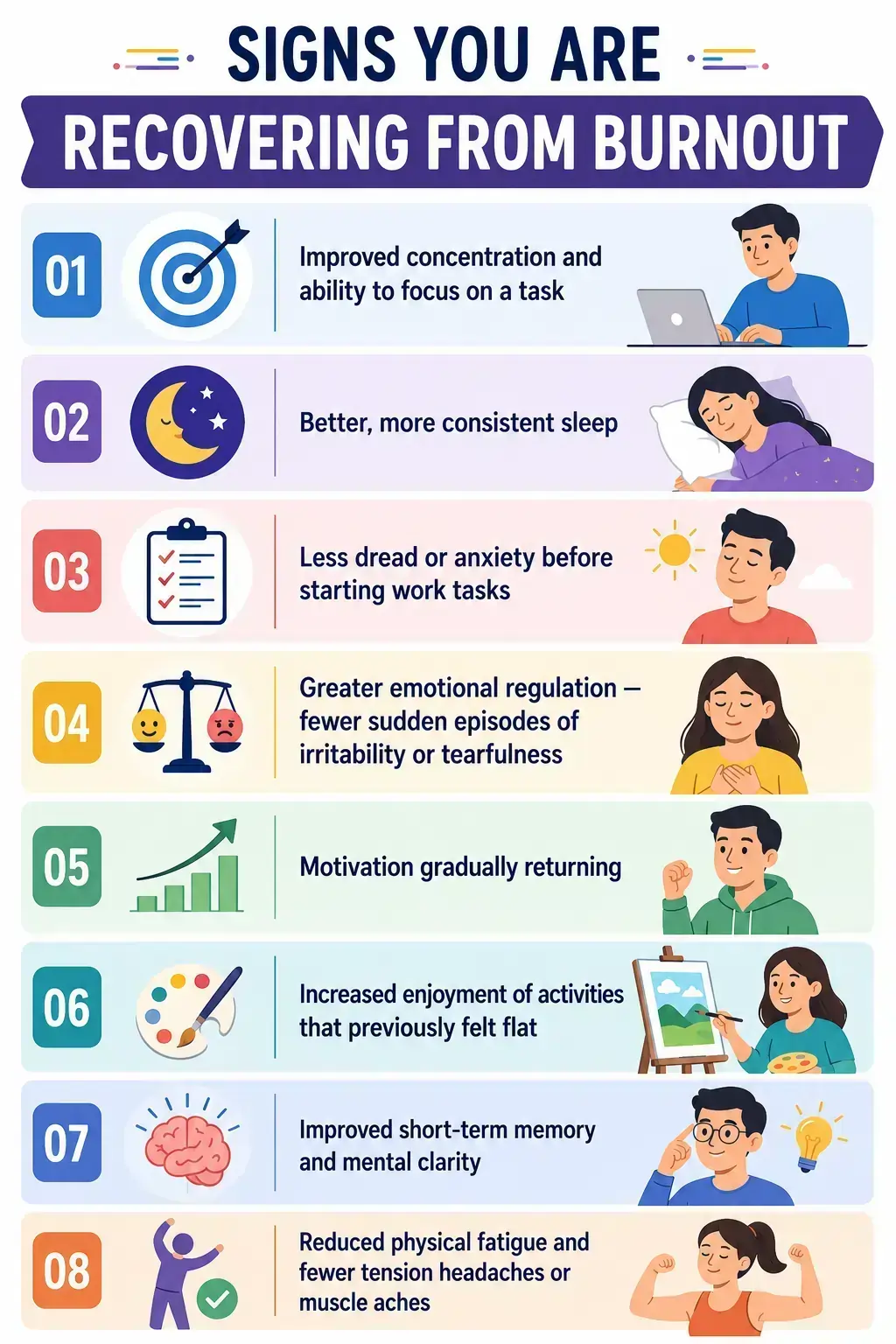
Recovery tends to show up gradually across several areas of functioning, rather than as a single turning point. For a broader picture of how burnout shows up in the first place, see our guide to signs and symptoms of burnout. Common signs include:
- Improved concentration and ability to focus on a task
- Better, more consistent sleep
- Less dread or anxiety before starting work tasks
- Greater emotional regulation — fewer sudden episodes of irritability or tearfulness
- Motivation gradually returning
- Increased enjoyment of activities that previously felt flat
- Improved short-term memory and mental clarity
- Reduced physical fatigue and fewer tension headaches or muscle aches
It is normal for these signs to fluctuate rather than improve in a straight line. A temporary dip after a stressful week does not necessarily mean recovery has stalled.
Burnout Relapse Prevention
Burnout relapse is common, particularly when the structural reset stage (Stage 2) is skipped. Relapse prevention typically involves:
Pacing
Increase workload and commitments gradually rather than returning to a previous pace immediately, even once symptoms feel resolved.
Boundaries
Maintaining the limits set during recovery — such as protected time off, defined work hours, or reduced after-hours availability — rather than letting them quietly erode.
Regular workload reviews
Scheduling periodic check-ins (for example, quarterly) to assess whether workload, control and reward remain in balance, rather than waiting for symptoms to return.
A written recovery plan
Documenting what helped during recovery, including early warning signs and a specific action plan, so it can be referred to quickly if symptoms begin to resurface.
Knowing your warning signs
Recognising your own early indicators — disrupted sleep, increased cynicism, withdrawal from colleagues — so you can act before reaching the same point of exhaustion. Warning signs can also look different depending on the person; for neurodivergent readers, our guide to autistic and ADHD burnout covers presentations that don’t always match the general pattern.
Return to Work After Burnout
For people who have taken time off, returning to work is itself a stage of recovery that benefits from planning rather than an abrupt switch back to full duties.
- Phased return: gradually increasing hours or days over several weeks rather than resuming full-time work immediately
- Reduced hours: a temporary reduction in hours, agreed with your employer, while capacity rebuilds
- Workplace adjustments: changes such as reduced meeting load, adjusted deadlines, or a quieter workspace
- Flexible work arrangements: options such as remote work, flexible start times, or compressed hours where feasible
- GP medical certificates: documentation supporting a graduated return, which may also be required for workplace or insurance purposes
In Australia, eligible employees can request flexible working arrangements under the Fair Work Act, and the Fair Work Ombudsman provides guidance on these entitlements and on managing leave for health-related absences.
How to Recover From Burnout While Still Working
Not everyone can take extended leave, and learning how to recover from burnout while still working is one of the most searched aspects of recovery. Practical strategies include:
- Negotiating a temporary reduction in non-essential responsibilities, even informally
- Protecting at least one full recovery day per week with no work-related tasks
- Using lunch breaks and commute time fully, rather than filling them with more screens
- Scheduling short, regular check-ins with a psychologist rather than waiting for a crisis point
How to Prevent Burnout
How to prevent burnout matters as much as how to manage burnout once it has set in, since recurrence is common without preventive habits. Useful preventive measures include:
- Regularly auditing workload against actual capacity, not just deadlines
- Building recovery time into the calendar before it becomes urgent
- Checking in on values alignment with your role at least once or twice a year
- Knowing your own early warning signs so you can act on them sooner next time
Burnout Treatment Options
Professional burnout treatment can draw on several therapeutic approaches, often combined and tailored to the individual:
- Cognitive Behavioural Therapy (CBT) — commonly used to address stress appraisal, unhelpful thinking patterns and boundary-setting
- Acceptance and Commitment Therapy (ACT) — focused on psychological flexibility and values-aligned action under stress
- Mindfulness-Based Stress Reduction (MBSR) — structured mindfulness training shown to reduce stress reactivity
- Compassion-focused therapy — useful where self-criticism is a significant driver of burnout
- Behavioural activation — gradually rebuilding engagement with meaningful activities
- Psychoeducation — understanding the burnout process itself, which can reduce self-blame and guide decision-making
- Workplace mediation — involving the employer where structural factors are part of the cause
Some multidisciplinary clinics offer structured, intensive programs for severe or prolonged burnout, although there is no single recognised medical category of “burnout treatment centres” in Australia; most cases respond well to outpatient therapy with a psychologist, supported by a GP.
Finding a burnout psychologist, including local options such as a burnout therapist in the eastern suburbs or your local area, is often the fastest way to build a personalised recovery plan rather than relying on general advice alone.
Medication and Burnout
Medication does not directly treat burnout itself, as burnout is an occupational phenomenon rather than a diagnosable medical condition in its own right. However, medication may be appropriate if depression, anxiety or significant insomnia are present alongside burnout, following assessment by a GP or psychiatrist. This should always involve a discussion of expected benefits, possible side effects, and how medication fits alongside therapy and structural changes, rather than being used as a stand-alone solution.
Sleep Recovery
Sleep disruption is both a symptom and a driver of burnout, making it an early priority in recovery.
- Keep a consistent wake time, even after a poor night, to help stabilise the body clock
- Reduce screen use and bright light in the hour before bed
- Avoid using bed for work, scrolling or worrying — reserve it for sleep and rest
- Limit caffeine after early afternoon and reduce alcohol, which fragments sleep quality
- If insomnia persists beyond a few weeks, consider Cognitive Behavioural Therapy for Insomnia (CBT-I) or speak with your GP
Nutrition During Recovery
Nutrition will not resolve burnout on its own, but stable blood sugar and adequate hydration support energy and mood regulation during recovery.
- Aim for regular meals rather than skipping food during high-stress periods
- Limit reliance on caffeine and sugar to manage energy dips, as these often worsen the underlying fatigue cycle
- Stay adequately hydrated, particularly if fatigue or headaches are prominent
- Where appetite or eating patterns have changed significantly, speak with a GP or dietitian rather than self-managing alone
Exercise During Recovery
Movement can support recovery, but intensity matters — high-intensity exercise during acute exhaustion (Stage 1) can sometimes increase fatigue rather than relieve it.
- In the acute rest stage, gentle movement such as walking is often more appropriate than intense training
- As energy returns, gradually reintroducing regular moderate exercise can support mood, sleep and stress regulation
- Avoid using exercise as another source of pressure or self-criticism during recovery
Nervous System Regulation
Chronic stress keeps the nervous system in a heightened state of alert. Deliberately activating the body’s calming response can support recovery alongside therapy and structural change. This physiological strain is closely linked to what’s often described as adrenal fatigue and emotional burnout, where prolonged stress hormone activity contributes to ongoing exhaustion.
- Slow, diaphragmatic breathing — extending the exhale tends to have the strongest calming effect
- Progressive muscle relaxation or other structured relaxation practices
- Vagal regulation techniques, such as humming, slow breathing or cold-water face splashing, used in some therapeutic approaches
- Regular mindfulness practice, which has evidence for reducing physiological stress reactivity over time
How Long Does Burnout Last?
How long does burnout last depends on severity, how early it was identified, and whether the underlying causes are addressed. Mild burnout can ease within a few weeks of rest and reduced demand. Moderate to severe burnout, particularly when ignored for months, often takes three to twelve months of structured recovery, sometimes longer.
When to Seek Urgent Help
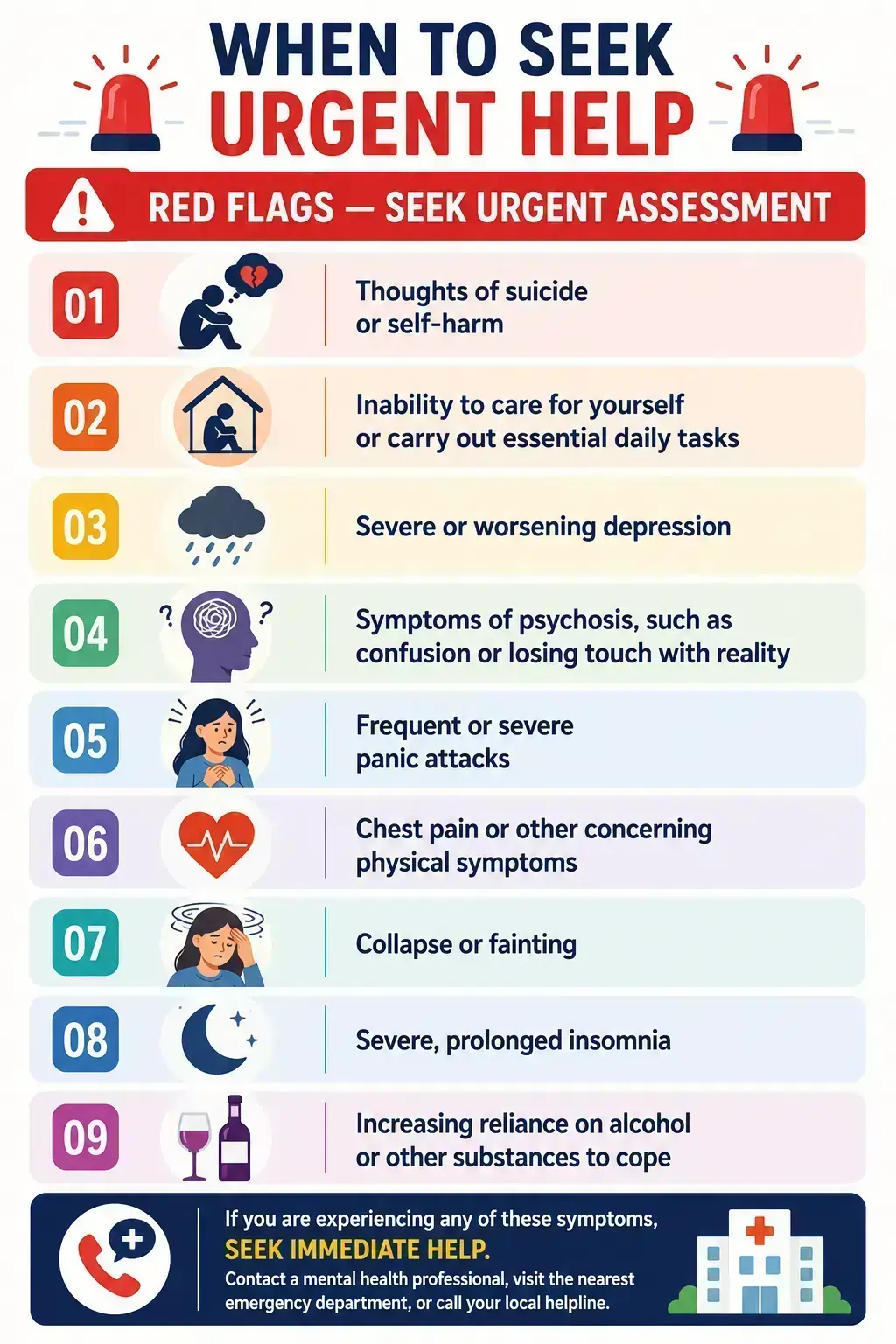
Red Flags — Seek Urgent Assessment
- Thoughts of suicide or self-harm
- Inability to care for yourself or carry out essential daily tasks
- Severe or worsening depression
- Symptoms of psychosis, such as confusion or losing touch with reality
- Frequent or severe panic attacks
- Chest pain or other concerning physical symptoms
- Collapse or fainting
- Severe, prolonged insomnia
- Increasing reliance on alcohol or other substances to cope
If you are experiencing any of the above, call 000 in an emergency, or contact Lifeline on 13 11 14 or Beyond Blue on 1300 22 4636 for immediate support.
Getting Support in Australia
Australia has several formal pathways that can reduce the cost and complexity of accessing burnout-related care:
- Mental Health Treatment Plan: A GP can develop a plan that provides Medicare rebates for a number of psychology sessions per year
- Medicare: subsidises eligible mental health services under a Mental Health Treatment Plan, reducing out-of-pocket costs
- GP referral: usually the first step, including assessment, ruling out other causes of fatigue, and referral to a psychologist or psychiatrist if needed
- Employee Assistance Program (EAP): many employers offer confidential short-term counselling at no cost to the employee — check with HR
- Workers compensation: may apply where burnout is assessed as substantially caused by employment conditions; eligibility varies by state
- Safe Work Australia: provides guidance on psychosocial hazards and employer obligations around work-related stress
- Fair Work Ombudsman: provides information on entitlements such as sick leave, flexible work requests and return-to-work arrangements
The Bottom Line
- Burnout is a real, measurable state of exhaustion, not a personal failing.
- Early recognition shortens recovery time significantly.
- Recovery requires both rest and structural change, not rest alone.
- Recovery is rarely linear, and relapse-prevention habits matter once symptoms improve.
- Persistent symptoms beyond a few weeks warrant a conversation with a GP or psychologist.
References
- Maslach C, Leiter MP. Understanding the burnout experience: recent research and its implications for psychiatry. World Psychiatry. 2016;15(2):103-111.
- Salvagioni DAJ, et al. Physical, psychological and occupational consequences of job burnout: a systematic review of prospective studies. PLoS ONE. 2017;12(10).
- World Health Organization. Burn-out an “occupational phenomenon”: International Classification of Diseases (ICD-11).
- Beyond Blue. Recovering from burnout. Beyond Blue; 2025.
- Safe Work Australia. Work-related psychological health and safety guidance.
- Fair Work Ombudsman. Flexible working arrangements and leave entitlements.
Last reviewed: 2026. This article is for general information only and does not replace personalised advice from a qualified health professional. If you are having thoughts of self-harm, contact Lifeline on 13 11 14 or, in an emergency, call 000.