

Overview:
Stress rarely announces itself with a warning. It shows up in a tight jaw during a work call, a sleepless hour at 2 am, or the low hum of worry that follows you from the school pickup to the grocery queue. For busy professionals, parents, caregivers, and students alike, everyday stress isn’t the exception. It’s the norm, woven into the pace of modern Australian life.
That doesn’t mean it has to stay unmanaged.
There’s an important difference between stress that comes and goes and stress that settles in and stays. Acute stress, the kind triggered by a looming deadline or a difficult conversation, is a normal and even useful response: it sharpens focus and mobilises energy. Chronic stress is different, building gradually until it starts affecting sleep cycles, mood, and daily functioning. This guide looks at what’s really driving day-to-day stress right now, and which evidence-based strategies for everyday stress management in Australia genuinely help.
What’s Really Driving Stress for Australians Right Now
Everyday stress rarely comes from one source. For most Australians, it builds from several pressures stacking on top of each other.
Financial pressure is a big part of the picture. Australians are currently reporting the highest levels of financial stress seen in over a decade, and an estimated 1.26 million low-income households faced financial housing stress in 2024-25 alone. Between rent, mortgage repayments, and the general cost of living, there’s often little breathing room left between pay cycles.
Work adds its own weight too. Long hours, tight deadlines, and an unspoken expectation to stay reachable after hours have blurred the line between a demanding job and one that’s genuinely unsustainable. For many workplaces across Australia, recognising these pressures early is the first step, since managing burnout tends to be far harder once it’s already taken hold.
Then there’s everything else stacked underneath: caregiving and parenting duties that don’t pause for a bad week, study pressure that spikes around exam time, and a kind of constant digital noise that makes switching off harder than it should be.
These pressures rarely stay in their own lane, even though it’s tempting to deal with each one separately. In practice, they tend to overlap and reinforce each other, which is exactly why understanding what’s driving stress matters before jumping into how to approach daily stress management.
How Stress Affects Your Mind and Body
Stress isn’t just a feeling. It’s a physical chain reaction, and understanding it can make the rest of this guide easier to apply. According to healthdirect Australia, when the brain registers a stressful situation, the body releases hormones that trigger the familiar “fight or flight” response.
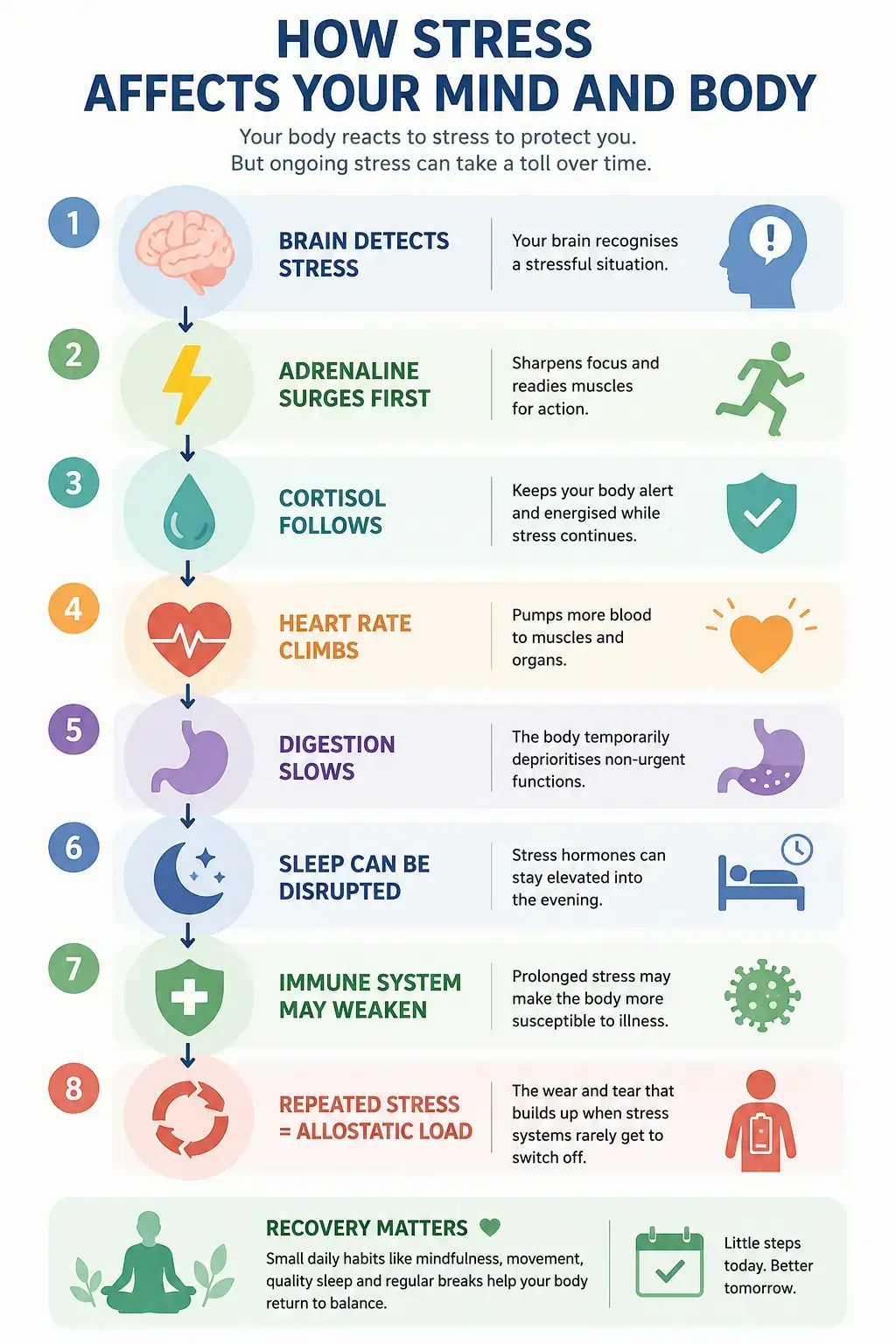
Here’s what tends to happen in that moment:
- Adrenaline surges first, sharpening focus and readying muscles for action
- Cortisol follows shortly after, keeping the body alert and energised for as long as the stress continues
- Heart rate climbs, pumping more blood to muscles and organs
- Digestion slows, since the body temporarily deprioritises non-urgent functions
- The nervous system shifts into a heightened state, staying primed until the perceived threat passes
- Sleep can be disrupted, particularly when stress hormones remain elevated into the evening
- The immune system may weaken with prolonged exposure, making the body more susceptible to illness over time
When this cycle repeats too often without enough recovery in between, the cumulative strain is sometimes referred to as allostatic load, essentially the wear that builds up when the body’s stress systems rarely get to switch off.
Occasional stress isn’t harmful on its own. It’s the body doing exactly what it’s designed to do. The concern only arises when it doesn’t get the chance to reset.
Evidence-Based Techniques That Actually Help
Once the drivers of stress are clearer, the next question is what genuinely helps when it comes to coping with everyday stress. A review of stress management interventions looked specifically at this question and found that mindfulness-based practices, cognitive behavioural approaches, and simple relaxation techniques stood out as the more consistently effective options. Better still, applying them doesn’t call for reinventing your entire routine.
Mindfulness and Breathing Techniques
Take mindfulness, for instance. At its core, it’s just paying attention to the present moment without immediately judging it. Something as simple as breathing in for four counts and out for six can help nudge the body’s parasympathetic nervous system into gear, which is what brings on that sense of calm.
Catching the Thought Before It Catches You
Cognitive behavioural techniques work a bit differently. Instead of focusing on the body, they focus on the mind, specifically on automatic thoughts: those quick, often unhelpful assumptions that surface the moment pressure builds. The point isn’t to force positivity or talk yourself out of a genuine problem. It’s more about creating a small gap between the thought and the reaction that usually follows it, enough space to ask whether the thought actually holds up.
Relaxation, Without the Overthinking
Not every relaxation technique needs to be structured or formal. Progressive muscle relaxation, a slow breathing session, or simply stepping away from a screen for a few minutes have all shown similar benefits when it comes to easing tension. None of these require perfect execution. A few consistent minutes most days tend to do more than one elaborate session every so often.
Taken together, these habits rarely work like a switch. They build gradually, and their value tends to show up over weeks rather than after a single try.
Habits That Hold Up Over Time
Beyond mindfulness and reframing, a few everyday habits play a supporting role in how is stress managed and how the body handles ongoing pressure over time.
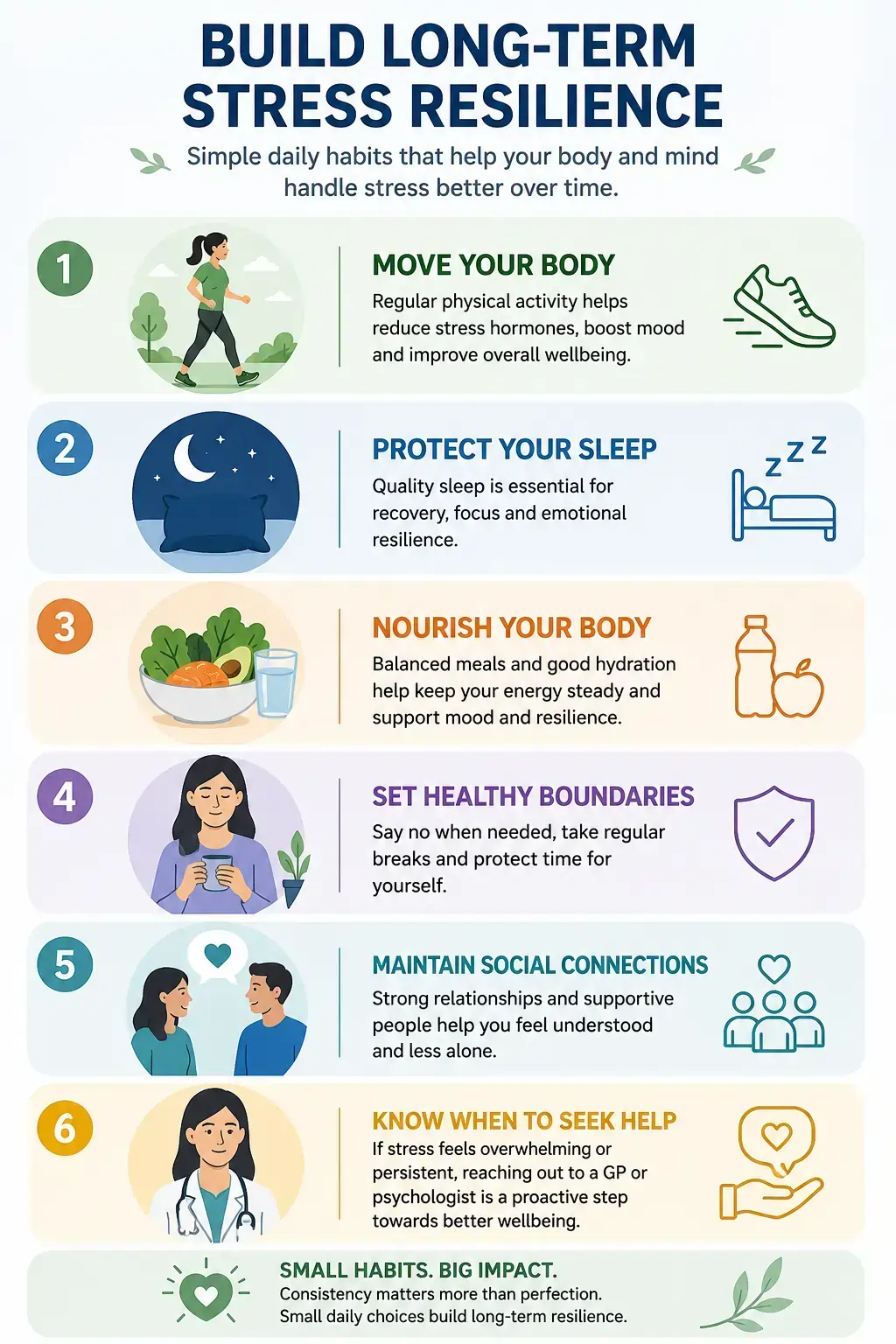
Physical Activity
Movement, whether it’s a brisk walk, resistance training, or a slow yoga flow, is widely considered one of the more reliable ways to support the body’s stress response. It doesn’t need to be intense or lengthy. A short walk during a lunch break can matter just as much as a structured workout, especially when it becomes a habit rather than an occasional effort. These habits double as burnout prevention for Australians balancing work and home demands.
Sleep and Recovery
Poor sleep and ongoing stress tend to feed each other in a loop that’s hard to break from either direction. A consistent bedtime, dimmer lighting in the evening, and less screen time in the hour before bed can all support the body’s ability to properly recover overnight.
Nutrition and Resilience
Food doesn’t get talked about as much in stress conversations, but it matters more than most people assume. Meals that keep blood sugar from swinging too wildly, paired with steady hydration through the day, can be the difference between handling a rough afternoon and feeling like everything’s suddenly too much. There’s also growing interest among researchers in how gut health ties into mood, though this remains a developing area without settled answers yet.
Boundaries and Connection
Resilience isn’t only physical. Setting realistic limits around work and personal time, staying in touch with people who offer genuine support, and allowing proper time to switch off all play a role in how well someone recovers from ongoing pressure. These habits tend to matter just as much as any physical routine, even though they’re less visible.
Seeking Professional Support
Sometimes, even with all of this in place, stress still doesn’t ease up. If stress has dragged on for weeks, started affecting sleep or work, or begun straining relationships, that’s usually a sign worth taking seriously. Talking to a GP or psychologist at that point isn’t an admission that something has gone badly wrong. It’s simply a way of getting ahead of it before it becomes something bigger.
These habits tend to work best together rather than as standalone fixes, and getting them exactly right matters far less than simply showing up for them consistently. Resilience tends to build quietly, through small, repeated choices rather than one dramatic overhaul, and even a couple of these shifts can make everyday stress feel more manageable over time.
Take the Next Step Toward Feeling Steadier
Everyday stress doesn’t always need to be managed alone. If it’s been building for a while, or you’re just looking for a bit of guidance on where to start, Truwell Clinic’s team can help you work through it at your own pace. Whether that’s a conversation about what’s been going on, or simply understanding your options a little better, support is available whenever you’re ready for it.
Disclaimer:
This article is general in nature and does not constitute medical or psychological advice. If you’re experiencing persistent stress or its effects on your wellbeing, please consult a GP or qualified healthcare professional for guidance specific to your circumstances