

Understanding Sleep Cycles and How Your Body Rests
Sleep is not a passive state. It follows a structured pattern that plays a central role in how the body and mind function each day. As explored in our guide on sleep wellness guide, sleep cycles consist of repeating stages that support physical restoration, cognitive processing, and overall well-being. Rather than being random, sleep operates through a predictable rhythm that the body relies on for consistency and balance.
For many Australians, modern lifestyle factors such as irregular schedules, increased screen exposure, and high daily demands can disrupt these natural patterns. This makes it increasingly important to understand how sleep cycles work and why maintaining a consistent sleep structure can influence energy levels, focus, and long-term health.
At its core, sleep is a structured biological process made up of distinct stages that repeat throughout the night. Recognising this structure is the first step toward building more consistent and supportive sleep habits aligned with your body’s natural rhythms.
What Are Sleep Cycles? (Sleep Architecture Explained)
Sleep cycles refer to the structured pattern your body follows throughout the night, moving through different stages in a predictable sequence. This structure is known as Sleep architecture, and it explains how various phases of sleep are organised to support overall well-being. When discussing sleep stages in Australia, this framework helps individuals better understand how their nightly rest is naturally designed to function.
Duration of Sleep Cycles:
Each sleep cycle typically lasts between 90 and 110 minutes and repeats multiple times across the night. As you progress through these cycles, your body transitions between two main types of sleep: REM (rapid eye movement) and NREM (non-rapid eye movement). NREM sleep includes lighter and deeper stages, while REM sleep may be associated with increased brain activity and dreaming.
In simple terms, NREM sleep focuses more on physical restoration, while REM sleep is linked to cognitive and emotional processing. Both are essential, and the balance between them changes as the night progresses.
These cycles are closely connected to your Circadian rhythm, which regulates when you feel awake or sleepy, and sleep pressure, which builds the longer you stay awake. Together, these systems help guide when sleep begins, how it progresses through each stage, and how restorative it ultimately feels.
The 4 Stages of Sleep (Sleep Stages Australia Explained)
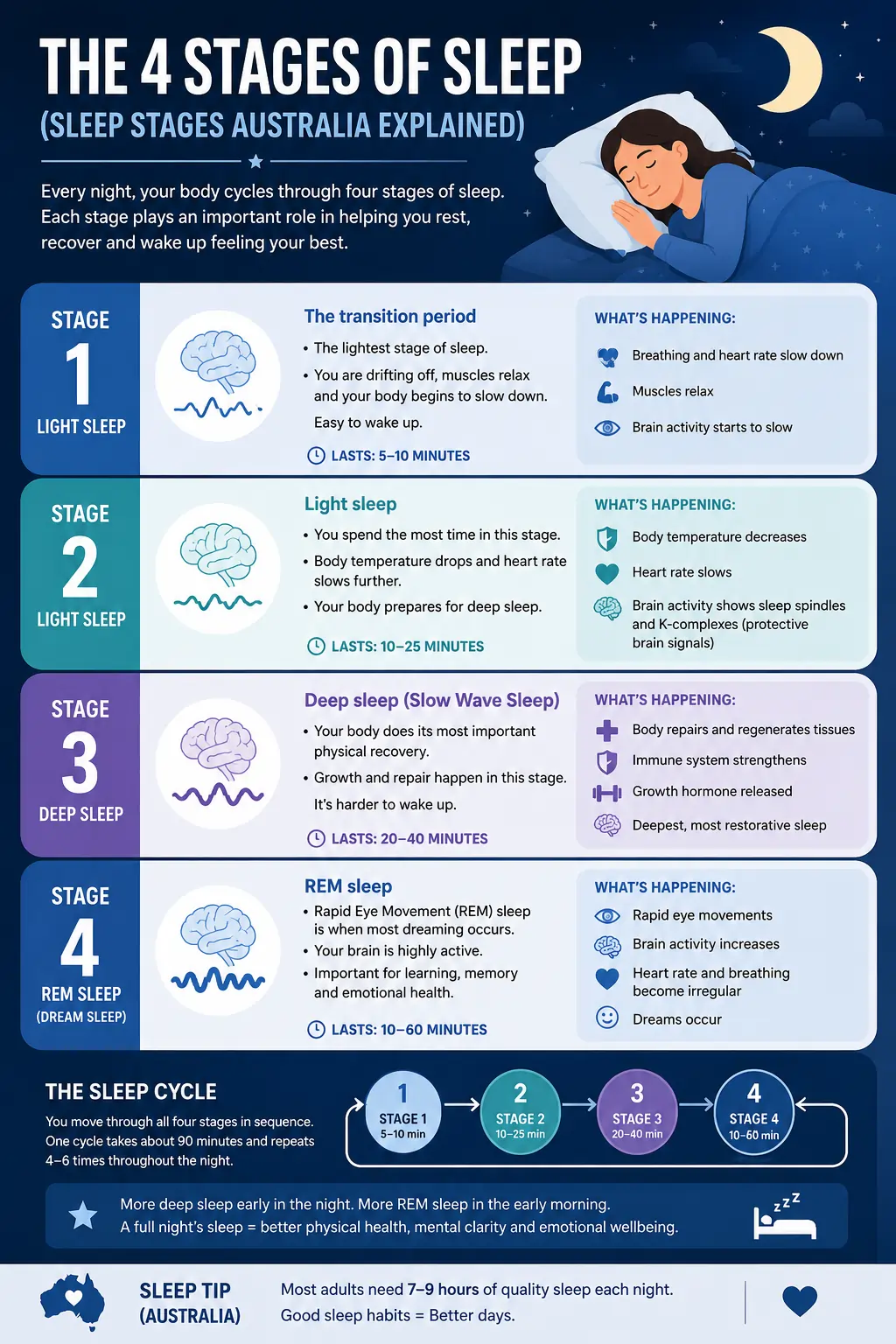
Understanding sleep stages in Australia begins with recognising that sleep is divided into four distinct stages, each contributing to overall rest and recovery. These stages are part of a structured system that works alongside your Circadian rhythm and sleep pressure to regulate how and when your body moves through the night.
Stage 1: Light Sleep (NREM 1)
This is the transition phase between wakefulness and sleep, forming the first part of NREM sleep.
- Brain activity begins to slow
- Muscles relax and awareness decreases
- Easy to wake, often lasting only a few minutes
This stage marks the initial shift as sleep pressure begins to take effect.
Stage 2: Stabilised Sleep (NREM 2)
In this stage of NREM sleep, the body moves into a more stable and sustained sleep state.
- Body temperature gradually drops
- Heart rate slows down
- Brain activity shows more structured patterns
Stage 2 prepares the body for deeper sleep and typically makes up a large portion of the night.
Stage 3: Deep Sleep (Slow-Wave Sleep)
Also known as slow-wave sleep, this is the deepest stage of NREM sleep.
- Physical recovery and restoration processes occur
- Brain waves slow significantly (delta waves)
- Reduced responsiveness to external stimuli
This stage plays a key role in feeling physically refreshed after sleep and is influenced by both sleep pressure and daily activity levels.
Stage 4: REM Sleep Explained
REM sleep refers to the stage where brain activity becomes more active, similar to wakefulness.
- Rapid eye movements occur
- Dreaming is more common
- Brain processes information and experiences
This stage is distinct from NREM sleep and becomes longer in later sleep cycles. It is an essential part of overall sleep architecture and contributes to cognitive and emotional processing.
Together, these stages form a complete sleep cycle that repeats throughout the night. Organisations such as the Sleep Health Foundation and NeuRA highlight the importance of maintaining consistent sleep patterns to support overall well-being and daily functioning.
How Sleep Cycles Work Across the Night
Sleep Architecture Across the Night
Understanding sleep cycles in Australia starts with recognising how sleep architecture changes from evening to morning. Sleep does not remain constant. Instead, it follows a structured progression where different stages dominate at different times of the night.
First Half of the Night: Deep Sleep Dominance
During the early part of the night, the body spends more time in deep sleep, also known as slow-wave sleep, which is a key stage of NREM sleep.
- Physical restoration processes are more active
- Brain activity slows significantly
- The body becomes less responsive to external disturbances
This phase is essential for physical recovery and is one of the most important components of overall sleep quality.
Second Half of the Night: REM Sleep Increases
As the night progresses, the structure of sleep cycles begins to shift. REM sleep becomes more prominent in the later cycles.
- Brain activity increases and becomes more similar to wakefulness
- Dreaming is more common
- Cognitive processing becomes more active
While NREM sleep dominates earlier cycles, REM sleep plays a larger role closer to waking.
Typical Number of Sleep Cycles
Most people experience 4 to 6 sleep cycles per night, with each cycle lasting around 90 to 110 minutes.
- Each cycle includes both NREM and REM stages
- The balance between stages changes across cycles
- This repetition supports both physical and mental recovery
Why Interruptions Affect Sleep Quality
Disruptions during the night can interfere with the body’s natural sleep architecture.
- Interrupted deep sleep may reduce physical recovery
- Disrupted REM sleep can affect mental processing
- Incomplete cycles may lead to feeling unrefreshed
Maintaining consistent and uninterrupted sleep cycles is an important factor in supporting overall well-being and daily functioning.
Why Deep Sleep and REM Sleep Matter
Deep Sleep and Physical Restoration
In the context of sleep stages Australia, deep sleep is a key part of NREM sleep, often referred to as slow-wave sleep.
- This stage is associated with physical restoration processes
- The body experiences reduced responsiveness and deeper relaxation
- It forms an essential part of overall sleep architecture
Deep sleep plays an important role in supporting general physical recovery as part of a healthy sleep cycle.
REM Sleep and Mental Processing
REM sleep is another essential stage within the sleep cycle, characterised by higher brain activity.
- It is commonly associated with dreaming
- The brain processes information and experiences during this stage
- It forms a distinct part of the broader sleep architecture alongside NREM stages
REM sleep contributes to how the brain organizes and processes daily information.
Balance Between Sleep Stages
Healthy sleep is not defined by one stage alone but by the balance between deep sleep, REM sleep, and other NREM stages.
- Each stage contributes differently to overall sleep structure
- A balanced cycle may support more consistent rest quality
- Sleep patterns naturally vary between individuals
Understanding this balance helps explain how sleep functions as a structured biological process.
A Balanced Perspective on Sleep Health
From a general wellbeing perspective, maintaining consistent sleep cycles Australia is more important than focusing on a single stage.
Sleep health is influenced by multiple factors, including sleep architecture, daily routines, and individual variability.
Rather than expecting specific outcomes from individual sleep stages, it is more appropriate to view sleep as a holistic process that supports overall physical and mental restoration over time.
Common Disruptions to Sleep Cycles in Australia
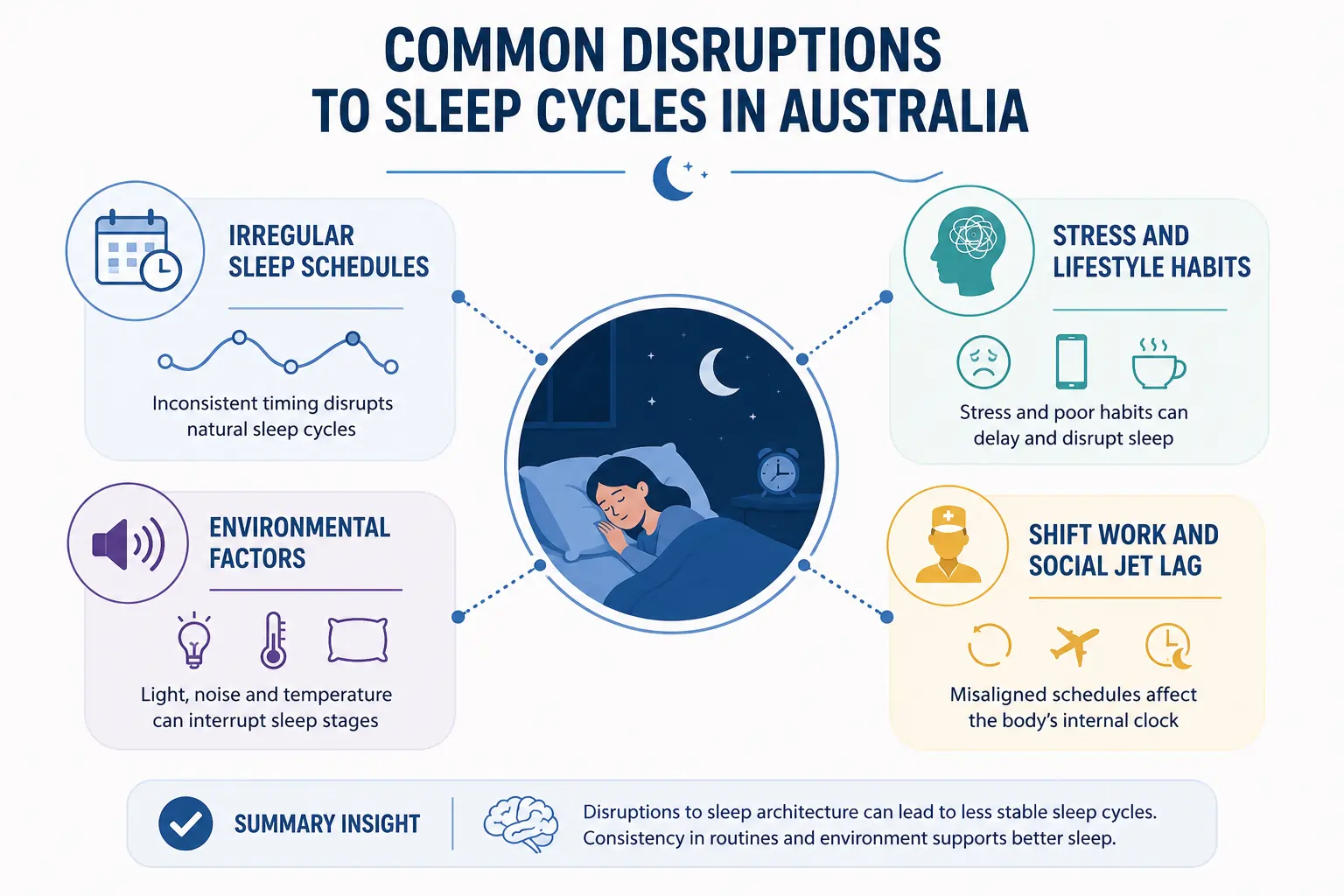
Irregular Sleep Schedules
In the context of sleep cycles Australia, inconsistent sleep and wake times can disrupt normal sleep architecture.
- The body relies on routine to regulate sleep timing
- Irregular schedules can shift the natural progression of sleep stages
- Over time, this may affect how smoothly sleep cycles occur across the night
Maintaining consistency may help support more stable sleep patterns aligned with the body’s internal rhythm.
Stress and Lifestyle Habits
Daily stress and behavioural patterns can also influence sleep quality.
- High stress levels may interfere with the ability to transition into restful sleep
- Lifestyle habits such as late-night screen use or irregular routines can delay sleep onset
- These factors may disrupt the natural flow of sleep stages
According to the Sleep Health Foundation, lifestyle-related factors are among the most common contributors to disturbed sleep patterns in the community.
Environmental Factors (Light, Noise, Temperature)
The sleep environment plays a significant role in maintaining healthy sleep cycles.
- Excessive light exposure can interfere with the body’s natural sleep signals
- Noise disturbances may interrupt deeper stages of sleep
- Uncomfortable temperatures can reduce overall sleep quality
These environmental influences can disrupt sleep architecture, preventing smooth progression through normal sleep stages.
Shift Work and Social Jet Lag
Shift work and irregular social routines can significantly impact sleep cycles Australia.
- Working night or rotating shifts can misalign the body’s internal clock
- “Social jet lag” occurs when weekday and weekend sleep schedules differ significantly
- This misalignment affects how sleep cycles are structured and repeated
Research from organisations such as Sleep Health Foundation highlights that circadian disruption from shift work is a common challenge affecting sleep consistency in Australia.
Summary Insight
Across all these factors, disruptions to sleep architecture can lead to less stable sleep cycles. Understanding these influences helps explain why maintaining consistent routines and environments is important for supporting natural sleep patterns.
When to Seek Professional Guidance
Persistent Difficulty Maintaining Sleep Patterns
When issues with sleep cycles Australia continue over an extended period, it may indicate that normal sleep architecture is being consistently disrupted.
- Difficulty staying asleep or maintaining regular sleep patterns
- Repeated night-time awakenings affecting cycle completion
- Ongoing imbalance in sleep pressure and circadian rhythm regulation
In such cases, it may be appropriate to seek structured support from a qualified health professional.
Daytime Fatigue Affecting Daily Functioning
When disrupted sleep begins to impact daytime performance, it may suggest that key stages such as REM sleep explained processes or deeper NREM phases are not being completed effectively.
- Persistent tiredness despite adequate time in bed
- Reduced focus, alertness, or energy levels
- Difficulty maintaining normal daily functioning
These signs can indicate that sleep cycles are not operating in a stable or restorative pattern.
Importance of Professional Support
If sleep concerns continue, speaking with an AHPRA-registered practitioner can help identify contributing factors and provide personalised guidance.
This may include assessing lifestyle, environment, and broader sleep patterns such as circadian rhythm alignment and sleep pressure regulation.
Credible Organisations and Sleep Health Insights
Several recognised organisations contribute to sleep research and public education in this area, including:
- Sleep Health Foundation
- NeuRA
- American Academy of Sleep Medicine
These organisations provide evidence-based insights into sleep architecture, sleep cycles in Australia, and broader sleep health patterns.
Key Takeaway
Understanding how sleep pressure, circadian rhythm, and sleep architecture interact can help identify when sleep patterns may need further assessment. Professional guidance ensures a structured, individualised approach to improving overall sleep wellbeing.
If you are experiencing ongoing sleep difficulties, it is recommended that you consult with an AHPRA-registered practitioner to discuss your individual sleep patterns and contributing factors.
At True Well Clinic, care is focused on practitioner-guided sleep wellness support, where tailored strategies are developed based on your unique needs and health context. Book a consultation with us; our practitioners will create a tailored sleep plan to help you wind down naturally at night.