

Food and how we feel are more connected than most people realise. Sleep, movement, and stress all play their part in everyday comfort, but what ends up on the plate tends to carry more weight than people expect. The way we eat, meal after meal, week after week, quietly shapes our energy, digestion, and overall sense of ease in the body.
This growing interest has brought attention to an anti-inflammatory diet. It isn’t a list of banned foods or a strict set of rules to follow. Think of it more as a loose template built around whole, nutrient-rich ingredients, one that’s flexible enough, actually, to stick with. Below, we’ll get into what this style of eating looks like in practice, which foods show up in it most often, and how it can realistically work for everyday life in Australia.
What Does an Anti-Inflammatory Eating Pattern Actually Mean?
For a long time, nutrition research focused narrowly on individual nutrients, studying things like vitamin C or omega-3 in isolation from the rest of the diet. But nobody eats a nutrient on its own; meals are messier and more layered than that, which is part of why researchers eventually shifted toward looking at dietary patterns as a whole. A peer-reviewed paper in the American Journal of Clinical Nutrition traces this exact shift, away from isolated nutrients, toward studying how foods interact as part of someone’s broader, day-to-day eating habits.
Why the Bigger Picture Beats Any Single Food
There’s a tendency to hope one trendy ingredient will quietly undo months of poor habits, but it won’t. A turmeric latte doesn’t cancel out a week of takeaway. What actually moves the needle is far less exciting: small, repeated choices, stacked across most days, that eventually add up to something real. Anti-inflammatory eating runs on that same logic. It’s a cumulative dietary pattern, not a magic ingredient.
Putting Inflammation in Context
Inflammation often gets blamed for more than it’s actually responsible for. At its core, it’s just the body doing its job, responding to an injury, fighting off infection, and dealing with irritation. None of that makes it the enemy. When people talk about anti-inflammatory nutrition, they’re usually pointing at something broader than any one food: sleep, stress, movement, and everyday eating habits, all working together. Food isn’t a fix here. It’s one piece of a larger picture, and the goal is steadier, more comfortable everyday living, not a cure.
What an Anti-Inflammatory Eating Style Usually Looks Like
In practice, this style of eating leans on food that hasn’t been pulled apart and reassembled in a factory, vegetables, fruit, whole grains, legumes, decent fats, and protein that hasn’t been overly processed. Variety matters more than any single ‘hero’ ingredient. And the emphasis sits on addition rather than restriction. More colour and fibre on the plate, rather than a growing list of things you’re no longer allowed to eat.
The Foods That Form the Foundation of an Anti-Inflammatory Diet
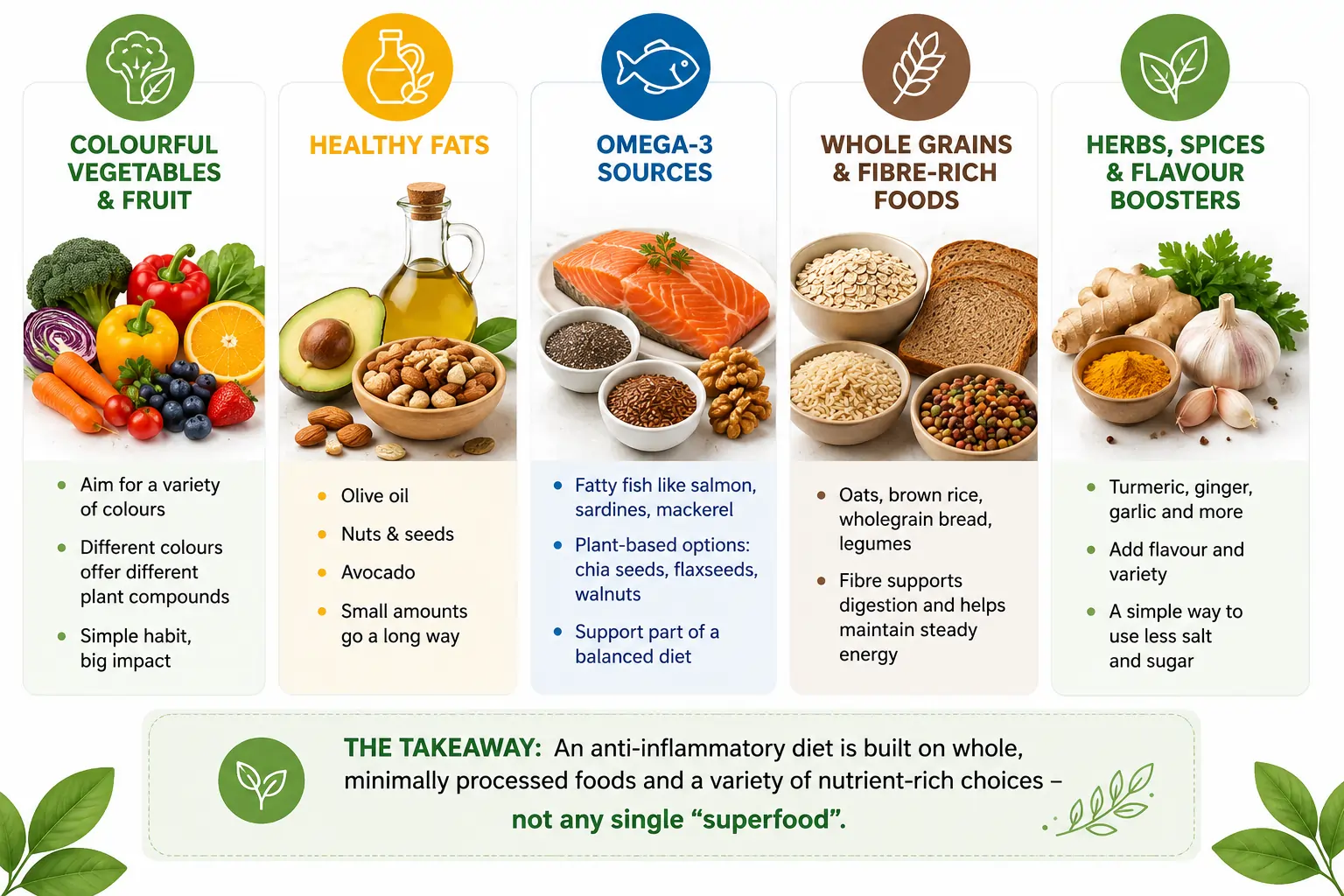
This isn’t just a loosely held idea, as there’s a reasonable body of research behind it. Research on anti-inflammatory nutrients and obesity-associated metabolic inflammation has looked at this closely. Summary evidence from randomized controlled trials shows substantial effects on biomarkers of inflammation following the adoption of plant-based diets. (see ref. 1) Consistent findings have been reported for higher intakes of whole grains, fruits, and vegetables.
None of this means specific foods ‘cure’ or ‘treat’ anything, but it does help explain why the foods below keep showing up in conversations about everyday comfort and wellbeing.
Colourful Vegetables and Fruit
Variety does a lot of the heavy lifting here. Different colours generally reflect different plant compounds, so a plate that mixes leafy greens, orange and red vegetables, and berries offers a broader nutritional spread than relying on the same two or three choices every week. Getting a reliable mix of fruit and vegetables into daily meals most days is one of the simplest habits to build.
Healthy Fats That Deserve a Place in the Daily Diet
Olive oil, nuts, seeds, and avocado are often grouped because they share a fat profile generally considered more favourable than the saturated fats found in heavily processed foods. None need to be eaten in large quantities; a drizzle of olive oil over a salad or a small handful of nuts as a snack is enough to build the habit.
Seafood and Other Omega-3 Sources
Fatty fish such as salmon, mackerel, and sardines are commonly highlighted for their omega-3 fatty acids. For anyone who doesn’t eat seafood, plant-based alternatives like chia seeds, flaxseed, and walnuts offer a comparable nutritional contribution.
Whole Grains and Fibre-Rich Foods
Oats, brown rice, wholegrain bread, and legumes bring fibre into the picture, supporting digestion and helping keep energy levels steadier across the day compared with heavily refined alternatives.
Herbs, Spices, and Everyday Flavour Boosters
Turmeric, ginger, and garlic are kitchen staples in many Australian households already, and they’re frequently mentioned in conversations about anti-inflammatory food. Beyond any specific properties, they’re a simple way to add flavour without reaching for extra salt or sugar.
Eating Habits That May Support Everyday Comfort
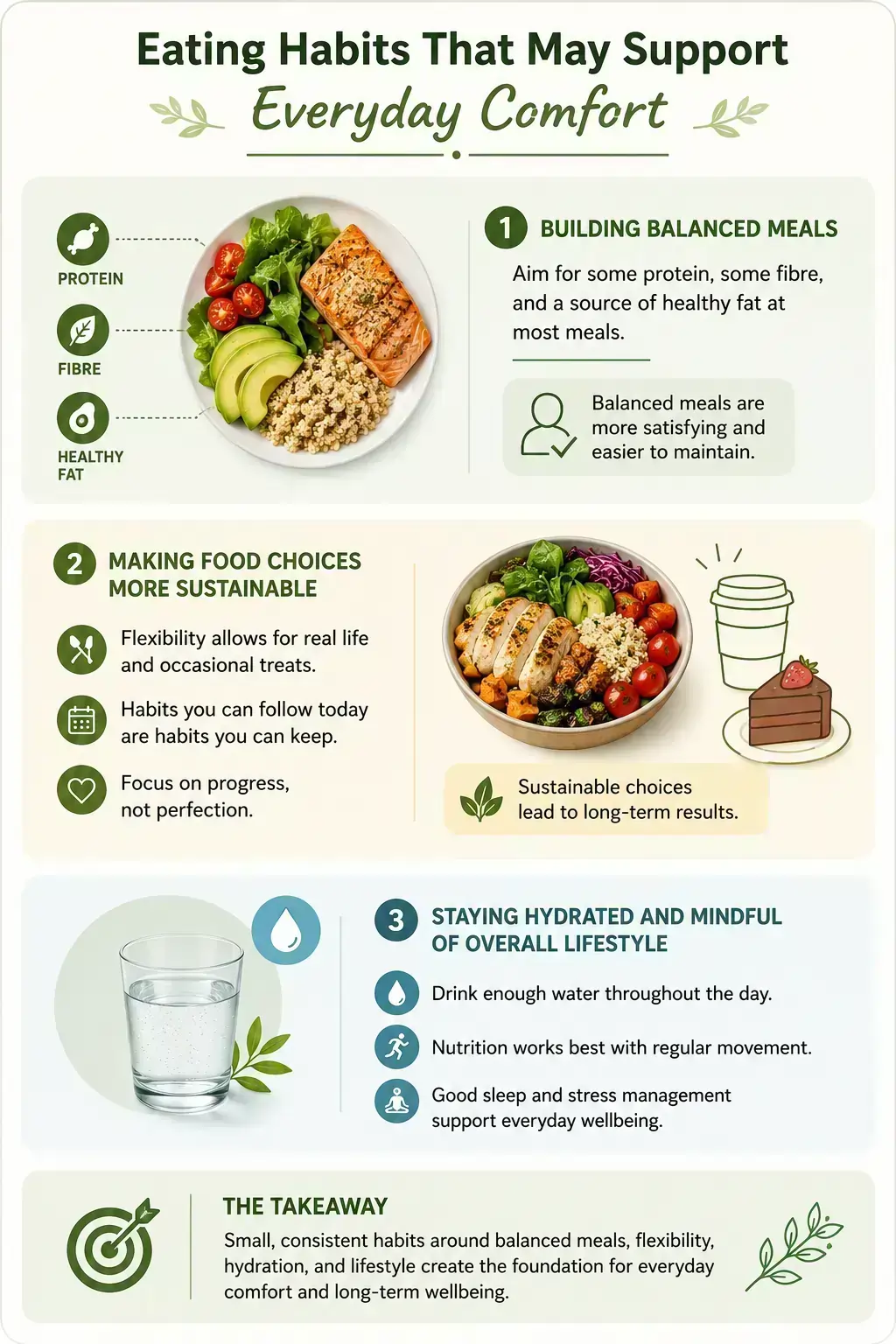
Building genuinely healthy eating habits is less about any single rule and more about a few consistent practices that fit naturally into daily life.
Building Balanced Meals
A useful mental model is to aim for some protein, some fibre, and a source of healthy fat at most meals. This combination tends to be more satisfying than meals built around a single food group, and it sidesteps the all-or-nothing thinking that makes most short-term diets hard to maintain.
Making Food Choices More Sustainable
Realistic habits outperform rigid ones over time. A plan that allows for flexibility, a takeaway dinner here, a less-than-perfect lunch there, is far more likely to last than one with no room to move. The goal isn’t dietary perfection; it’s a pattern you can still be following in twelve months.
Staying Hydrated and Mindful of Overall Lifestyle
Water intake is easy to overlook, but it sits alongside nutrition as part of the bigger picture. Diet doesn’t work in isolation; sleep quality, movement, and stress levels all interact with how the body feels day to day, and a genuinely supportive routine, one that pays attention to sleep wellness alongside diet and movement, tends to address more than one of these at once.
Foods Often Reduced in Anti-Inflammatory Eating Patterns
The flip side of ‘what to add’ is ‘what to wind back.’ There’s reasonable evidence base here too. A scoping review of human studies found that higher intake of ultra-processed foods is consistently linked to elevated CRP, a key marker of inflammation, with signals showing up for other inflammatory markers as well (see ref. 2 ). The mechanisms are fairly intuitive. These foods tend to be low in fibre and high in saturated fat, both of which can shift gut bacteria toward a more inflammatory state. None of this means one packet of chips causes harm. It’s the pattern of frequent intake that the research points to.
Highly Processed Foods and Added Sugars
Packaged snacks, deli meats, sugary drinks, and convenience meals tend to be lower in fibre and higher in additives than whole-food alternatives, which is why processed foods are often mentioned as something to wind back rather than eliminate outright. Cutting back gradually tends to be more sustainable than removing them overnight.
Frequent Deep-Fried Takeaway
Fried takeaway is often grouped alongside processed foods for similar reasons. It’s easy to overconsume and tends to crowd out more nutrient-dense choices when eaten frequently.
Why Moderation Matters More Than Perfection
None of this means these foods are off-limits entirely. What seems to matter more is how often they show up on the plate. A burger once in a while isn’t the same as a burger every other night, and treating every ‘less ideal’ food as forbidden often backfires, pushing people toward restriction one week and overeating the next.
Why Mediterranean-Style Eating Continues to Receive Attention
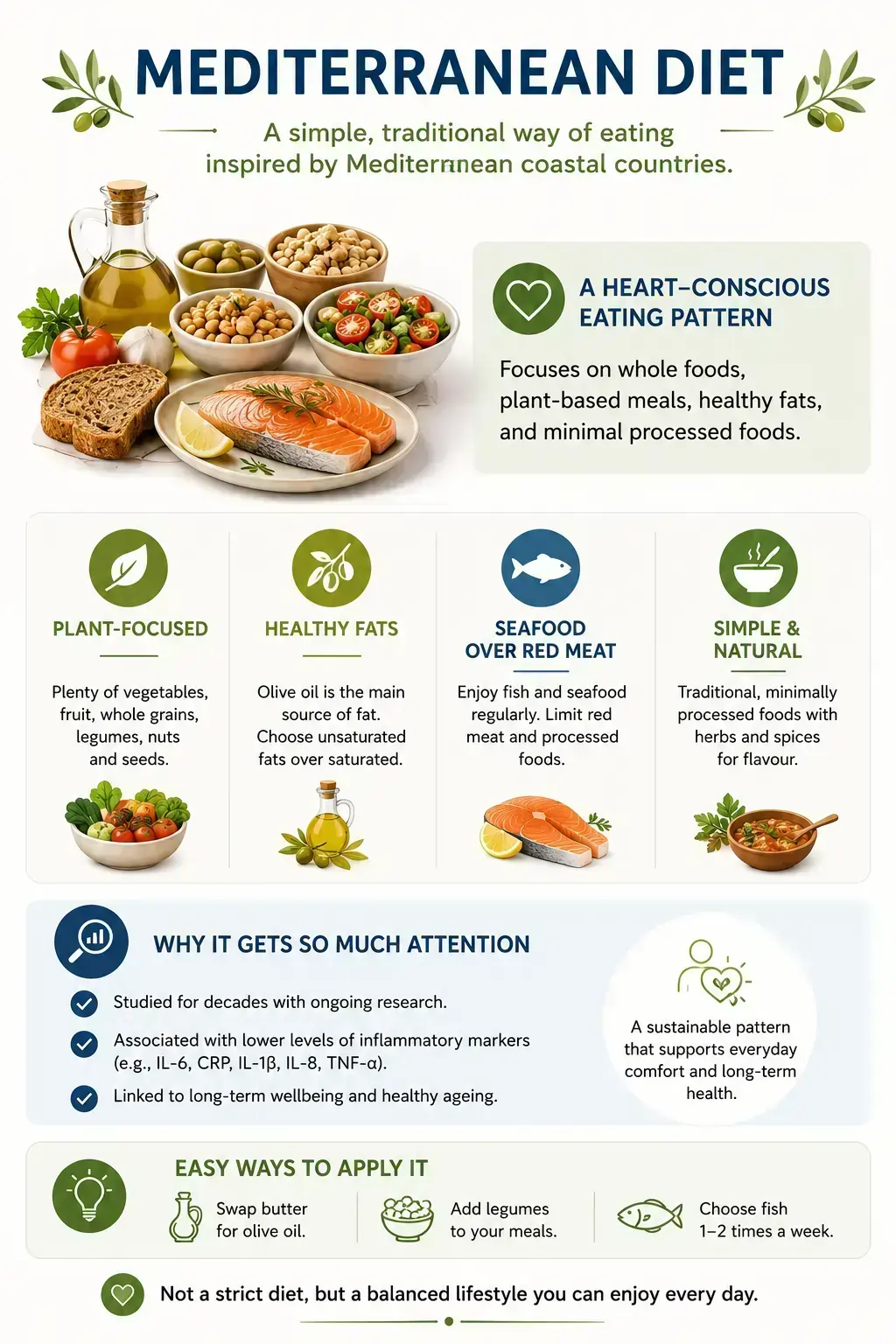
Mediterranean-style eating is exactly what it sounds like. It’s modelled on traditional diets from Mediterranean coastal countries like Greece, Italy, and Spain. The focus lies on vegetables, legumes, olive oil, and seafood. Red meat and processed foods should be minimal.
It keeps coming up for a reason. Researchers have studied it for decades, longer than most other eating patterns. A systematic review and meta-analysis of randomized controlled trials found that following a Mediterranean dietary pattern leads to a pronounced reduction in several inflammatory biomarkers, including IL-6, IL-1β, CRP, IL-8, and TNF-α. The strongest results tend to cluster around regular intake of whole grains, fruit, and vegetables
So it’s not a passing wellness trend. It’s a pattern with decades of data behind it. That’s probably why it keeps surfacing in conversations about ageing and long-term health.
What Research Commonly Explores
This pattern has attracted ongoing research interest, particularly around long-term wellbeing and healthy ageing. The Heart Foundation’s heart-healthy eating pattern mirrors many of the same principles, such as variety, wholegrains, and a preference for unsaturated fats over saturated ones.
Bringing Mediterranean Principles Into Australian Lifestyles
Locally, this can look like swapping butter for olive oil, adding a tin of legumes to a weeknight dinner, or choosing fish once or twice a week instead of red meat. None of which requires a dramatic lifestyle overhaul.
Making Anti-Inflammatory Eating Work in Real Life
Knowing the research is one thing; building it into a normal week is another. The same body of evidence that supports whole-food eating patterns also points to something reassuring. These benefits build gradually, through consistent everyday choices, rather than requiring a complete dietary overhaul. That’s good news for anyone trying to make changes that actually last. A few practical, low-effort swaps tend to go further than an ambitious meal plan that falls apart by week two.
Small Changes That Add Up
Take an extra spoonful of vegetables at dinner. Swap white bread for wholegrain. Reach for fruit instead of a packet of chips after lunch. Nobody needs to clear out their pantry overnight for any of this to matter. Habits like these work because they’re easy to repeat week after week, with little willpower required.
Progress Over Perfection
There’s no need to get every meal ‘right.’ A pattern followed reasonably well across most days will generally outperform a strict regime abandoned after a fortnight. For broader guidance on food groups and recommended serves, the Australian healthy eating guidelines (see ref. 5, 6) offer a useful, evidence-based starting point
Bringing It All Together
Anti-inflammatory eating isn’t really a rulebook. It’s more like a loose direction to lean toward over time. Whole foods, decent fats, habits that don’t fall apart after a tough week, these tend to matter more than any one ingredient could on its own. And food is only one piece of it. Movement, rest, and how stressed someone feels day to day all factor in too; none of it works particularly well in isolation.
If you’d like to explore how nutrition fits alongside other everyday comfort strategies, our Truewell Clinic articles hub covers more practical, lifestyle-based approaches to wellbeing. And if you’d like personalised guidance on building habits that suit your own routine, feel free to get in touch or book a consultation when you’re ready.
Disclaimer: This article is general information only and does not constitute medical advice. Always speak with a qualified, AHPRA-registered health professional about any individual health concerns specific to you.
References
- https://pmc.ncbi.nlm.nih.gov/articles/PMC8954840/
- https://pmc.ncbi.nlm.nih.gov/articles/PMC12472508/
- https://pmc.ncbi.nlm.nih.gov/articles/PMC8803482/
- https://www.heartfoundation.org.au/healthy-living/healthy-eating/heart-healthy-eating-pattern
- https://www.eatforhealth.gov.au/guidelines/australian-guide-healthy-eating
- https://www.eatforhealth.gov.au/guidelines/australian-dietary-guidelines-1-5