
Overview:
Generic advice only gets you so far. Drink more water, move more, sleep better. Most people have heard it all before, and most people are still stuck wondering why it hasn’t changed much. That’s usually because comfort and well-being don’t work the same way for everyone. What settles one person’s stress might do nothing for someone else, simply because their routines, history, and daily pressures look completely different. This is where a personalised comfort wellness consultation Australia-wide comes into play, and it’s worth knowing what that process actually looks like before booking one.
One Size Rarely Fits: Why Comfort Support Needs a Personal Lens
Two people can eat the same diet, work similar hours, and still end up in totally different places physically and mentally. Work demands, sleep quality, stress load, and movement habits rarely line up neatly from person to person, and that’s exactly why a personalised wellness plan comfort approach tends to hold up better than a generic checklist.
An individualised wellness plan starts from a different place. Instead of assuming everyone needs the same five habits, it asks what’s actually going on for this particular person, their history, their goals, what’s realistic given their week. A personalised care plan built this way tends to reflect real life rather than an idealised version of it, which is part of why it sticks.
Inside a Comfort Consultation: The Intake Conversation
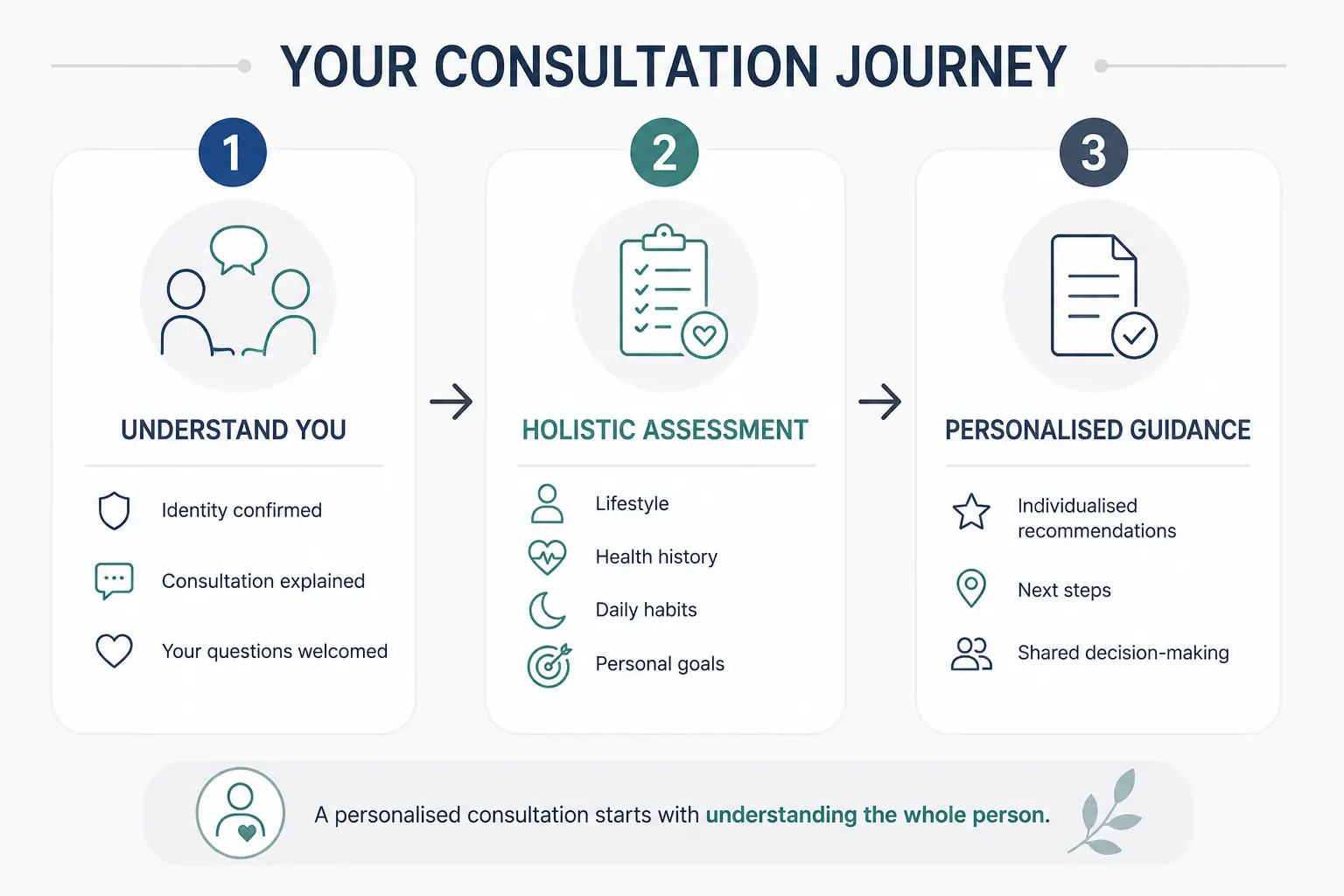
A first consultation is mostly conversation, not a checklist rushed through in five minutes. The Medical Board of Australia’s telehealth guidance actually spells out why that matters: practitioners are expected to confirm who they’re speaking with, explain their role, and make sure the patient understands how the session will run before getting into the substance of it. That groundwork isn’t a formality; it’s what makes everything that follows actually useful.
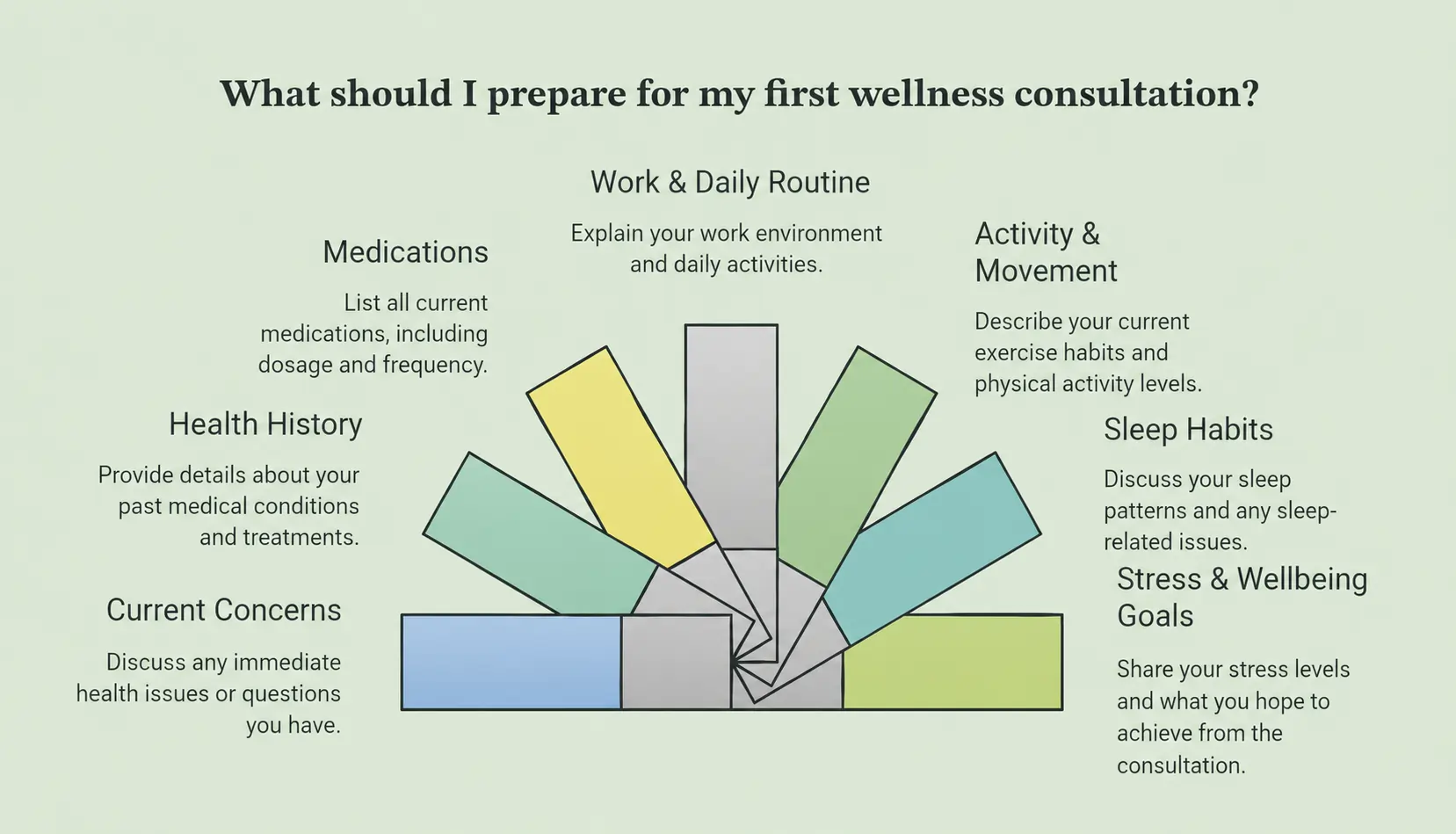
Once that’s established, the conversation typically covers ground like:
- Current concerns and what’s prompting the visit
- Relevant health history and medications
- Work environment and daily routine
- Movement, exercise, and general activity levels
- Sleep patterns and quality
- Stress levels and emotional load
- Personal goals for comfort and wellbeing
This is the intake assessment stage, and a proper holistic health assessment treats all of this as connected rather than separate boxes to tick. Someone’s sleep might be tangled up with their stress, which might be tangled up with how much they’re moving during the day, and none of that becomes obvious without the conversation happening first.
Turning Conversation into a Plan
Once that picture starts forming, the next step is shaping it into something usable. Recommendations are generally built around health history, current circumstances, personal priorities, and how ready someone actually is to make changes, since pushing too much too fast rarely works.
An individualised wellness plan put together this way might touch on daily routines, movement suggestions, sleep habits, ways to manage stress, and general nutrition guidance where relevant, plus some kind of follow-up to see what’s working. None of this comes with guarantees. A personalised care plan is a starting point for practitioner-guided care, not a fixed prescription, and adjustments along the way are normal, not a sign something went wrong.
Meeting Your Practitioner Through a Screen
Telehealth has become a genuinely normal part of how Australians access care, not a workaround. Ahpra has pointed to Australian Bureau of Statistics figures showing that roughly one in four people had a telehealth consultation in 2023-24, so for a lot of people this is already a familiar way to see a practitioner rather than something new or unusual.
That growth has come with closer attention to how it’s done properly. Updated telehealth guidance reinforces that the same standard of care applies whether a consultation happens in person, by phone, or online, and that a practitioner carries that responsibility personally rather than handing it off to a platform.
A comfort consultation telehealth session generally follows the same structure as an in-person one, the same kind of discussion, the same intake questions, just delivered over video or phone instead of across a desk. For many people, it removes the travel and scheduling friction that makes booking an appointment harder than it should be, particularly for those outside major cities. That said, a telehealth consultation isn’t automatically the right fit for every situation, and a practitioner may recommend an in-person assessment if that’s what a particular concern calls for.
Finding a Practitioner Who’s the Right Fit
Choosing the right health practitioner isn’t only about qualifications, though that matters. It’s also about how they communicate, whether they explain things clearly, and whether they treat a consultation as a two-way conversation rather than a one-way instruction session. A practitioner who’s upfront about the limits of what a session can achieve, and clear about when an in-person visit makes more sense, is generally a good sign rather than a red flag.
A few practical things worth checking:
- Registration status, which can be verified through Ahpra’s public Register of Practitioners
- Whether their approach is evidence-informed rather than one-size-fits-all
- How comfortable you feel asking questions during a session
- Whether decisions feel collaborative rather than dictated
Ahpra’s register exists specifically so people can confirm a practitioner is registered and permitted to practise, and it’s a quick, free way to check before committing to ongoing care.
What Comes After the First Session
A consultation doesn’t end the moment the plan is written down. Most personalised approaches build in some kind of check-in, whether that’s a follow-up session, a quick review, or just an open door to come back if something isn’t working the way it was expected to. This matters because an individualised wellness plan is rarely right on the first attempt. Circumstances shift, a suggestion that made sense on paper doesn’t fit real life, or priorities change after a few weeks of actually trying something out.
That’s not a sign the process failed; it’s part of how practitioner-guided care is meant to work. Adjustments along the way tend to produce a better fit than getting everything perfect in one sitting, and a good practitioner will treat those check-ins as routine rather than something to avoid raising.
Ready to Feel the Difference of a Tailored Approach?
Most people already know generic advice hasn’t worked as well as they’d hoped; that’s usually what brings someone to look into a personalised consultation in the first place. Comfort and wellbeing rarely respond to instructions built for everyone at once, mostly because no two people are starting from the same place. A structured conversation, whether in person or via telehealth, gives space to actually look at the full picture before deciding what might help.
If that sounds like the kind of support you’ve been looking for, TrueWell Clinic’s practitioner-guided consultations are built around exactly that idea, starting with your own circumstances rather than a generic template. Get in touch today to book a consultation and see what a personalised approach could look like for you.
Disclaimer:
This article is general in nature and does not constitute personalised medical or health advice. Wellness consultations vary depending on individual health status, circumstances, and practitioner scope of practice. Telehealth may not be suitable for all conditions, and a practitioner may recommend an in-person assessment where clinically appropriate. All practitioners referenced operate in accordance with Australian Health Practitioner Regulation Agency (AHPRA) guidelines.