

Overview
Cortisol is a hormone produced by the adrenal glands – two small glands that sit on top of each kidney. It is often referred to as the body’s stress hormone because of the central role it plays in how the body responds to physical and emotional pressure. Cortisol is not only released during stress, however. The body produces it continuously throughout the day, and it supports a wide range of essential functions including blood sugar regulation, immune response, and the sleep-wake cycle.
The relationship between cortisol and stress is complex. A short-term rise in cortisol – the kind that occurs during a difficult conversation, a driving test, or a physical challenge – is a normal and protective response. Problems develop when cortisol levels remain elevated over a prolonged period, which is commonly associated with chronic stress. This sustained imbalance can affect sleep, weight, mood, blood pressure, and immune function.
Cortisol imbalance can occur in two directions: levels may become too high, or in some cases too low. Both states carry health implications. Understanding the causes, recognising the symptoms, and knowing when to seek professional support are important steps in managing the relationship between cortisol and mental health and overall wellbeing.
Key Terms
- Cortisol: A steroid hormone produced by the adrenal glands. It regulates stress response, metabolism, blood pressure, and immune function.
- Adrenal glands: Two small glands located on top of the kidneys. They produce cortisol and other important hormones including adrenaline.
- Chronic stress: Persistent, ongoing stress lasting weeks or months. A primary driver of prolonged cortisol elevation and its associated health effects.
- Cortisol imbalance: A state in which cortisol levels are consistently too high or too low, disrupting normal body function.
- HPA axis: The hypothalamic-pituitary-adrenal axis – the hormonal communication pathway between the brain and the adrenal glands that controls cortisol release.
How Cortisol Responds to Stress
When the brain perceives a threat or stressor, it signals the hypothalamus – a small region at the base of the brain – to activate the body’s stress response. The hypothalamus communicates with the pituitary gland, which in turn signals the adrenal glands to release cortisol into the bloodstream. This pathway is called the HPA (hypothalamic-pituitary-adrenal) axis.
The resulting cortisol release prepares the body to respond. Heart rate increases, blood sugar rises to provide quick energy, and non-essential functions such as digestion are temporarily reduced. This is commonly referred to as the fight-or-flight response. Under normal circumstances, once the stressor passes, cortisol levels return to their baseline within 30 to 90 minutes.
Cortisol levels naturally fluctuate throughout the day. Levels are typically highest in the morning – peaking around 30 minutes after waking – and lowest in the late evening. This daily pattern, known as the cortisol awakening response, helps regulate energy, alertness, and sleep. Disruptions to this rhythm are associated with fatigue, mood changes, and difficulty sleeping.
Symptoms:
Symptoms of cortisol imbalance vary depending on whether levels are too high or too low, and how long the imbalance has been present. Not everyone will experience all symptoms, and presentation differs between individuals.
Symptoms of High Cortisol Levels
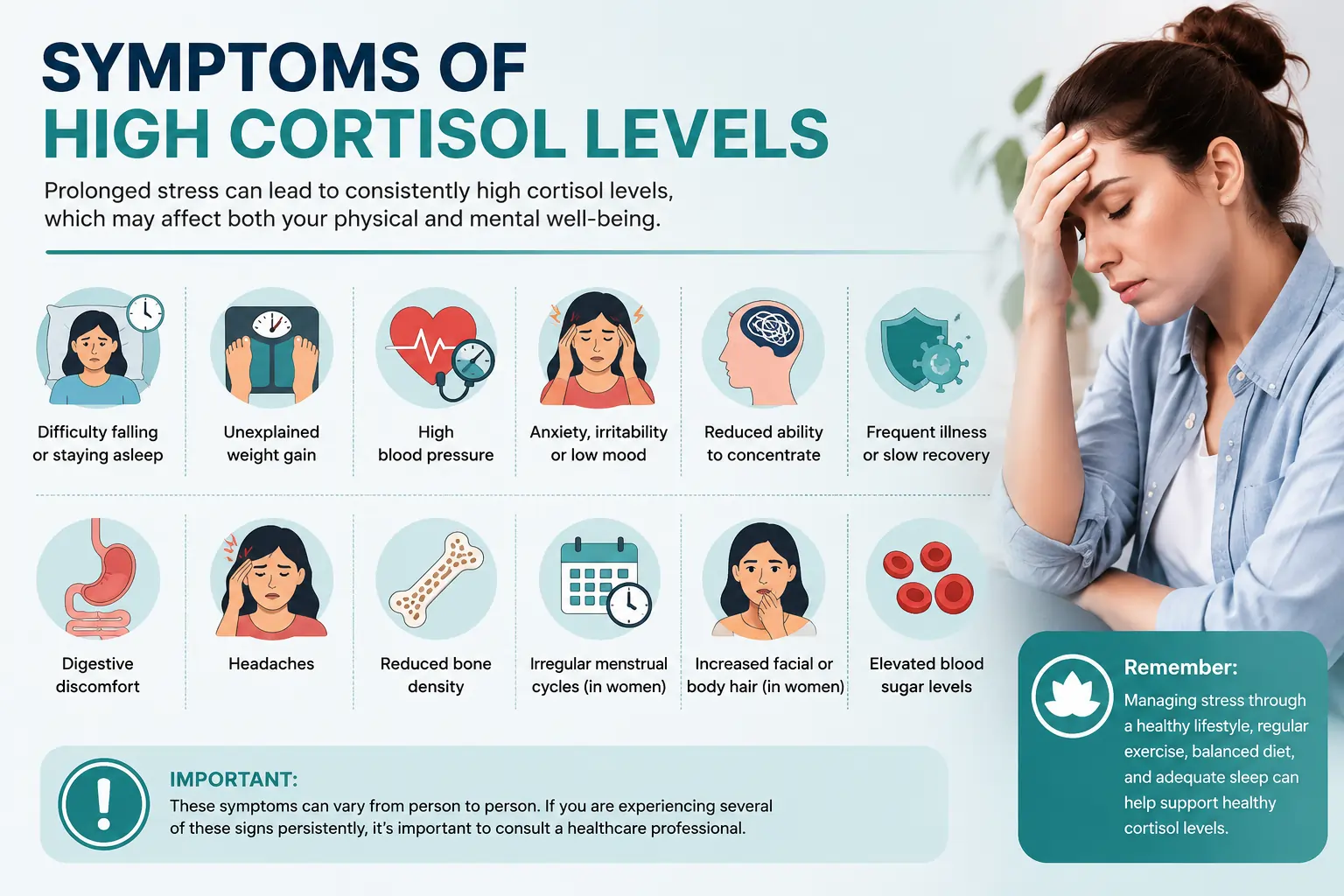
Prolonged elevation of cortisol – most commonly associated with chronic stress – may produce a range of physical and psychological symptoms. These may include:
- Difficulty falling or staying asleep.
- Unexplained weight gain, particularly around the abdomen and face.
- High blood pressure.
- Anxiety, irritability or low mood.
- Reduced ability to concentrate.
- Frequent illness or slow recovery – reflecting a weakened immune system.
- Digestive discomfort, including bloating or changes in bowel habits.
- Headaches.
- Reduced bone density over time.
- Irregular menstrual cycles in women.
- Increased facial or body hair growth in women.
In more severe cases, persistently high cortisol may be associated with Cushing’s syndrome – a medical condition caused by prolonged exposure to very high cortisol levels, often due to a tumour on the adrenal or pituitary gland rather than stress alone.
Symptoms of Low Cortisol Levels
Low cortisol – known medically as adrenal insufficiency – is less common than high cortisol but equally important to recognise. It may produce:
- Persistent fatigue and low energy.
- Low blood pressure, sometimes causing dizziness on standing.
- Unintentional weight loss.
- Reduced appetite.
- Nausea, vomiting or diarrhoea.
- Muscle weakness.
- Strong cravings for salty foods.
- Difficulty coping with even minor stressors.
When to See a Doctor
See your doctor if you experience persistent symptoms that may indicate a cortisol imbalance – particularly unexplained weight changes, ongoing fatigue, high blood pressure, significant mood disturbance, or frequent illness that does not resolve.
Seek urgent medical attention if symptoms include severe dizziness, extreme weakness, or sudden abdominal pain combined with low blood pressure. These may indicate an adrenal crisis – a rare but serious condition requiring immediate treatment.
In Australia, a GP can order a cortisol blood test, a 24-hour urine cortisol test, or a late-night salivary cortisol test to assess your cortisol levels. If an underlying medical condition is suspected, your GP may refer you to an endocrinologist – a specialist in hormone-related conditions.
Causes
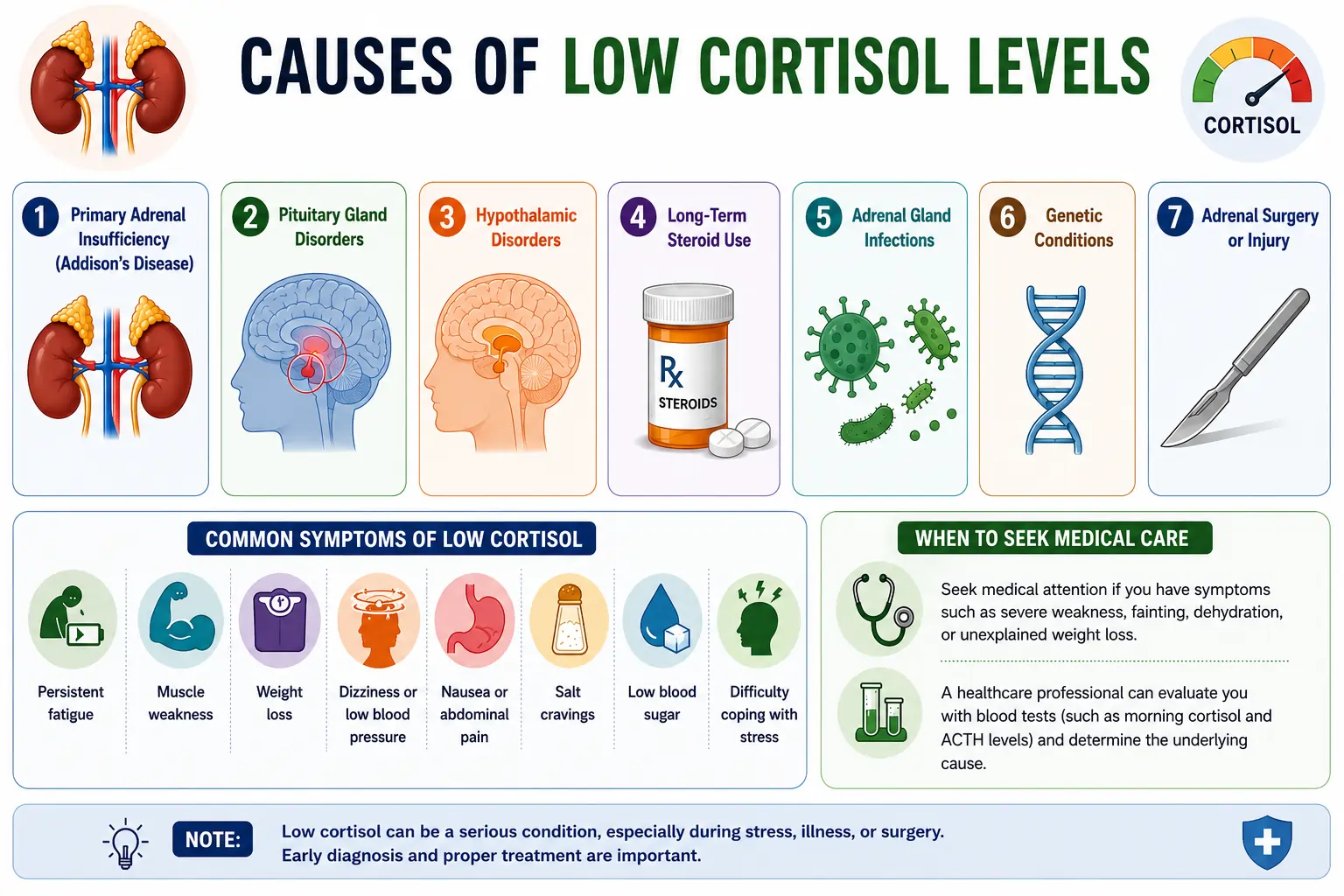
Multiple factors can contribute to an imbalance in cortisol levels. Not all causes are within a person’s control, and in some cases a medical condition – rather than lifestyle factors – is responsible.
- Chronic stress. Ongoing psychological or physical stress is among the most common drivers of persistently elevated cortisol in Australian adults. Work pressure, relationship difficulties, financial strain, and caregiving responsibilities are frequently reported stressors.
- Poor sleep. Sleep and cortisol are closely linked. Insufficient sleep – fewer than seven to nine hours per night for most adults – can raise cortisol levels and disrupt the body’s natural daily cortisol rhythm.
- Dietary factors. A diet high in added sugar and ultra-processed foods may contribute to cortisol elevation. Research from the University of Wollongong notes that high sugar and salt intake are associated with raised cortisol levels.
- Intense or excessive exercise. Prolonged high-intensity exercise without adequate recovery can temporarily raise cortisol. Moderate regular exercise, by contrast, supports healthy cortisol regulation over time.
- Medical conditions. Cushing’s syndrome, adrenal tumours (including adrenal incidentalomas – tumours discovered incidentally during imaging for another reason), and certain pituitary conditions can cause cortisol overproduction independent of stress.
- Some medications. Long-term use of corticosteroid medicines – commonly prescribed in Australia for asthma, inflammatory conditions, and autoimmune diseases – can raise cortisol levels.
Causes of Low Cortisol Levels
- Primary adrenal insufficiency (Addison’s disease). A condition in which the adrenal glands are damaged and cannot produce sufficient cortisol. This is an autoimmune condition in most cases.
- Secondary adrenal insufficiency. Occurs when the pituitary gland fails to produce enough ACTH – the hormone that signals the adrenal glands to make cortisol. This may follow pituitary tumours, head injury, or surgery.
- Abrupt discontinuation of steroid medicines. Stopping corticosteroid medication suddenly after long-term use can cause low cortisol levels, as the adrenal glands may take time to resume normal production. Steroid medicines should only be tapered under medical guidance.
Risk Factors
Certain factors may increase a person’s likelihood of developing a cortisol imbalance. These include:
- High-demand occupation. Australians working in healthcare, emergency services, education, and management roles report elevated occupational stress, which is a risk factor for prolonged cortisol elevation.
- History of trauma. Adverse childhood experiences and adult trauma – including accidents, assault, or significant loss – are associated with long-term dysregulation of the cortisol stress response.
- Female sex. Research suggests that people assigned female at birth may experience more pronounced cortisol responses to certain psychological stressors, and are at higher risk of some adrenal conditions.
- Age. Cortisol regulation may become less efficient with age. Older adults may be more susceptible to the health effects of chronic stress and cortisol imbalance.
- Existing mental health conditions. Anxiety disorders and depression are associated with altered cortisol patterns. The relationship is bidirectional – cortisol and mental health influence each other.
- Use of corticosteroid medicines. Long-term use of prescribed corticosteroids significantly affects the body’s own cortisol production and regulation.
Complications
When cortisol levels remain outside the normal range for a prolonged period without treatment, complications may develop. These are more commonly associated with chronically high cortisol than low cortisol, though both carry risks.
Potential complications of prolonged high cortisol include:
- Type 2 diabetes – cortisol raises blood glucose levels, which over time can impair insulin sensitivity.
- Cardiovascular disease – including high blood pressure and increased risk of heart attack and stroke.
- Osteoporosis – reduced bone density increasing the risk of fractures.
- Impaired immune function – increasing susceptibility to infections.
- Mental health conditions – including anxiety, depression, and cognitive difficulties.
- Obesity – particularly central weight gain around the abdomen.
- Cushing’s syndrome – in cases of severe, prolonged hypercortisolism.
Untreated adrenal insufficiency (low cortisol) carries the risk of adrenal crisis – a life-threatening condition triggered by illness, surgery, or physical stress, which requires emergency medical treatment.
Diagnosis
A GP is the appropriate first point of contact for anyone concerned about their cortisol levels in Australia. Diagnosis typically involves a combination of physical examination, symptom review, and one or more of the following tests:
- Blood cortisol test: Measures cortisol in the bloodstream. Most reliable when taken in the morning when cortisol is at its natural daily peak.
- 24-hour urine test: Measures the total amount of cortisol excreted in urine over 24 hours. Useful for detecting consistently elevated levels.
- Late-night salivary cortisol: Cortisol should be at its lowest point late at night. An elevated reading at this time suggests dysregulation.
- Low-dose dexamethasone test: A suppression test used to confirm or rule out Cushing’s syndrome. Requires a referral to an endocrinologist in most cases.
Australian Healthcare Note
In Australia, a GP can order cortisol blood tests under Medicare. If results suggest an adrenal or pituitary condition, referral to an endocrinologist is the standard next step.
The Endocrine Society of Australia and Hormones Australia (hormones-australia.org.au) provide publicly accessible resources for patients and clinicians on cortisol-related conditions.
Management
Management of cortisol imbalance depends on its underlying cause. Where a medical condition – such as Cushing’s syndrome or Addison’s disease – is responsible, treatment is directed by a specialist and may include medication, surgery, or hormone replacement therapy. For cortisol elevation driven primarily by chronic stress, lifestyle-based approaches are well supported by evidence.
Medical Treatment
- Cushing’s syndrome. Treatment depends on the cause and may include surgical removal of a tumour, radiotherapy, or medicines that reduce cortisol production such as metyrapone or ketoconazole. Treatment is managed by an endocrinologist.
- Adrenal insufficiency (low cortisol). Treated with cortisol replacement – typically hydrocortisone taken orally, dosed to mimic the body’s natural daily cortisol pattern. Fludrocortisone may also be prescribed. People with adrenal insufficiency require sick day management plans to prevent adrenal crisis.
- Steroid-induced adrenal suppression. Managed through a carefully supervised tapering of the corticosteroid dose under medical guidance. Abrupt cessation is not safe.
Lifestyle and Self-Management
For stress-related cortisol elevation, the following lifestyle strategies are consistently supported by evidence. They are not a substitute for medical treatment when a medical condition is present, but can meaningfully support cortisol regulation in the context of everyday stress:
- Prioritise sleep – Aim for seven to nine hours per night. Going to bed and waking at consistent times supports the body’s natural cortisol rhythm. The cortisol awakening response is closely tied to sleep regularity.
- Engage in moderate exercise – Walking, swimming, cycling, or yoga for 30 minutes on most days reduces stress hormones and improves mood. Avoid consistently intense training without adequate rest, as this can raise rather than lower cortisol.
- Follow a balanced diet – A diet rich in whole foods, vegetables, lean protein, healthy fats, and whole grains supports hormonal balance. Limiting added sugar, caffeine, and ultra-processed foods helps prevent cortisol spikes. One-third of Australians do not consume enough magnesium – important for energy production during stress – found in leafy greens, nuts, seeds, and legumes.
- Practise mindfulness or relaxation techniques – Evidence supports mindfulness-based stress reduction (MBSR), progressive muscle relaxation, and deep breathing in reducing cortisol levels in adults experiencing chronic stress.
- Spend time in nature – Exposure to green spaces and natural environments has been shown to reduce cortisol and lower markers of psychological stress. Australia’s access to national parks, beaches, and outdoor spaces is a genuine health resource.
- Maintain social connections – Talking with trusted friends, family, or a counsellor provides emotional regulation support and reduces the physiological stress response.
- Limit alcohol and caffeine – Both substances can interfere with sleep quality and cortisol regulation, particularly when consumed in excess or late in the day.
Psychological and Professional Support
When stress becomes persistent or overwhelming, psychological support can be highly effective in reducing the chronic activation of the cortisol stress response. Cognitive behavioural therapy (CBT) has strong evidence for reducing both perceived stress and cortisol levels in clinical populations.
If you are experiencing severe and persistent stress that leads to high cortisol levels, please visit Truewellclinic.com.au . We can offer a variety of services and resources. Contact us at truewell clinic and get professional help.
References
- Healthdirect Australia. The role of cortisol in the body. Australian Government Department of Health. healthdirect.gov.au/the-role-of-cortisol-in-the-body. Accessed June 2026.
- Hormones Australia. Cortisol, stress and chronic disease: what’s the connection? Endocrine Society of Australia. hormones-australia.org.au. Published January 2025. Accessed June 2026.
- Hormones Australia. Adrenal Insufficiency. Endocrine Society of Australia. hormones-australia.org.au/endocrine-diseases/adrenal-insufficiency. Accessed June 2026.
- Stanhope KL, et al. Dietary sugar and cortisol: evidence review. University of Wollongong, Faculty of Science, Medicine and Health. 2025.
- Thau L, Gandhi J, Sharma S. Physiology, Cortisol. In: StatPearls [Internet]. Treasure Island (FL): StatPearls Publishing. 2024.
- Better Health Channel, Victoria. Stress. betterhealth.vic.gov.au. Victorian Government Department of Health. Accessed June 2026.
- Australian Bureau of Statistics. National Health Survey 2022–23. ABS. abs.gov.au. Published 2023.
Last reviewed: June 2026
Disclaimer:
This article is intended for general informational purposes and does not constitute medical advice. Content has been prepared in accordance with Australian health information standards and the EEAT (Experience, Expertise, Authoritativeness, Trustworthiness) framework. Always consult a registered healthcare practitioner before making changes to your health management. In Australia, call Healthdirect on 1800 022 222 for free health advice 24 hours a day, 7 days a week.