
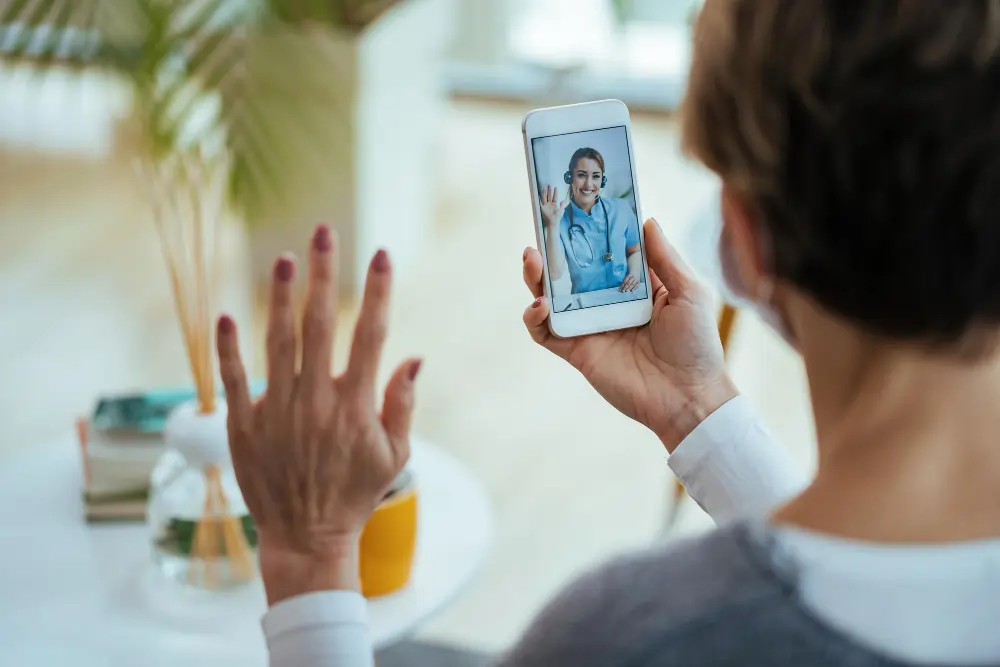
Most Australians have used telehealth at least once. Many have written it off as a quick fix for colds and flu. A surprising number still believe it’s not “proper” medicine – that a real GP would never actually manage a serious health concern over a phone call.
Almost all of those beliefs are wrong. And because of those misconceptions, a lot of people are still sitting in waiting rooms for an hour, or worse, not seeing a doctor at all, when a telehealth doctors appointment could have solved the problem that morning. Here are the seven things Australians most commonly get wrong – and what’s actually true in 2026.
Myth 1: Telehealth Is Only for Minor, Trivial Complaints
The idea that telehealth is a consolation prize for people who can’t get a “real” appointment is outdated. An AHPRA-registered GP conducting a telehealth appointment is the same doctor, using the same clinical reasoning, operating under the same Medicare item numbers, and held to the same professional standards as they would be in a consulting room.
Your telehealth GP can initiate Mental Health Care Plans, manage stable chronic conditions like type 2 diabetes or hypertension, prescribe most medications available in general practice, interpret blood test results and arrange follow-up pathology, and refer you to specialists. The limitation is physical examination – not clinical thinking or clinical authority.
A 2022 study published in BMJ Open that examined GP telehealth practices across Victoria found that telehealth successfully maintained continuity of care across a broad spectrum of presentations, including complex and chronic disease management. The limitation was not the doctor’s capability – it was the absence of hands.
Hands matter for some things. For a significant majority of everyday GP encounters, they are not the deciding factor.
Myth 2: Bulk Billing Still Means Free for Everyone
This one was true during the COVID era. It’s no longer accurate in 2026, and the confusion is causing real frustration for patients who arrive expecting a free appointment and face an unexpected fee.
Here’s what actually changed: from November 2025, Medicare tightened the “eligible telehealth practitioner” rules. For most new patients – people without an established 12-month clinical relationship or MyMedicare registration with their provider – a standard telehealth GP consultation is now a privately billed service. A Medicare rebate may apply in some cases, but it won’t cover the full fee for everyone.
Bulk billing in 2026 applies broadly for:
- Children under 12 months
- People experiencing homelessness
- Mental Health Care Plan consultations
- Certain sexual health consultations (particularly where privacy or local access is limited)
- Pregnancy-related consultations for concession cardholders
- Patients with an established ongoing relationship with the telehealth provider
For most other patients, the fee at a reputable telehealth service runs between $49 and $70 for a standard 10-minute consultation. That is still often less than a gap fee at a private GP clinic – but it is not free, and assuming otherwise leads to poor decisions about where and when to seek care.
The practical move: check eligibility before you book. Every reputable platform will tell you upfront.
Myth 3: You Can’t Get a Proper Doctors Certificate via Telehealth
You can. A medical certificate issued by an AHPRA-registered GP through a telehealth doctors appointment is legally and professionally equivalent to one issued across a consulting room desk. The doctor’s registration is what gives the certificate its validity – not whether they were physically present with you.
Most Australian employers accept telehealth certificates. Most educational institutions do too. The Australian Medical Association has confirmed there is no legal or regulatory barrier to telehealth-issued medical certificates, provided the issuing doctor is registered and the clinical assessment supports the certificate.
What the GP cannot do is issue a certificate on request without clinical justification. They will ask about your symptoms, when they started, and how they’re affecting your capacity to work or study. A certificate follows a clinical assessment — it is not an automatic outcome of booking an appointment. That is true whether the consultation is in person or remote.
For mental health absences specifically, a telehealth GP can assess your condition and issue a certificate for work or study leave if clinically warranted – without you having to explain yourself in a waiting room full of people.
Myth 4: Telehealth Is Only Available on Weekdays During Business Hours
One of the most useful things about dedicated telehealth services is precisely when they operate. Many platforms offering telehealth doctors appointments in Australia run seven days a week, including evenings and public holidays. Some offer 24-hour access.
This matters because health problems do not follow business hours. A UTI that develops on a Saturday afternoon does not need to wait until Monday morning. A skin rash that’s been getting worse over the weekend should not require an emergency department visit when a telehealth GP can assess it via video within the hour.
Example: Jae-won is a 27-year-old in Melbourne who woke up on a Sunday with a fever, sore throat, and ear pain. His regular GP clinic was closed. Rather than sitting in an urgent care centre for three hours, he booked a telehealth appointment at 8am. By 9am, he had spoken with a GP, received an e-script sent directly to his phone, and had the prescription filled at a nearby pharmacy that opened at 9:30am. He was back in bed with medication by 10am.
Same-day telehealth appointments are widely available across Australia, with many services reporting average wait times of under 30 minutes for standard presentations.
Myth 5: The Doctor Can’t Actually Help Without Seeing You in Person
This myth often comes from a single bad experience – perhaps an occasion where a telehealth appointment did not resolve something that genuinely required physical examination. That experience, while valid, does not describe the full picture.
The reality is that a large proportion of GP consultations do not require physical examination at all. A repeat prescription for a stable chronic condition does not require an examination. A mental health check-in does not require one. A medical certificate for flu symptoms does not require one. A referral to a cardiologist for known heart symptoms does not require one.
Research published in BMJ Open (2022) found that GPs themselves identified a clear subset of presentations that were consistently well-managed via telehealth – and that the quality-of-care concern was specifically about presentations where physical examination findings would change clinical management. For everything else, the consultation quality was considered equivalent.
A good telehealth GP will tell you clearly when your concern is in that “needs to be seen” category. That honest conversation is a feature of quality care – not a failure of telehealth.
Myth 6: You Need Special Equipment or a Fast Internet Connection
You need a phone. That’s it for a phone-based consultation.
For video – which gives the GP more to work with, particularly for skin conditions or presentations where a visual assessment adds clinical value – you need a smartphone, tablet, or computer with a camera. A standard home internet or 4G connection is sufficient. You do not need a headset, a specific platform pre-downloaded, or any medical equipment.
Most telehealth platforms send you a video link by SMS or email at the time of your appointment. You tap the link, the call begins. There is no app download required in most cases.
The one practical recommendation that consistently appears in clinical guidance: find a quiet, well-lit, private space before your appointment starts. A parked car works. A bedroom works. A noisy open-plan office does not – not because the technology fails, but because you need to be able to speak freely about your symptoms, and your GP needs to hear you clearly.
Myth 7: Telehealth Is Impersonal and Rushed
The concern about impersonal care is understandable. But it reflects the reality of some telehealth services – not telehealth itself.
A 10-minute telehealth consultation with a GP who has your medical history, asks the right questions, explains their clinical reasoning, and follows up appropriately is not impersonal. It is efficient. The distinction matters.
The ABS 2024–25 Patient Experiences survey found that among Australians who had a telehealth consultation in the previous 12 months, 80% reported their telehealth practitioner always listened to them carefully, 83.1% felt always shown respect, and 78.3% felt the practitioner always had enough time for them. Those figures are consistent with – not notably worse than – satisfaction scores for in-person GP visits.
What you experience depends heavily on which service you use and how you prepare. Telehealth appointments that feel rushed often happen when patients arrive without knowing what they want to address. Coming prepared changes the dynamic entirely.
How to Get More from Your Telehealth Doctors Appointment
The difference between a useful consultation and a frustrating one often comes down to three minutes of preparation beforehand.
Before the call:
- Write down the main reason you’re booking – one clear sentence helps the GP orient quickly
- Note the duration of your symptoms and anything that makes them better or worse
- Have your Medicare card and current medication list nearby
- If you’re discussing a skin condition, take a clear photo in natural light before the call begins
- If you’re requesting a repeat script, have the name and dose of your current medication ready
During the call:
- Start with your main concern – not background context
- Mention any relevant history the GP might not have access to
- Ask directly if something isn’t clear; telehealth GPs understand that you can’t see their expression as easily as in a clinic
After the call:
- Check your SMS and email for e-scripts, certificates, and referrals
- E-scripts work at any Australian pharmacy – you can also nominate a pharmacy for direct dispensing in some platforms
- If your GP said to follow up if symptoms worsen, treat that instruction as clinical advice – not a vague suggestion
When to Choose In-Person Instead
Telehealth is not always the right answer. Choose an in-person GP appointment when:
- You have chest pain, significant shortness of breath, or symptoms suggesting a serious acute illness
- You need a physical examination – abdominal pain, suspected fracture, wound assessment
- Your child is unwell and under 12 months (a GP may still assess via telehealth, but in-person is often better for infants)
- You’ve had a telehealth appointment for the same issue and it has not improved as expected
- You need a procedure – pap smear, vaccination, blood pressure monitoring with a cuff, ECG
If in doubt, book the telehealth appointment first. A good GP will redirect you to in-person care if that’s what your presentation requires — and most will help you arrange it.
The Bottom Line
- Telehealth doctors appointments are real, clinically valid consultations – not a workaround for minor illness
- Bulk billing is real but restricted in 2026; check your eligibility before booking
- Medical certificates from telehealth are legally equivalent to those issued in person
- Same-day appointments are available seven days a week through most Australian telehealth services
- The quality of your appointment depends significantly on how you prepare
- A good telehealth GP will always tell you if your concern needs an in-person visit
Book a telehealth doctors appointment through truewellclinic.com.au – same-day appointments available, AHPRA-registered GPs, with bulk billing eligibility confirmed at the time of booking.
References
- Hardie RA, Thomas J, Li J, Pearce C, Georgiou A. General practice perspective on the use of telehealth during the COVID-19 pandemic in Australia using an Action Research approach: a qualitative study. BMJ Open. 2022;12(10):e063179. doi:10.1136/bmjopen-2022-063179
- Australian Bureau of Statistics. Patient Experiences, 2024–25. ABS, 2025. Available at: abs.gov.au/statistics/health/health-services/patient-experiences/latest-release
- Australian National Audit Office. Expansion of Telehealth Services — Auditor-General Report No. 10 of 2022–23. ANAO. Available at: anao.gov.au
- White J, Byles J, Walley T. The qualitative experience of telehealth access and clinical encounters in Australian healthcare during COVID-19. Health Research Policy and Systems. 2022;20(1):1–10. doi:10.1186/s12961-021-00812-z
- Doccy.com.au. Are online telehealth and after-hours doctors still free in 2025? December 2025. Available at: doccy.com.au/blog/is-telehealth-still-free-bulkbilled
Last reviewed: June 2026 | Written for truewellclinic.com.au | This content is for general informational purposes only and is not a substitute for professional medical advice, diagnosis, or treatment. Always consult an AHPRA-registered health professional for your individual health concerns.