

Overview:
Have you ever noticed feeling irritable after skipping a meal, or unusually clear-headed after a balanced lunch? That connection between what’s on your plate and how you feel isn’t a coincidence. While no single ingredient can shift your mood on its own, a growing body of research suggests that the overall pattern of what we eat plays a meaningful role in emotional wellbeing over time.
This is where the idea of foods mood support in Australia becomes genuinely useful, not as a quick fix, but as a way of understanding how everyday eating habits quietly shape brain function, energy, and resilience. Nutrition influences far more than physical health. It touches brain chemistry, gut function, and the body’s inflammatory response, all of which are increasingly linked to how we experience mood day-to-day.
The encouraging part is that supporting mental health nutrition in Australia doesn’t require rare ingredients or expensive supplements. It starts with foods already sitting in most Australian kitchens. This guide walks through what the research actually shows, which foods are worth prioritising, and how to bring them into everyday meals without overhauling your diet.
The Science Behind Food and Mood
The brain runs on a constant supply of fuel, and the quality of that fuel, drawn directly from food, shapes how well it functions. Nutrients like glucose, amino acids, and fatty acids support everything from clear thinking to emotional regulation, which is part of why researchers increasingly treat diet and emotional wellbeing as connected rather than separate topics.
Much of this connection traces back to the gut. A large share of the body’s serotonin, a neurotransmitter involved in mood and sleep regulation, is produced in the digestive tract rather than the brain itself, though how directly this affects brain-based mood regulation is still being researched.
The gut is lined with millions of nerve cells that communicate with the brain, and this exchange is shaped in part by the bacteria living in the digestive system. Emerging research published in the BMJ has explored how this gut-brain relationship, along with the body’s inflammatory response, offers more insight into how food and emotions are biologically linked.
Diet quality appears to matter more than any single nutrient. Diets high in refined sugar and processed carbohydrates have been associated with sharper swings in blood sugar and higher markers of inflammation, both of which have been linked to low mood in observational research. By contrast, traditional eating patterns such as the Mediterranean diet, built around vegetables, legumes, fish, and unprocessed grains, have consistently been associated with better mental health outcomes compared with a typical Western-style diet.
What the evidence points to is the cumulative effect of consistent, whole-food eating patterns, benefits that build gradually rather than appearing overnight, not the impact of any single meal or ingredient. For many Australians, eating happiness isn’t about one dish; it’s a pattern built over weeks.
The Best Foods That Support Mood
Knowing the science behind food and mood is one thing. Knowing what to actually put on your plate is another. A handful of mood-boosting foods keep appearing across the research on diet and emotional wellbeing, though each one seems to work through a slightly different pathway.
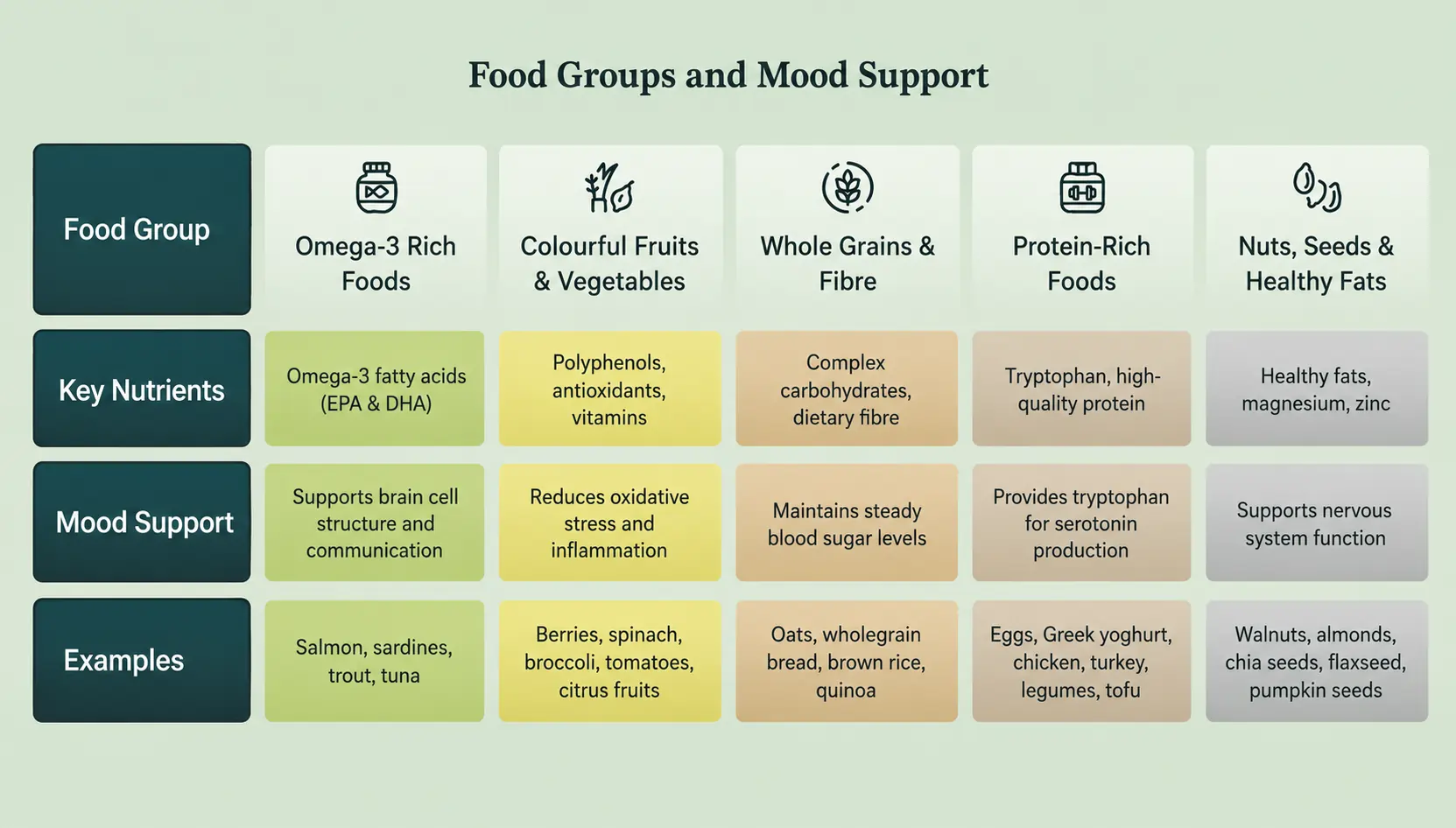
Omega-3 Rich Foods
Fatty fish have probably received the most attention here, and for good reason. The fats found in salmon, sardines, trout, and tuna are a core building block of brain cell membranes, which is part of why researchers keep circling back to omega-3 mood support as one of the more consistently studied foods that boost your mood.
- Salmon
- Sardines
- Trout
- Tuna
Colourful Fruits and Vegetables
It’s not just tradition that puts colourful vegetables at the centre of most healthy-eating advice. Berries, spinach, and citrus carry polyphenols and antioxidants that seem to dampen inflammation in the body, and inflammation is one of the biological mechanisms most closely examined in studies on brain foods and mood connections.
- Berries
- Spinach
- Broccoli
- Tomatoes
- Citrus fruits
Whole Grains and Fibre
Oats, brown rice, and quinoa don’t get much attention in mood conversations, but they arguably should. Slower-releasing carbohydrates keep blood sugar from spiking and crashing throughout the day, and those crashes are often what’s behind the mid-afternoon irritability many people write off as just tiredness.
- Oats
- Wholegrain bread
- Brown rice
- Quinoa
Protein and Tryptophan
Eggs, yoghurt, and legumes bring something less obvious to the table: tryptophan, an amino acid the body converts into serotonin. It’s a small, quiet mechanism, but it’s part of why protein choices matter just as much as fruit and veg when people ask about foods for mood support in Australia.
- Eggs
- Greek yoghurt
- Chicken
- Turkey
- Legumes and tofu
Nuts, Seeds and Healthy Fats
A handful of walnuts or a spoon of chia seeds might not seem significant, but the magnesium and zinc they carry support nervous system function in ways that are easy to overlook. These are the kind of small additions that add up more than people expect.
- Walnuts
- Almonds
- Chia seeds
- Flaxseed
- Pumpkin seeds
There isn’t a single food on this list capable of turning a bad week into a good one. What the research actually supports is a pattern: eating this way consistently, rather than occasionally, tends to make the biggest difference. These small additions are among the more overlooked ways to support mood. Just as important is knowing what tends to undercut that pattern, which is where the next section picks up.
Eating Well in Practice
Understanding what supports mood is only half the picture. It helps just as much to notice what quietly works against it, and how to translate all of this into meals that actually fit everyday life.
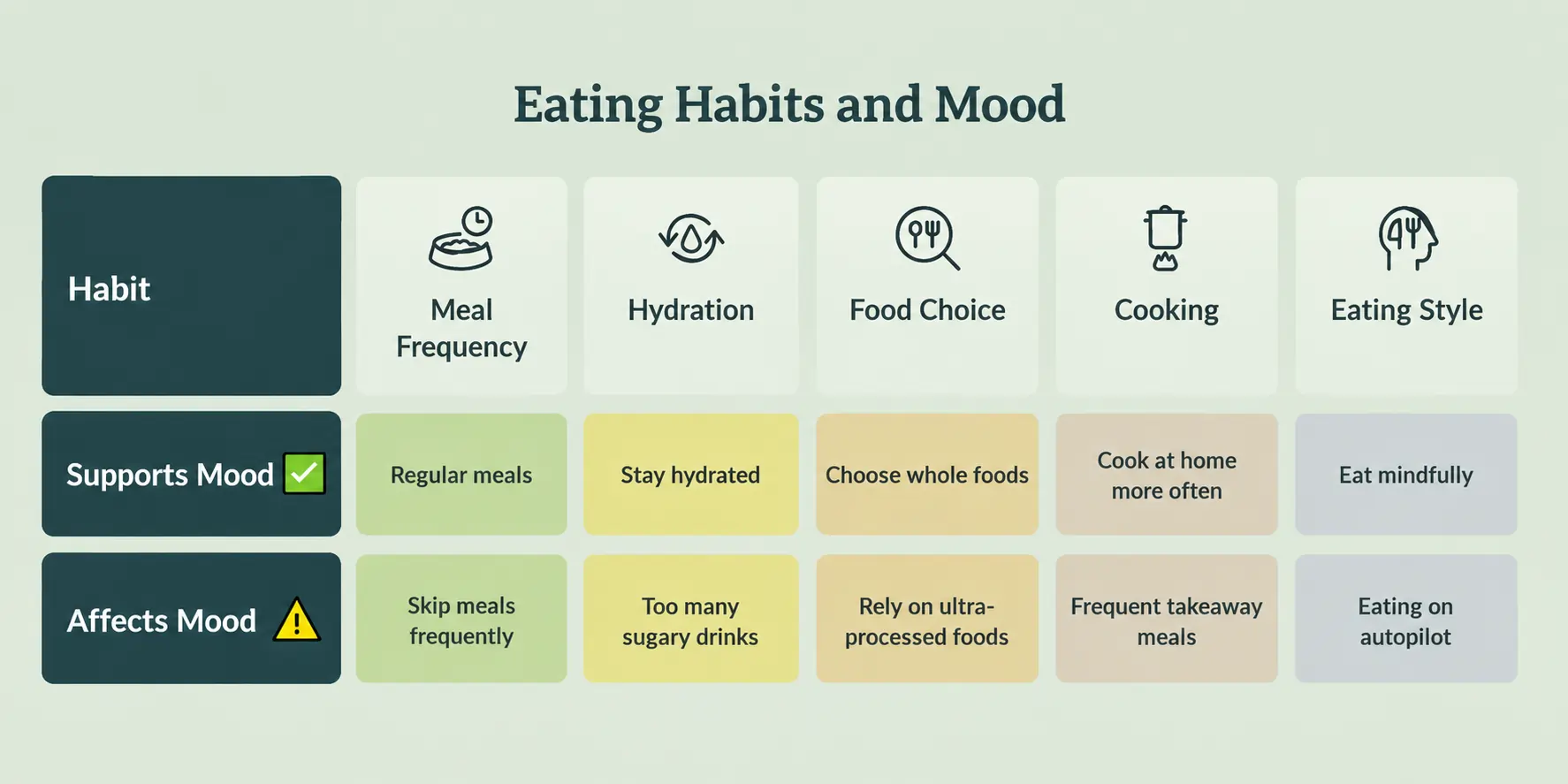
What Tends to Work Against Mood
Added sugar and heavily processed foods aren’t inherently forbidden, but relying on them too often can create a cycle of energy spikes followed by crashes, and those crashes often show up as irritability or flat, low energy later in the day. Skipping meals altogether tends to have a similar effect, leaving blood sugar low for longer stretches than the body copes with well. A single treat or missed meal won’t undo progress. It’s the pattern over weeks, rather than any one meal, that matters most for nutrition and mental health in Australia.
Building a Mood-Friendly Plate
Supporting mood through food doesn’t require specialty ingredients. Most of what matters is already available at a typical Australian supermarket:
- Breakfast: rolled oats with Greek yoghurt and blueberries
- Lunch: a wholegrain wrap with chicken and salad
- Dinner: grilled salmon with brown rice and steamed broccoli
- Snacks: walnuts, fresh fruit, or hummus with vegetable sticks
Everyday Habits Worth Building
Alongside food choices, a few simple habits tend to reinforce the same benefits: making time for regular meals, keeping hydrated, choosing home-cooked foods more often, and slowing down to enjoy your meals instead of eating on autopilot are practical habits that can support your mood.
When Food Isn’t Enough on Its Own
Nutrition can genuinely support emotional wellbeing, but it isn’t a treatment or a substitute for professional care. If low mood persists for more than a couple of weeks, or starts affecting daily functioning, it’s worth speaking with a GP, an Accredited Practising Dietitian, or a psychologist. Diet works best as one part of a broader approach to wellbeing, not the whole solution.
The Bottom Line
Bringing all of this together, a few key points are worth carrying with you long after this article closes. Small shifts in what tends to fill your plate matter far more than any complete diet overhaul.
- Mood isn’t shaped by a single nutrient or superfood. It responds to overall dietary patterns built up over weeks and months
- The gut and brain communicate constantly, and a meaningful share of the body’s serotonin is produced in the digestive tract rather than the brain itself
- Omega-3s, colourful produce, whole grains, tryptophan-rich protein, and nuts or seeds each support this process through different, complementary pathways
- Diets heavy in added sugar and processed food are linked to sharper energy crashes, which often surface as irritability or low mood later in the day
- Small, consistent habits, regular meals, home-cooked food, and proper hydration tend to outperform occasional, dramatic changes
- Food can meaningfully support emotional wellbeing, but it works alongside professional care, not in place of it, when low mood persists
For more evidence-based strategies on protecting your everyday wellbeing, explore our Mind and Mood Wellness Guide, or speak with Truwell Clinic’s team if you’d like personalised, practical guidance.
Disclaimer:
This article is general in nature and does not constitute medical, dietetic, or psychological advice. If you have concerns about your mood or nutrition, please consult a GP, Accredited Practising Dietitian, or qualified healthcare professional for guidance specific to your circumstances.