

Most people assume getting older means getting stiffer, slower, and less comfortable in their own body, full stop, no negotiation. But researchers tell a different story. Muscle, bone, and joint health all respond to habits, not just age, which means comfort after 50 is far more within your control than it feels on a bad morning. That’s the heart of active ageing comfort.
Comfort wellness over 50 isn’t about chasing the body you had at 30. It’s about supporting physical comfort as you age in Australia’s everyday context. Building habits that let you move through your day with ease, involving activities like gardening, playing with grandkids, and walking to the shops without bracing for discomfort afterwards. Ageing well is less about reversing time and more about working with it.
Here’s the encouraging part: the body keeps responding to good habits, no matter your age. Muscles get stronger with use. Bones stay denser with the right load on them. Joints move more freely when they’re not left idle. None of this requires reversing time, just needs consistency. This article walks through what’s actually changing in your body after 50, and what genuinely helps, without the scare tactics or the overcomplication.
What Changes in the Body After 50 (And Why It Affects Comfort)
As the years go on, a few physical shifts tend to show up, and naming them takes away some of their mystery.
- Muscle mass declines naturally with age – a process researchers call sarcopenia, which can mean an age-related decrease in strength for everyday tasks like carrying shopping or getting up from a low chair
- Bone density gradually decreases, particularly after menopause for women, which is part of why caring for ageing bones through activity matters more, not less
- Joints can feel stiffer, especially first thing in the morning or after sitting for long stretches, often just a normal part of how connective tissue changes over time
None of this is a sign that something’s wrong. It’s simply what ageing looks like under the surface. And each of these changes responds well to the right habits, particularly when it comes to muscle and joint health.
Staying Mobile: Movement That Actually Helps After 50
Movement is the single most influential lever for comfort as you age, and it doesn’t need to look like a gym session. However, not all movement does the same job. The kind that helps most after 50 isn’t necessarily the most intense; it’s the kind that builds strength, keeps joints flexible, and trains balance, since these are what everyday tasks like standing, reaching, and walking confidently actually depend on.
Australian guidelines for older adults recommend aiming for at least 30 minutes of moderate intensity activity on most days, ideally every day, though short sessions, such as three 10-minute walks across the day, work just as well as one longer block. You should aim for a mix of activities that improve aerobic fitness, strength, flexibility, and balance, since each offers its own benefit for health and independence.
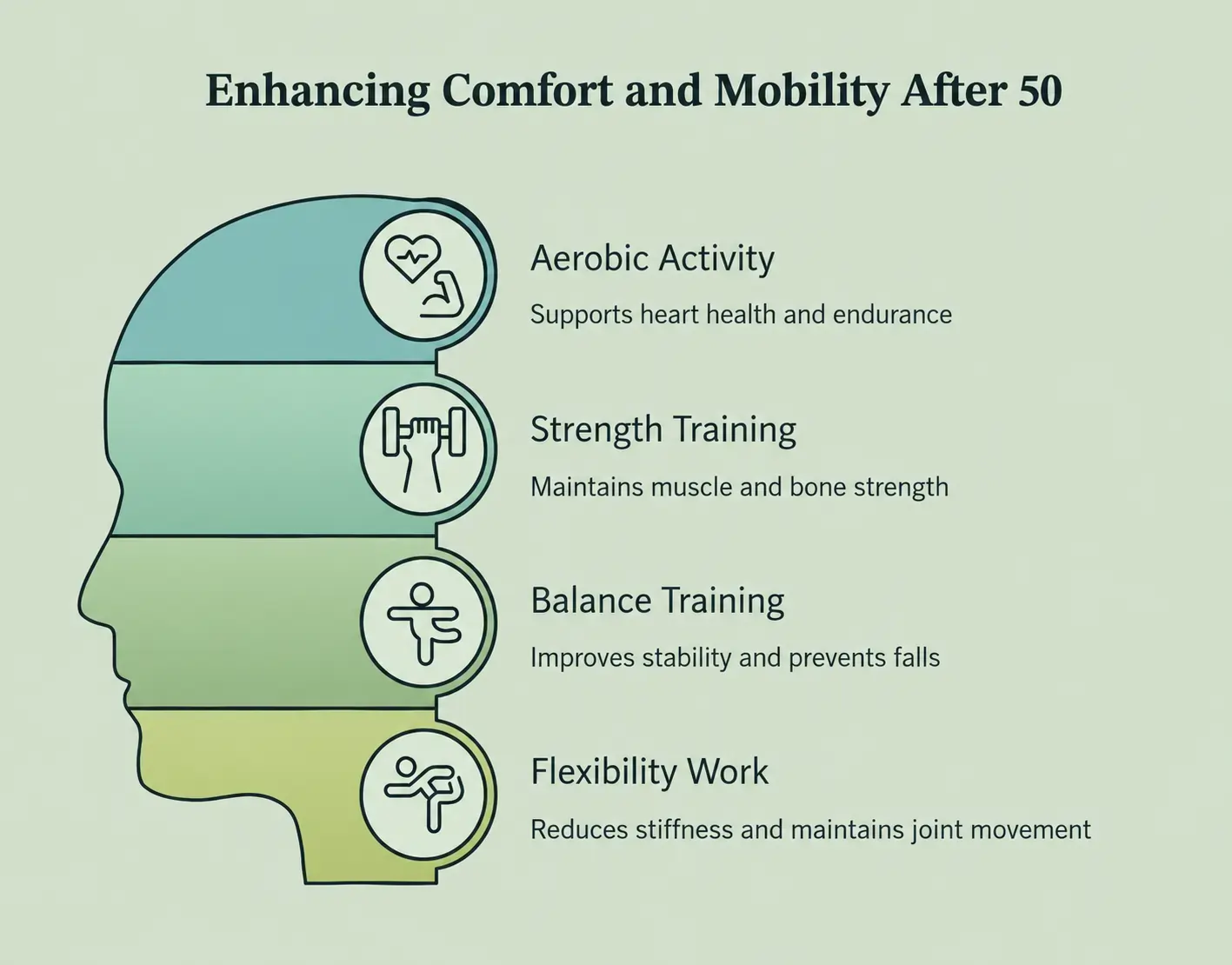
A weekly routine built around these four areas covers most of what matters for comfort and mobility after 50:
- Aerobic activity: walking, swimming, or water aerobics, which are particularly helpful for people with joint stiffness
- Strength training: Using light weights, resistance bands, or household items like water bottles to keep muscles and bones strong and lower fall risk
- Balance practice: activities that train stability and help prevent falls and injuries, ideally done daily
- Flexibility work: Gentle stretching that helps joints move freely and eases stiffness from sitting or inactivity
If balance feels shaky at first, holding onto a bench, wall, table, or solid chair is a sensible way to start, gradually using less support as stability improves. And consistency tends to matter more than ambition here: starting with just 10 minutes a day is a realistic way of maintaining mobility as you age.
Movement doesn’t need to be confined to a dedicated workout, either. Everyday actions like walking around the block, doing a few sit-to-stands from a chair during ad breaks, or calf raises while brushing your teeth all genuinely count toward weekly activity. These small additions are often what make a routine sustainable over months and years, rather than the occasional big effort that’s hard to repeat.
Everyday Habits That Support Musculoskeletal Comfort
Outside of dedicated exercise, the small decisions you make throughout the day add up to everyday joint comfort.
Posture is one of the quieter contributors to discomfort, and it tends to drift with age in ways that are easy to miss day to day. Long hours of sitting paired with general inactivity gradually tire the muscles that keep the spine upright, and it’s usually that fatigue, more than anything else, that does the damage over time.
Carried on long enough, it places an uneven load on the back and joints, which is where stiffness, aching, and gradual wear start to creep in. Good posture isn’t about holding a stiff, chest-out stance. It simply means your weight is evenly distributed and your spine keeps its natural curves, so the muscles and ligaments supporting it aren’t being overstretched session after session.
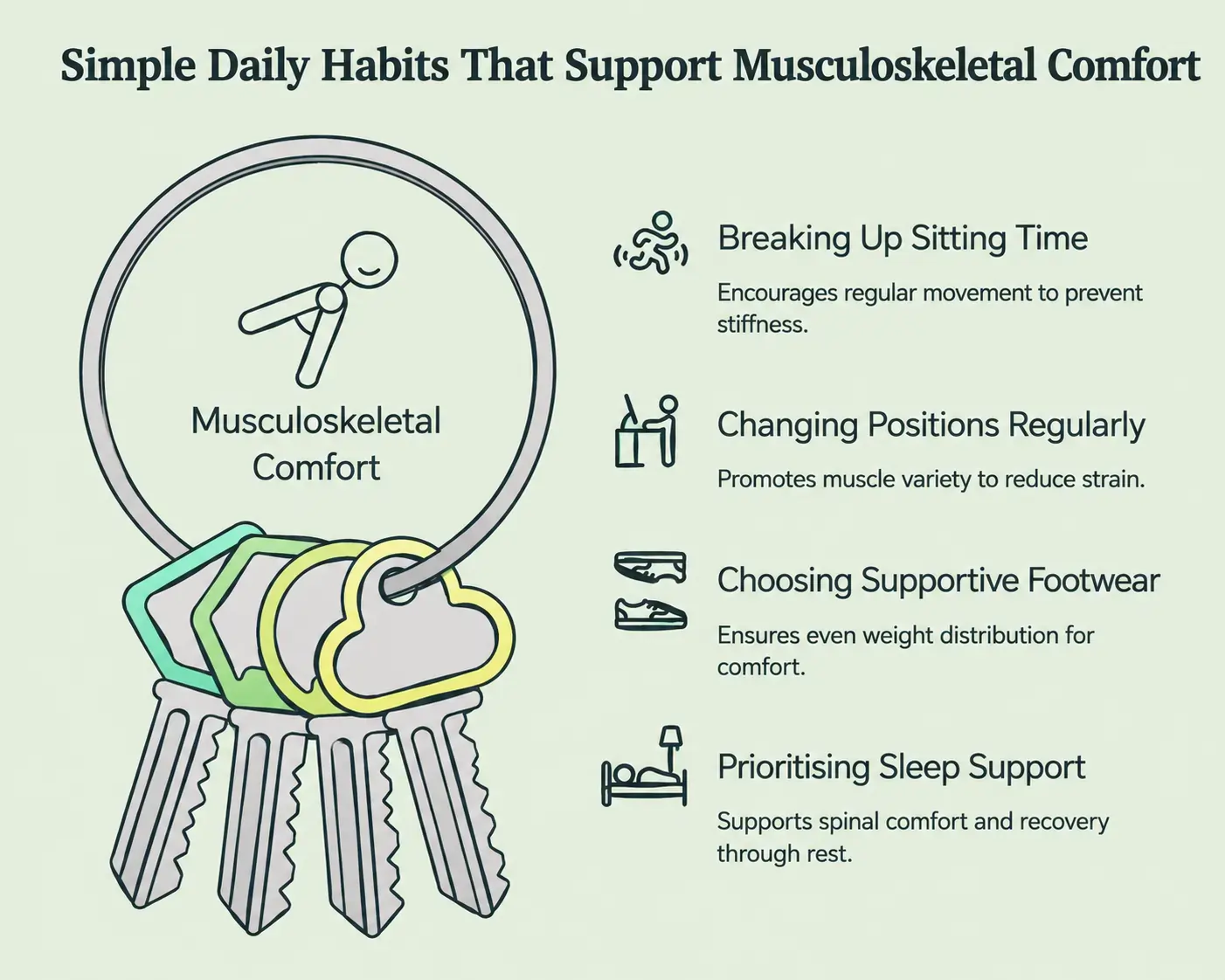
A few small, low-effort habits make a noticeable difference over time:
- Break up sitting time: Long periods of sitting may increase health risks, and even a few minutes of walking or stretching every so often helps offset this
- Switch positions often: Avoid sitting, standing, or lying in the same position for too long, since changing posture regularly eases strain on the same muscles and joints
- Choose supportive footwear: Wear well-fitting shoes for walking and replace them once they show signs of wear, since flat, well-fitting shoes help distribute weight evenly through the feet and joints
- Sleep on proper support: A mattress that supports your body properly is one of the simplest ways to look after your spine overnight
Comfort over 50 isn’t built in a single afternoon. It’s stitched together from dozens of small choices made daily, and that’s exactly what makes it sustainable.
Nutrition and Recovery for Long-Term Comfort
What you eat plays a quiet but steady role in how your body feels day to day.
Protein deserves particular attention here. Older adults generally need more of it than younger people, not less; that’s a common misconception. Muscle tissue is constantly being broken down and rebuilt, and when protein intake falls short, the body simply can’t keep up with the rebuilding side of that equation. Spreading protein across breakfast, lunch, and dinner works better than loading it all into one meal at the end of the day.
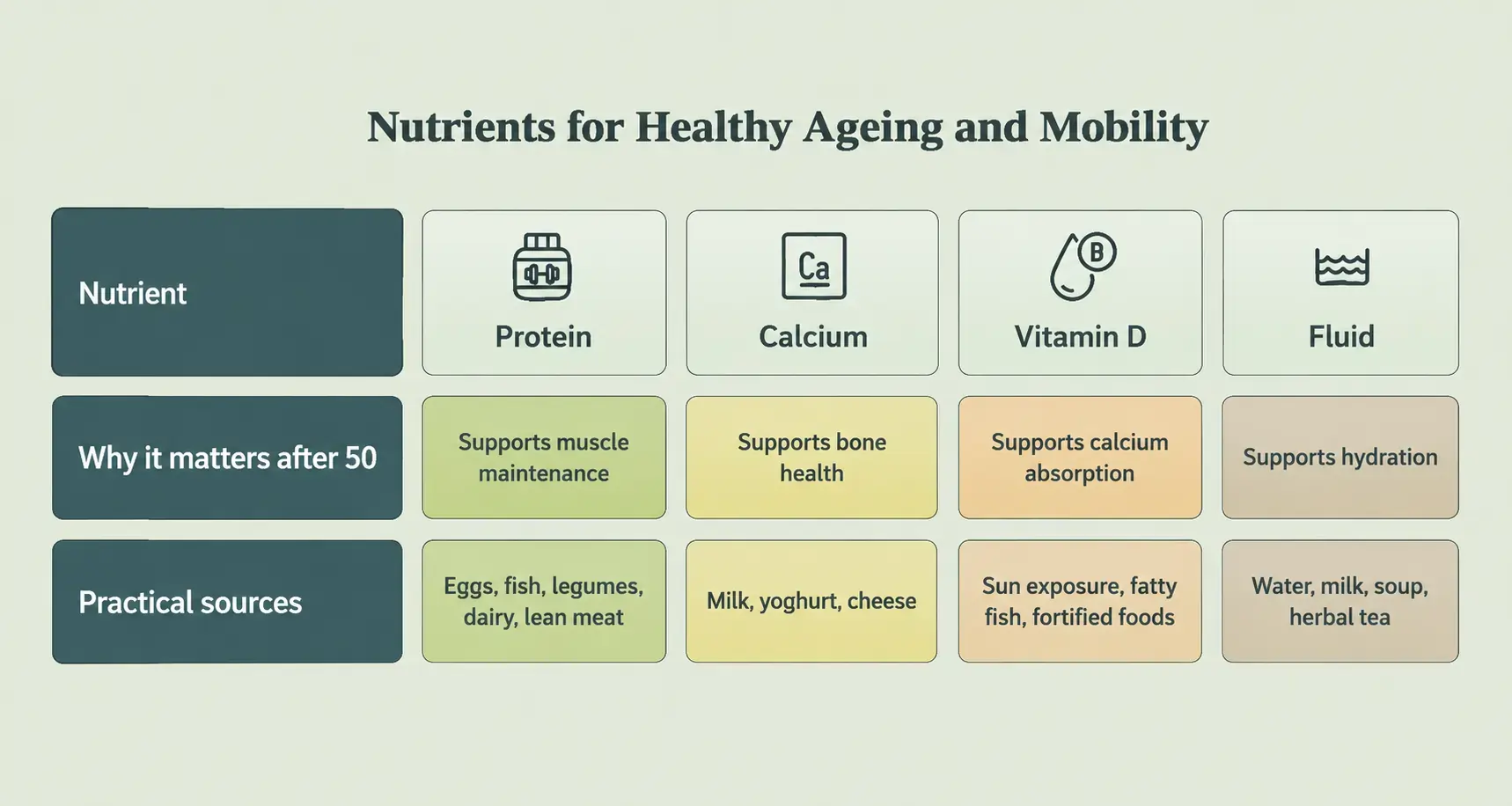
A few important nutrients are worth noting;
- Protein from eggs, fish, legumes, dairy, and lean meat is included at each main meal. Spreading protein across meals supports muscle tone and ageing well, rather than loading it into one sitting
- Calcium from milk, yoghurt, and cheese, which supports bone strength and density as the years go on.
- Vitamin D, which helps the body actually absorb that calcium into bone, and which also plays a role in muscle function
- Plenty of fluid throughout the day, since hydration needs don’t ease off with age, the way some people assume
Most Australians get the bulk of their vitamin D from sunlight rather than food, since very few foods contain much of it naturally. A short amount of time outdoors, with skin exposed and away from the most intense part of the day, generally covers it for most people.
None of this calls for a complete overhaul. A few consistent habits, repeated most days, do more for long-term comfort than any single ambitious change ever could.
When to Seek Guidance, and Building Your Comfort Wellness Routine
Most day-to-day stiffness and fatigue can be eased through the lifestyle habits covered above. That said, it’s worth checking in with a GP, physiotherapist, or accredited exercise physiologist if discomfort is persistent, worsening, or interfering with sleep or daily tasks; they can assess what’s actually going on and guide next steps safely.
For most Australians over 50, though, comfort wellness comes down to small, repeatable choices: a daily walk, a few minutes of stretching, a posture check now and then, and meals that support muscle and bone health. None of these requires dramatic life changes, and that’s precisely why they tend to stick.
If you’d like to keep building on this, explore our Everyday Comfort Guide for more practical wellness resources designed to support how you move, feel, and live well at every stage of life. And if you have questions about your own situation, our team is happy to help; you can reach us through our contact page anytime.
This article is intended for general educational purposes and does not constitute medical advice or a treatment recommendation. Always consult a qualified and AHPRA-registered health professional for guidance specific to your circumstances.
References
https://www.health.gov.au/topics/physical-activity-and-exercise/what-were-doing-about-physical-activity?language=en