

Ever noticed your stomach churn before a job interview, or your appetite change during a stressful period? The gut and brain are closely connected through a communication network known as the gut-brain axis.
So, can gut health affect mood? Research suggests there is a relationship between the gut microbiome, digestive health, everyday stress and aspects of mental wellbeing. However, the connection is complex, and researchers are still working to understand exactly how much the gut influences mood and how much other factors contribute.
Australian researchers are actively studying this relationship, including how diet and the gut microbiome may interact with mental health. This guide explains what the current evidence shows, what remains uncertain, and practical ways to support your gut health as part of overall wellbeing.
What Is the Gut-Brain Axis?
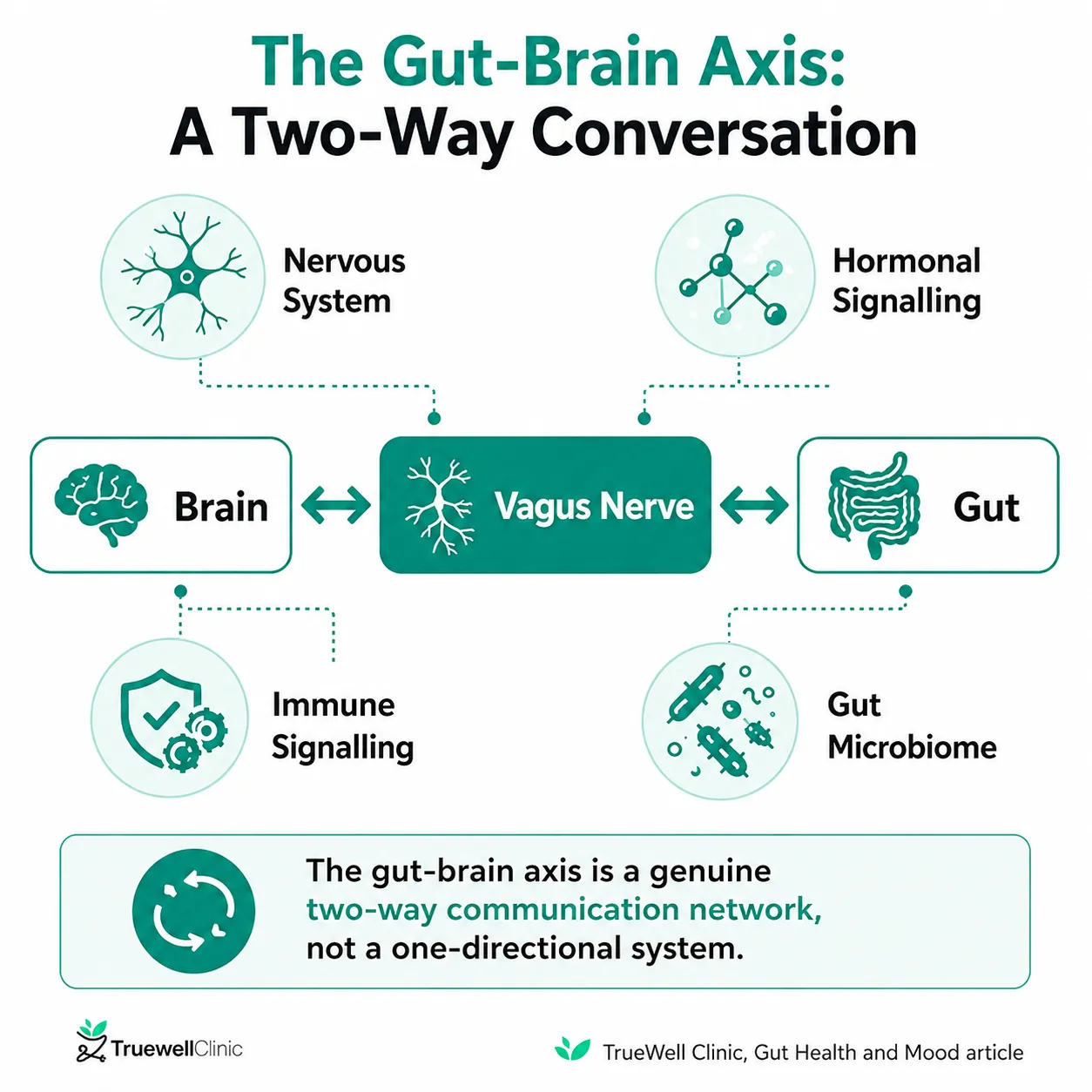
The gut-brain axis is the communication network linking your digestive system and your central nervous system (CNS). Health authorities describe it as a genuine two-way exchange, not simply your brain issuing instructions to your gut.
Physically, this connection runs through the vagus nerve, a long nerve that links the brainstem to the digestive tract. Signals travel in both directions along this pathway, which is partly why emotional states can be felt so viscerally in the body. That knot in your stomach before a difficult conversation, or the loss of appetite during a period of grief, reflects real neural traffic between gut and brain.
Your gut also runs its own extensive nervous system, often called the ‘second brain,’ tucked into the lining of the digestive tract. It doesn’t just take orders from above; it fires signals back to the brain constantly, shaping how you feel as much as how you digest.
The gut also releases hormones and immune-related chemicals that reach the brain, sometimes directly, sometimes by first triggering nerve pathways along the way
Researchers increasingly view this as a genuinely bidirectional relationship: gut health may shape mood, and psychological stress may, in turn, alter gut function.
How Your Gut Microbiome Talks to Your Brain
Trillions of microorganisms live in your digestive tract, collectively known as your gut microbiome. Far from just helping break down food, these microbes appear to play an active role in producing chemical messengers that influence how you feel.
Take serotonin, often nicknamed the ‘feel-good chemical’. It’s commonly associated with mood, but where and how it’s actually produced in the body is more complex than most people realise. Here’s what current research tells us:
- Most of the body’s serotonin is produced outside the brain, largely in the gastrointestinal tract, where it plays a key role in digestion and other bodily functions.
- Gut-produced serotonin does not simply cross into the brain and directly boost mood; the two systems don’t work that straightforwardly.
- Researchers are instead investigating how gut microbes, gut-derived signalling molecules, and other pathways may interact with the systems involved in mood and emotional regulation.
- The relationship is considerably more complex than a simple ‘gut serotonin equals better mood’ explanation, and oversimplified claims about this often misrepresent the actual science.
Gut bacteria also produce other compounds worth knowing about, including short-chain fatty acids, which are produced when your gut ferments dietary fibre. These compounds seem to help keep the gut lining intact and may ease inflammation in the body, and inflammation itself is something researchers are increasingly connecting back to mood and mental wellbeing.
This doesn’t imply that your gut microbiome single-handedly controls your emotions. What the research does suggest is that a diverse, well-functioning gut microbiome may support the biological systems your body relies on for emotional regulation. When that balance is disrupted, a state researchers call dysbiosis, some studies have found associations with anxiety and depressive symptoms, though establishing cause and effect in humans remains genuinely difficult.
The Emerging Science: Nutritional Psychiatry in Australia
Australia is actually home to some of the world’s leading research in this space. Deakin University’s Food and Mood Centre, led by Professor Felice Jacka, focuses specifically on what’s known as Nutritional Psychiatry, the study of how diet and gut health interact with mental health outcomes.
What the Research Is Looking At
One current project looks at something you wouldn’t expect. Researchers are analysing stool samples to understand what the gut microbiome might reveal about mood, potentially even picking up early signs of low mood before a person notices changes themselves. It’s a reminder of how much information is likely sitting in the gut that traditional mental health assessments simply don’t capture.
Where the Research Is Still Developing
Researchers are still working to understand exactly how changes in the gut microbiome may relate to mood and mental wellbeing. Studies are exploring whether patterns in gut bacteria are associated with psychological symptoms and whether changes in the microbiome could eventually help researchers better understand mental health.
However, much of this research is still developing. An association between the gut microbiome and mood does not necessarily mean that changes in gut bacteria directly cause changes in mental health. Larger and longer-term studies are needed to clarify these relationships.
Why This Field Is Worth Watching
What stands out about Nutritional Psychiatry as a field is how upfront it stays about what’s still unknown. Researchers aren’t claiming diet cures mental illness. They’re building a slow, evidence-based picture of how gut health, nutrition, and mental wellbeing intersect, and Australian institutions are playing a leading role in that work.
Can Stress Affect Your Gut Microbiome?
Short answer: yes, and the relationship runs both ways. Just as gut health may influence mood, chronic stress appears to reshape the gut itself.
The Two-Way Street: How Stress Reshapes the Gut
When you’re under sustained stress, your body activates what’s known as the HPA axis (hypothalamic-pituitary-adrenal axis), releasing cortisol and other stress hormones. Research suggests this hormonal shift doesn’t stay contained to the nervous system. It can alter gut motility, change the mix of bacteria living in your digestive tract, and affect the integrity of the gut lining itself.
This is part of why chronic, unmanaged stress so often shows up as physical gut symptoms rather than staying purely psychological.
Signs Your Gut Might Be Reacting to Stress
Common patterns researchers and clinicians observe include:
- Changes in bowel habits during stressful periods
- Increased bloating or stomach discomfort with no clear dietary trigger
- Appetite swings, eating more or considerably less than usual
- Flare-ups of existing digestive conditions like IBS during high-stress periods
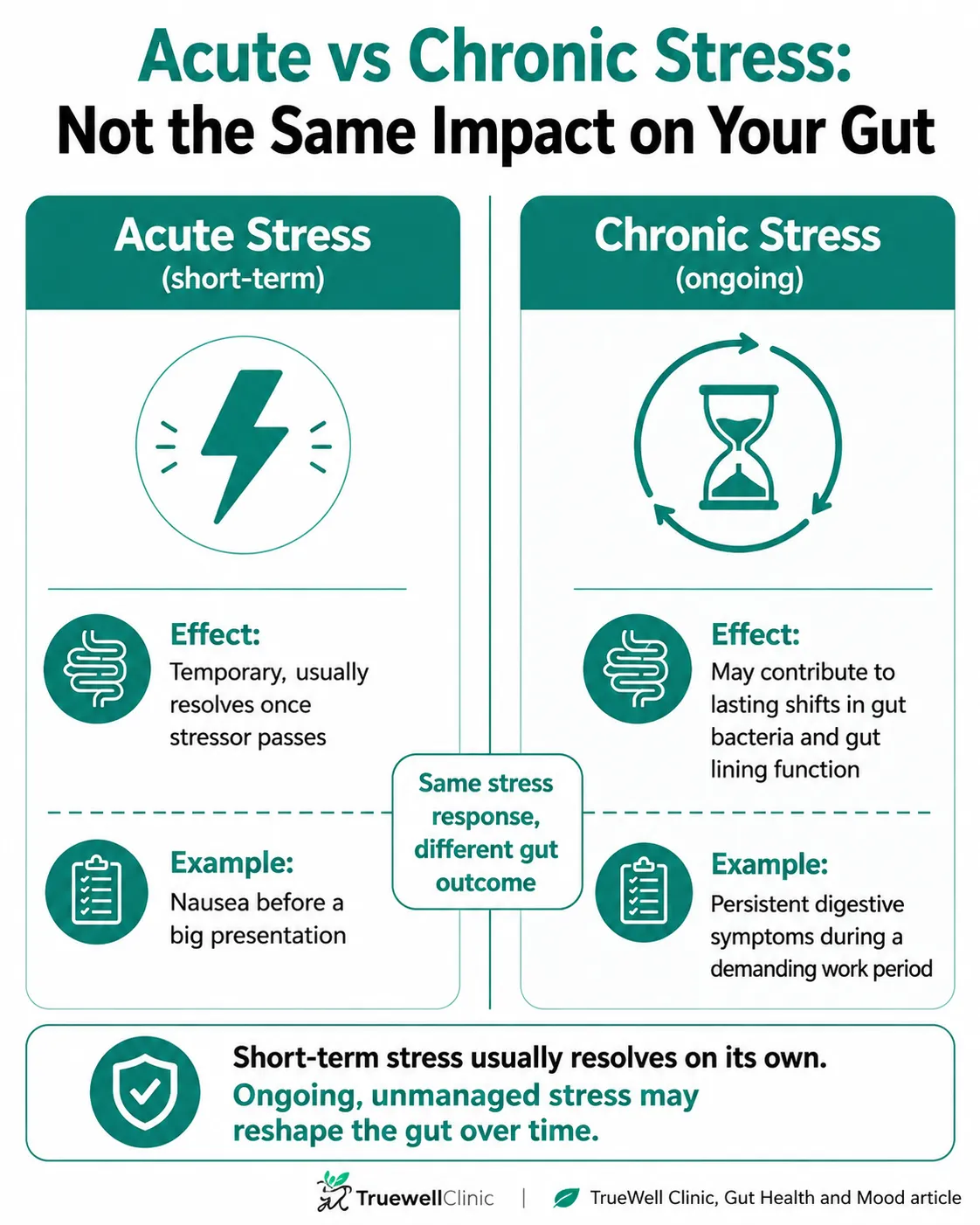
Acute vs Chronic Stress: Not the Same Impact
| Stress Type | Typical Gut Effect | Example |
| Acute (short-term) | Temporary, usually resolves once stressor passes | Nausea before a big presentation |
| Chronic (ongoing) | May contribute to lasting shifts in gut bacteria and gut lining function | Persistent digestive symptoms during a demanding work period |
Why This Matters for Mood
Because this relationship is bidirectional, a gut under chronic stress may become less able to support the biological processes involved in mood regulation, potentially feeding back into anxiety or low mood. This is one reason ongoing anxiety and digestive symptoms so often appear together, though the exact mechanisms are still being studied.
This shouldn’t be interpreted as meaning that stress alone causes gut or mental health conditions. It’s one contributing factor among many, and everyone’s threshold looks different.
Foods That Support a Healthy Gut-Mood Connection
Diet is one of the more practical, everyday levers you have for supporting gut health, and by extension, potentially your mood. No single food works miracles, but a consistent pattern of eating certain foods appears to support a more diverse, resilient gut microbiome over time.
Fibre-Rich Foods
Fibre feeds the bacteria in your gut, and when they ferment it, they produce short-chain fatty acids linked to gut lining health and reduced inflammation. Good sources include:
- Legumes (lentils, chickpeas, beans)
- Whole grains (oats, brown rice, wholemeal bread)
- Vegetables, especially leafy greens and root vegetables
- Fruit, particularly with the skin left on where appropriate
Fermented Foods
Fermented foods naturally contain live bacterial cultures and have been used across cultures for generations. Options worth incorporating include:
- Natural yoghurt
- Kefir
- Sauerkraut
- Kimchi
- Miso
A Broader Dietary Pattern
Rather than fixating on individual ‘superfoods,’ research increasingly points to overall dietary patterns. A Mediterranean-style diet, rich in vegetables, fruit, whole grains, legumes, olive oil, and fish, with only modest amounts of red meat and processed food, has been associated with better mental health outcomes in several studies, though researchers are still working out exactly why.
Beyond Diet: Sleep and Lifestyle
Diet doesn’t work in isolation. Sleep wellness, physical activity, and stress management all interact with gut health too. Disrupted or poor-quality sleep, for instance, has been associated with reduced gut microbiome diversity in some studies, suggesting these lifestyle factors are worth addressing together rather than in isolation.
A Note on What to Limit
Research also points to dietary patterns that may work against gut diversity:
- Highly processed foods
- Excess added sugar
- Very low fibre intake over extended periods
None of this requires an overnight overhaul. Small, sustained changes to your regular diet tend to matter more than short bursts of strict change.
What Does the Research Say About Probiotics?
Probiotics get marketed heavily as a mood fix, but the actual research tells a more cautious story than most product packaging suggests.
The Marketing vs the Evidence
Walk down any supplement aisle, and you’ll find probiotics positioned as a straightforward mood booster. The science hasn’t caught up to that claim yet.
A 2022 systematic review and meta-analysis examining 54 randomised controlled trials found that most probiotics did not affect mood, stress, anxiety, depression, and psychiatric distress compared to placebo. That’s a substantial body of evidence pointing toward far more modest effects than commonly advertised.
A separate 2023 review reached a similar conclusion, noting that results remain inconclusive, largely due to weak study design and low statistical power across the existing trials.
Why the Evidence Is So Mixed
A few factors seem to be behind the inconsistent findings:
- Studies use different probiotic strains, doses, and durations, making comparisons difficult
- Sample sizes in many trials are small
- Individual responses to probiotics likely vary significantly from person to person
- Probiotics aren’t one single intervention; they’re a broad category covering many different organisms
What This Means in Practice
This doesn’t mean probiotics are useless. It means the current evidence doesn’t support strong claims about specific mood benefits, and no particular strain or product can be confidently recommended for mental health purposes based on where the research currently stands.
If you’re considering a probiotic supplement, it’s worth having that conversation with your GP or a dietitian, particularly if you’re taking it with a specific health goal in mind rather than general gut support.
The Bigger Picture
Whole-diet approaches, fibre, fermented foods, and varied plant intake currently have a stronger evidence base for supporting gut health than isolated probiotic supplements do. That’s worth keeping in mind before reaching for a bottle over a genuinely varied diet.
Bringing It Together: Gut Health and Emotional Wellbeing
The gut-brain axis is real, well-documented, and increasingly hard to ignore in conversations about mental wellbeing. Your gut and brain communicate constantly through nerves, hormones, and the trillions of microorganisms living in your digestive system. Australian researchers, particularly at Deakin’s Food and Mood Centre, are helping lead the world’s understanding of this relationship.
What the science doesn’t yet support is the idea that any single food, supplement, or probiotic strain can reliably fix mood on its own. What it does support is something more useful: a consistent, varied diet rich in fibre and fermented foods, alongside good sleep, movement, and stress management, appears to support both gut and mental health.
If you’re experiencing persistent digestive symptoms alongside low mood or anxiety, it’s worth speaking with a GP or relevant healthcare professional rather than trying to self-diagnose the connection. They can help identify what’s actually going on and guide next steps that suit your specific situation.
Disclaimer:
This article is general information only and does not constitute medical advice. If you have concerns about your gut health or mental wellbeing, please consult your GP or a qualified healthcare professional.