Overview:
Most people know the feeling. Shoulders creeping up toward the ears during a stressful phone call, or a tight chest before walking into a big meeting. These small, physical signs of tension are common, and they often build quietly through the day without much notice. Breathing and relaxation techniques offer a practical way to interrupt that build-up, giving the body a chance to settle before tension takes hold.
This is where breathing relaxation techniques Australia become a genuinely useful starting point, not as a fix for every source of stress, but as a set of tools that support the body’s own capacity to calm down. Simple approaches like breathing exercises for anxiety and structured relaxation techniques for stress don’t require special equipment or training. They can be practised almost anywhere, often within a few minutes, and fit naturally into an everyday approach to comfort and wellbeing.
This guide walks through what current research says about these techniques, how to practise the most well-known methods step by step, and how often they may need to be used to notice a meaningful difference.
The Science Behind Breathing and Relaxation
The body has two main modes when it comes to stress: an alert state that speeds up heart rate and tightens muscles, and a calmer state that slows things back down. Breathing exercises for anxiety work by nudging the body toward that second, calmer state on purpose, rather than waiting for it to happen on its own.
Most breathing throughout the day happens automatically, without any real thought behind it. Conscious, slower breathing is different. Research published in a systematic review on slow breathing techniques suggests that deliberately slowing the breath can shift the body’s nervous system balance, supporting a state associated with reduced feelings of anxiety, tension, and mental fatigue, alongside improvements in comfort and alertness (PMC).
This is where anxiety deep breathing techniques and other structured methods, like the ones covered later in this guide, tend to be most useful. They are not a way to remove every source of stress. Instead, they appear to offer a practical, low-effort way to support the body’s own regulation process during moments of tension.
Everyone tends to respond a little differently. A few slow breaths might be enough for some people to feel a shift, while others may only notice deep breathing and stress relief after practising the technique more regularly. Either way, the evidence points to breathing as a genuinely useful, evidence-informed starting point.
Diaphragmatic Breathing: A Simple Technique for Activating Calm
Diaphragmatic breathing, sometimes called belly breathing, is one of the most accessible relaxation techniques available, largely because it does not require any equipment, training, or quiet studio space. Most people naturally breathe from the chest during a busy day, taking shallow breaths that barely move the lower lungs. Diaphragmatic breathing works differently, drawing air deeper into the abdomen and allowing the diaphragm to do more of the work.
A narrative review of diaphragmatic breathing research suggests this deeper, slower pattern may support parasympathetic nervous system activity, the part of the nervous system associated with rest and recovery, while also easing respiration rate over time (PMC).
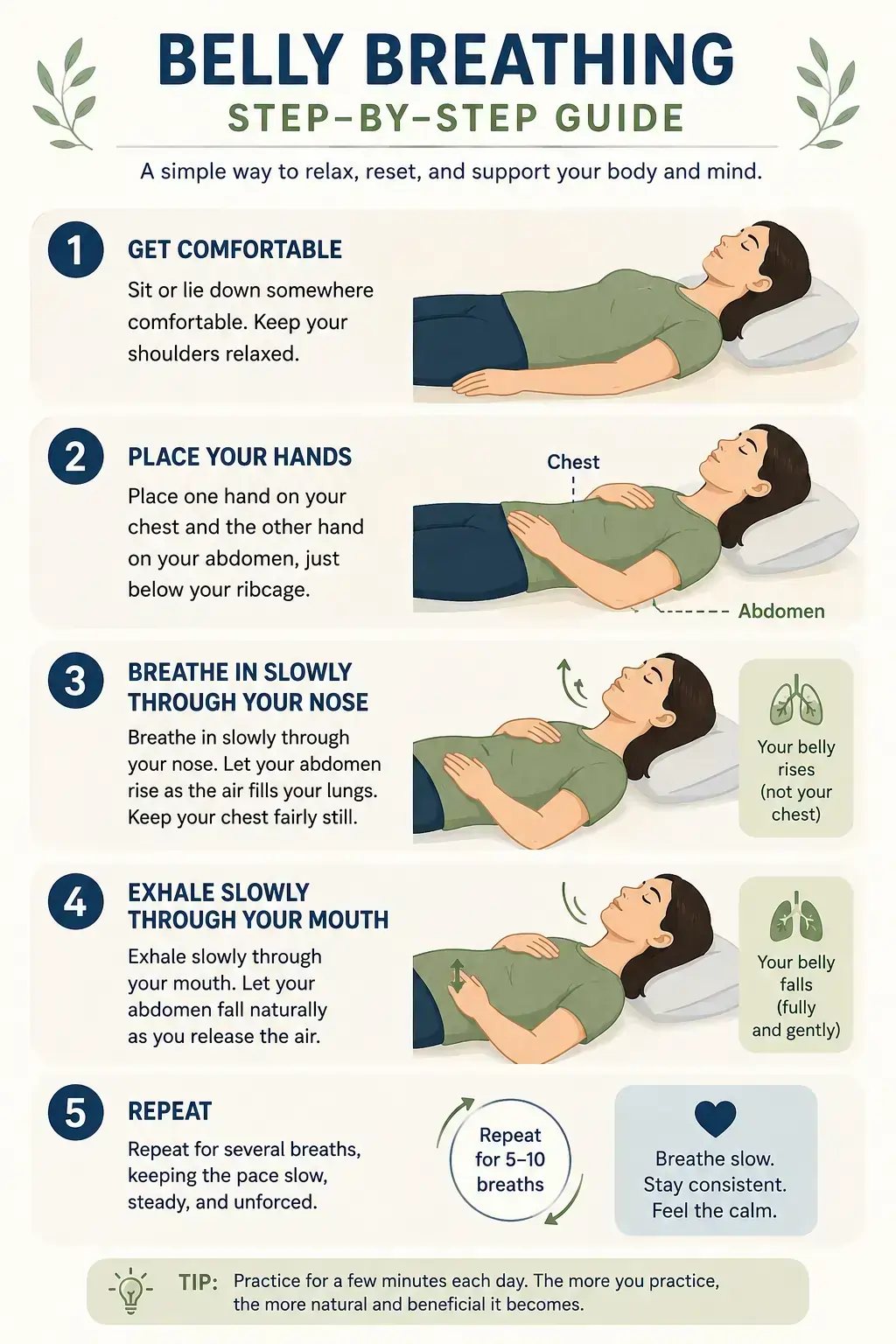
The technique itself is simple enough to try immediately:
- Sit or lie down somewhere comfortable, with the shoulders relaxed
- Place one hand on the chest and the other on the abdomen
- Breathe in slowly through the nose, allowing the abdomen to rise while the chest stays fairly still
- Exhale slowly through the mouth, letting the abdomen fall naturally
- Repeat for several breaths, keeping the pace slow and unforced
This kind of deep breathing and stress relief does not need to take long. Even a minute or two can be enough to notice a shift, and it is often one of the easier forms of breathwork for stress to practise discreetly, whether at a desk, before a meeting, or while waiting in traffic.
Box Breathing and Other Structured Techniques
Some people find it easier to follow a specific pattern rather than simply “breathing slowly,” and this is where structured methods like box breathing come in. Also known as square breathing, it follows a steady four-part rhythm that gives the mind something concrete to count through, which can be useful when thoughts feel scattered or racing.
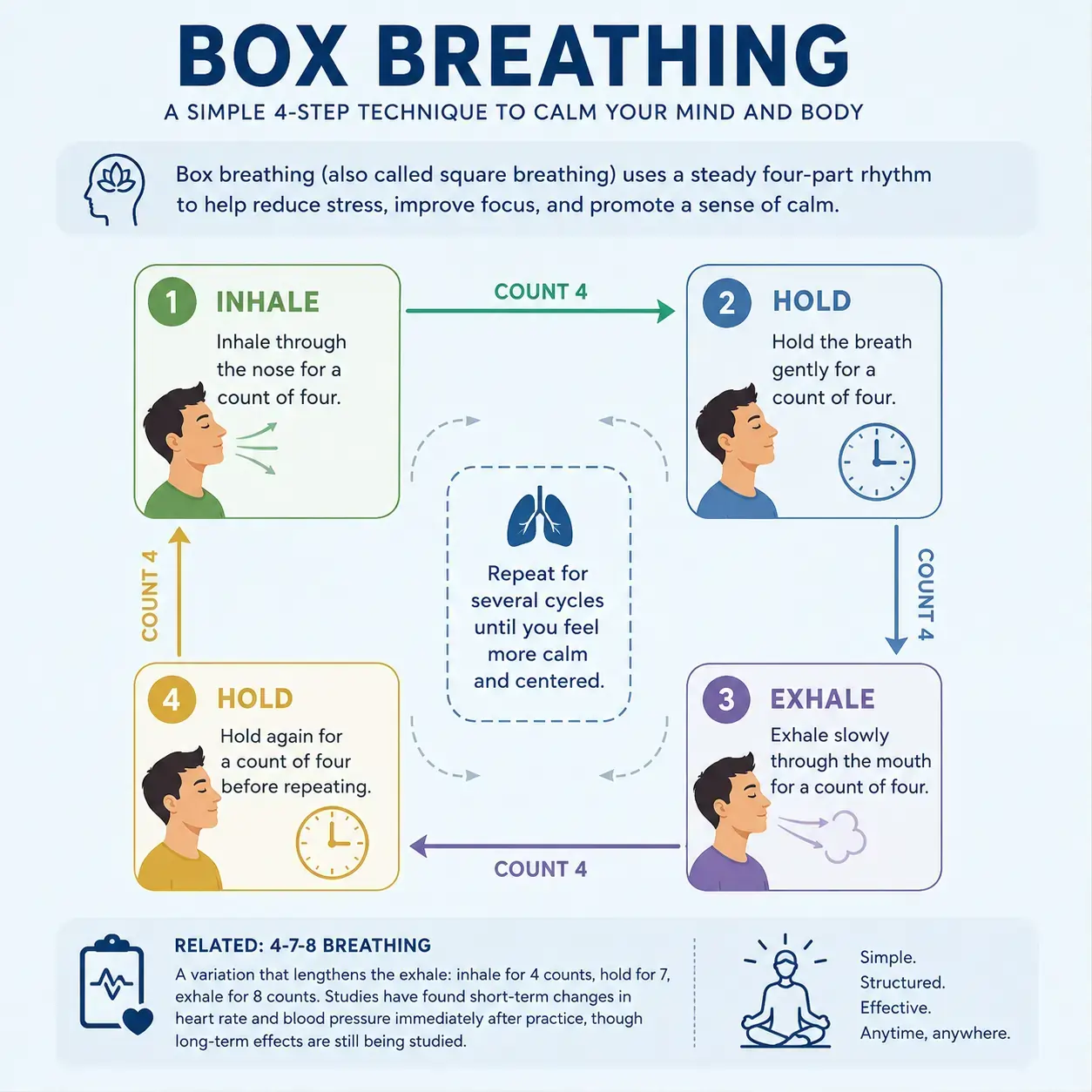
The pattern is straightforward to learn:
- Inhale through the nose for a count of four
- Hold the breath gently for a count of four
- Exhale slowly for a count of four
- Hold again for a count of four before repeating
A related approach, the 4-7-8 method, follows a similar idea but stretches the exhale out longer than the inhale. A study measuring the technique’s short-term effects found it was associated with changes in heart rate and blood pressure immediately after practice, though research on its longer-term impact is still limited.
Both patterns tend to work well as calming exercises for anxiety in moments of acute tension, such as before a stressful conversation, during a work break, or as part of a wind-down routine before bed.
Progressive Muscle Relaxation and Building a Regular Practice
Relaxation does not always start with the breath. Progressive muscle relaxation, often shortened to PMR, works from the body outward, using deliberate tension and release to help people notice where stress is physically held.
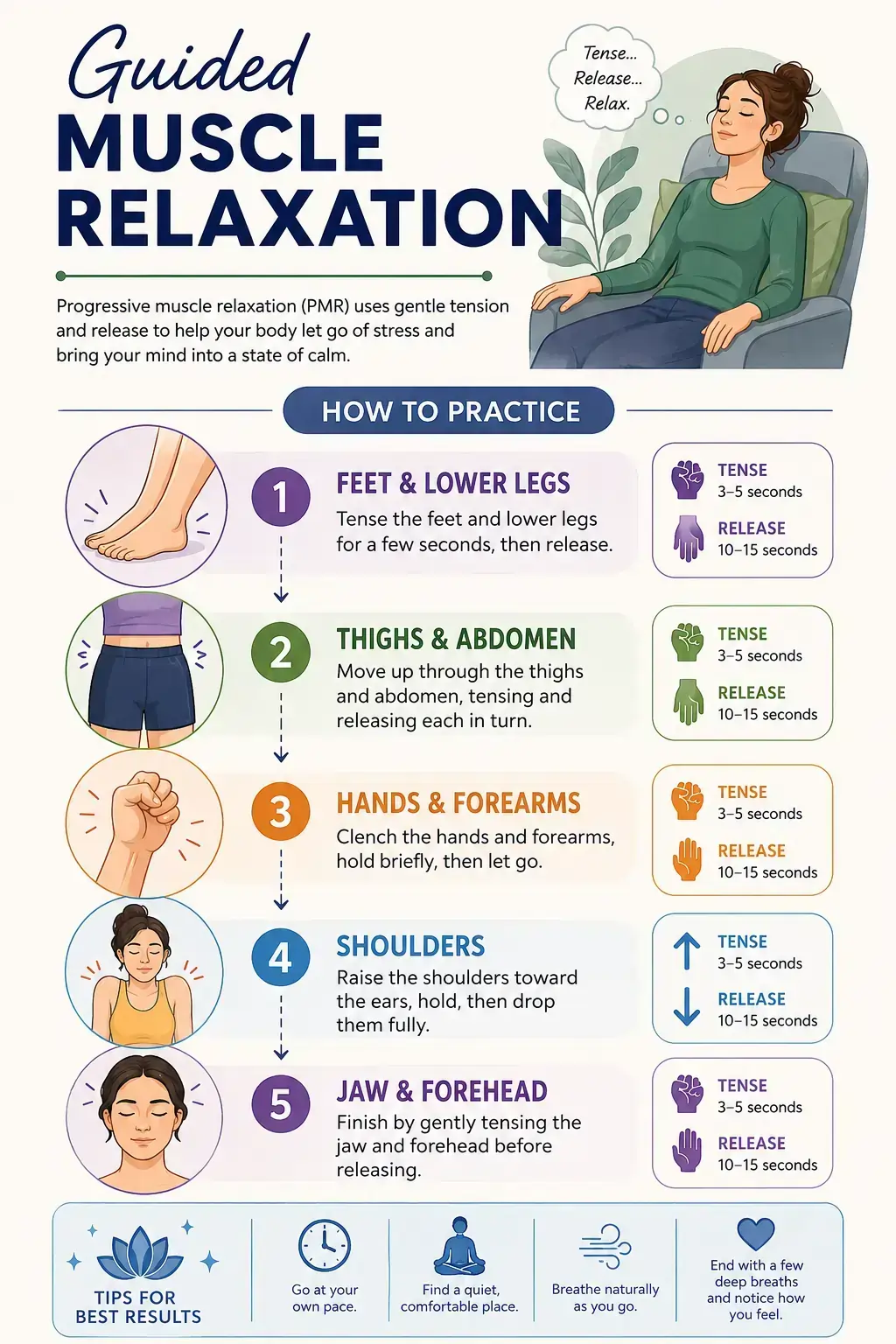
The technique involves working through major muscle groups one at a time, tensing each briefly before letting it go completely. A simple sequence to follow includes:
- Tense the feet and lower legs for a few seconds, then release
- Move up through the thighs and abdomen, tensing and releasing each in turn
- Clench the hands and forearms, hold briefly, then let go
- Raise the shoulders toward the ears, hold, then drop them fully
- Finish by gently tensing the jaw and forehead before releasing.
A systematic review of PMR in adults found the technique was consistently linked to reductions in self-reported stress and anxiety, with effect sizes ranging from modest to substantial depending on the study (Taylor & Francis Online). This kind of guided muscle relaxation appears particularly useful for people who carry tension physically, such as a tight jaw or clenched shoulders, since it targets that tension directly rather than only addressing racing thoughts.
As with breathing techniques, relaxation techniques for anxiety tend to work best with some consistency. A short practice a few times a week, worked into an existing routine such as before bed, often matters more than one long session used occasionally.
The Bottom Line
Bringing these techniques together, a few key points are worth keeping in mind. None of these tools remove stress entirely, but each offers a genuine, low-cost way to support the body’s calm response when practised regularly.
- Slow, conscious breathing appears to shift the nervous system toward a calmer state, supported by a growing body of research
- Diaphragmatic breathing is one of the simplest breathing exercises for overwhelmed moments, requiring no equipment and only a minute or two
- Box breathing and the 4-7-8 method offer structured calming exercises for anxiety, useful during acute tension or before sleep
- Progressive muscle relaxation targets physical tension directly, often easing a tight jaw or clenched shoulders
- Consistency, rather than one long session, tends to make the biggest difference over time
- These techniques work best as part of a broader approach to wellbeing, alongside professional support when needed
For those wanting to explore this further, our Mind & Mood Guide looks at the wider picture of stress and emotional wellbeing, while the Sleep Wellness pillar covers how relaxation techniques for stress can support better rest. If low mood or anxiety continues to affect daily life, speaking with a GP or psychologist is a reasonable and proactive next step, not a sign that something has gone wrong.
Disclaimer:
This article is general in nature and does not constitute medical or psychological advice. If you have concerns about anxiety or stress, please consult a GP or qualified healthcare professional for guidance specific to your circumstances.