
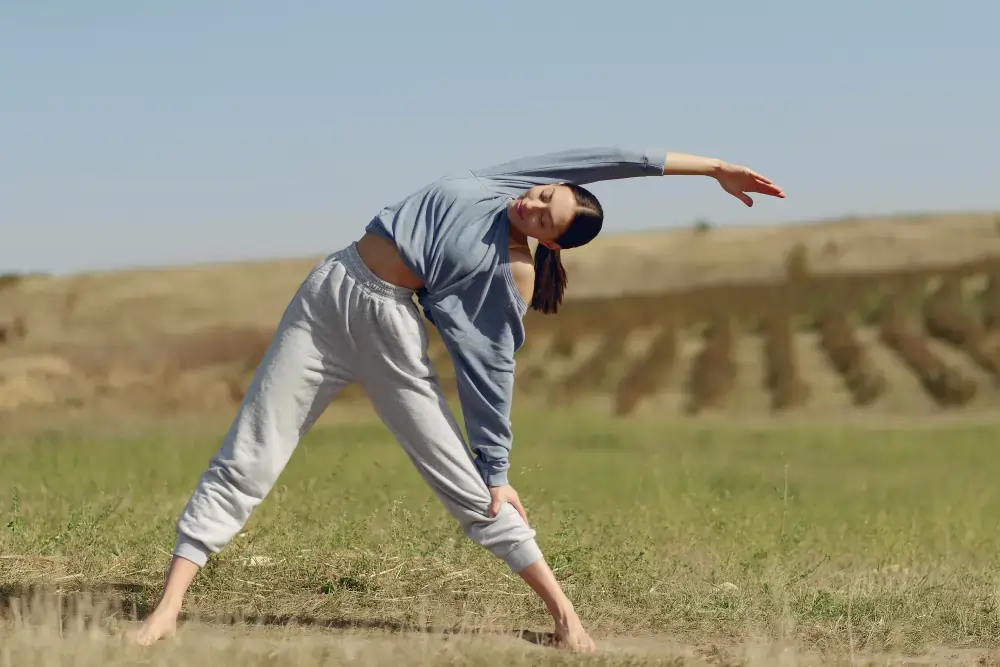
Many Australians know the feeling of discomfort creeping into ordinary days. A stiff lower back when getting out of bed, sore knees after a long walk, or shoulders that never quite seem to loosen up. For adults experiencing this kind of physical discomfort, the instinct is often to slow right down and avoid movement altogether, out of fear that any activity will make things worse.
It makes sense to want to protect a sore back or an aching knee. But pulling back from movement entirely often isn’t the relief people expect it to be. A growing body of evidence points to gentle, low-impact movement as a practical and accessible way to daily comfort support, mobility, and overall well-being, without the need for intense effort or specialised equipment. The sections below break down what gentle movement looks like day to day, which low-impact options work well for different people, and how to ease into activity without overdoing it.
Why Movement Matters When You’re Dealing with Discomfort?
The human body holds up best when it moves regularly. Joints rely on motion to stay lubricated, muscles need some load to stay strong, and circulation slows down when we sit or rest for long stretches. When discomfort leads someone to avoid activity for weeks or months, stiffness and reduced flexibility can quietly build up, sometimes making the original discomfort feel worse rather than better.
There’s actual research behind this pattern. Health and Wellbeing Queensland has pointed to a Cochrane review indicating that staying active is generally linked to better outcomes for chronic discomfort than reducing activity, though the strength of evidence varies across conditions. In other words, the instinct to stop moving altogether often works against the body rather than for it. That’s not to say discomfort should be ignored or pushed through, but it does explain why complete inactivity isn’t usually the protective move it seems to be.
Gentle movement sits at the opposite end of the spectrum from high-intensity training. There’s no sprinting, no heavy lifting, and no pushing through pain. Instead, it covers low-impact, low-intensity activities designed to keep the body moving within a comfortable range. Think along the lines of a relaxed walk to the shops, a handful of gentle stretches at home, an easy-paced Pilates class, or a slow swim in the pool.
Types of Low-Impact Movement Worth Knowing About
Low-impact movement simply means activity that keeps the body moving without putting heavy strain or sudden force through the joints, muscles, or spine. There’s no jumping, no jarring impact, and no demand to push past what feels manageable. It’s exercise built around control and comfort rather than intensity, which is exactly why it suits people easing back into activity or working around persistent discomfort.
Not every form of exercise suits every person, and that’s exactly the point of low-impact movement. It’s meant to be adaptable. So what does this actually look like day-to-day? A few options tend to come up again and again, each suited to slightly different needs and comfort levels.
Yoga, Pilates, and Comfort-Focused Walking
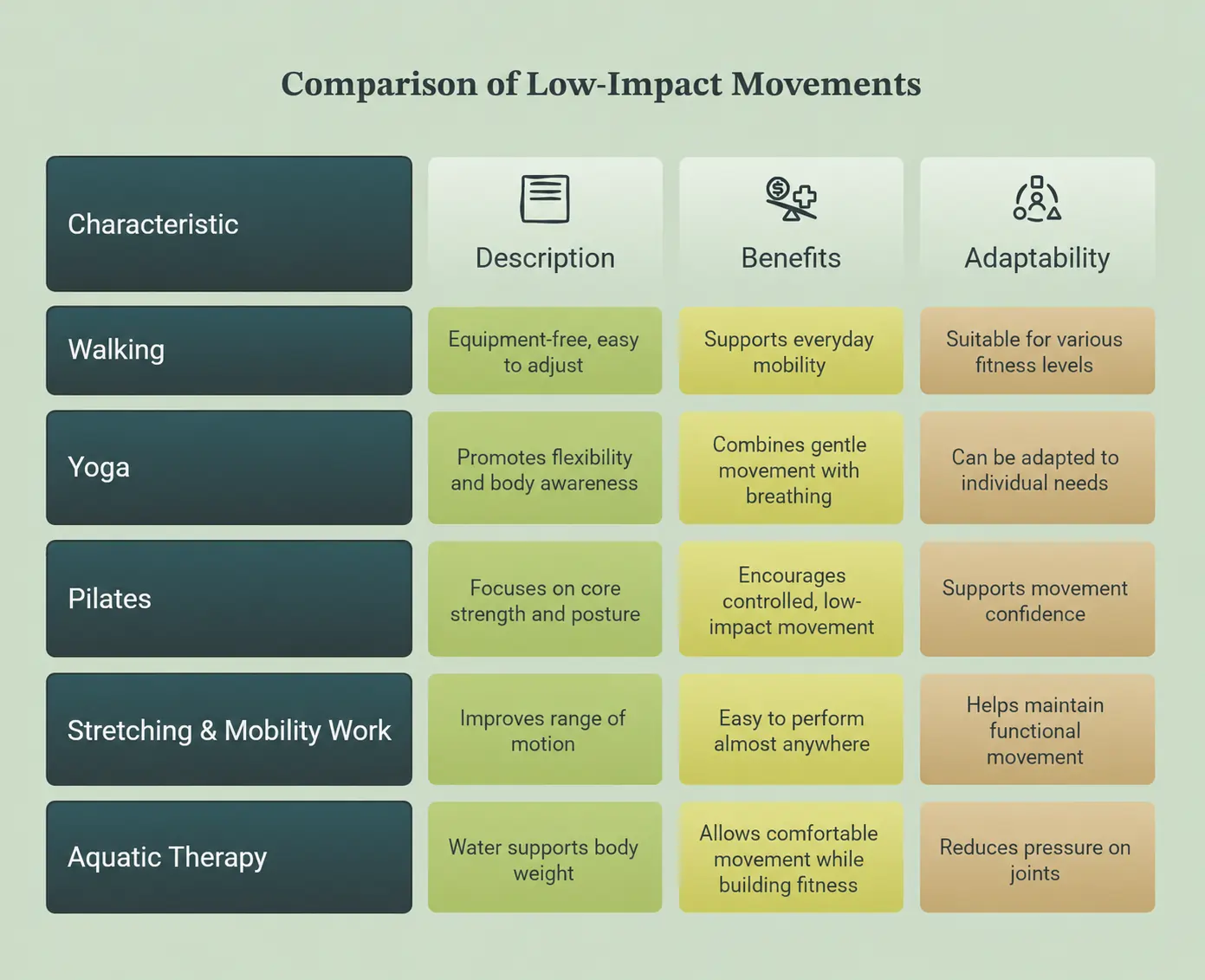
Walking is one most people already know how to do without thinking about it. It needs no equipment, can be shortened or extended depending on how the body feels that day, and can happen almost anywhere. Yoga and Pilates both bring something a little different to the table.
Yoga tends to work well for people chasing better flexibility and a stronger sense of body awareness, mostly through slow movement paired with breathing. Pilates takes a different angle. It’s more about control, building strength through the core and steadier posture, rather than stretching things out. According to Healthdirect, both practices can be adjusted by a certified instructor to suit different ages and fitness levels. No single option works for everyone, so here’s what sets each apart:
- Walking: flexible, equipment-free, easy to scale up or down
- Yoga: flexibility, breathing, and body awareness
- Pilates: core strength, posture, and controlled movement
- Stretching and mobility drills: simple range-of-motion work that can be done almost anywhere
Whether it’s a walk, a stretch, or a slow Pilates flow, each of these supports the kind of functional mobility that keeps an active lifestyle realistic, even on days when comfort is harder to come by.
Aquatic Therapy and Water-Based Movement
Aquatic therapy changes the equation for people whose discomfort makes land-based exercise feel difficult. Buoyancy supports body weight, which takes pressure off joints such as knees, hips, and ankles. Healthdirect notes that water-based exercise takes pressure off weight-bearing joints without sacrificing the chance to build strength and fitness. That’s a rare combination. It’s part of why so many people with joint discomfort find the water a more forgiving place to move than land.
How Gentle Movement Supports Physical Well-being
Most people don’t measure comfort by how stiff they feel in the morning. They measure it by whether the stairs still feel ordinary, whether reaching for something overhead is no big deal, and whether getting out of a chair doesn’t need a run-up. That kind of independence depends on staying capable, not just pain-free, which is why inactivity tends to cost people more than they expect.
The scale of the problem backs this up. Government data shows that an estimated 46 per cent of Australian adults and older adults aren’t getting enough physical activity, a figure the Department of Health flagged when it released updated national movement guidelines covering activity, sitting time, and sleep together. That number has actually improved over time, down from 65 per cent in the past years, but it still means close to half the adult population is falling short. None of this is about blame. It’s simply a reminder that staying capable takes some ongoing input, and gentle physical activity is often the easiest place to start.
Healthdirect’s guidance for older adults backs this up at a practical level: even modest, regular activity can help people stay physically capable and lower the risk of falls and lost mobility over time. Intensity isn’t really the deciding factor here. Showing up consistently is.
That consistency tends to do something for movement confidence as well. People who’ve felt nervous about getting active again often find that starting small and proving to themselves they can manage it makes the next session easier than the last. The mood lift that comes with that shouldn’t be underestimated, since feeling capable again often matters just as much as any physical change.
Exercising Safely When You’re Experiencing Persistent Discomfort
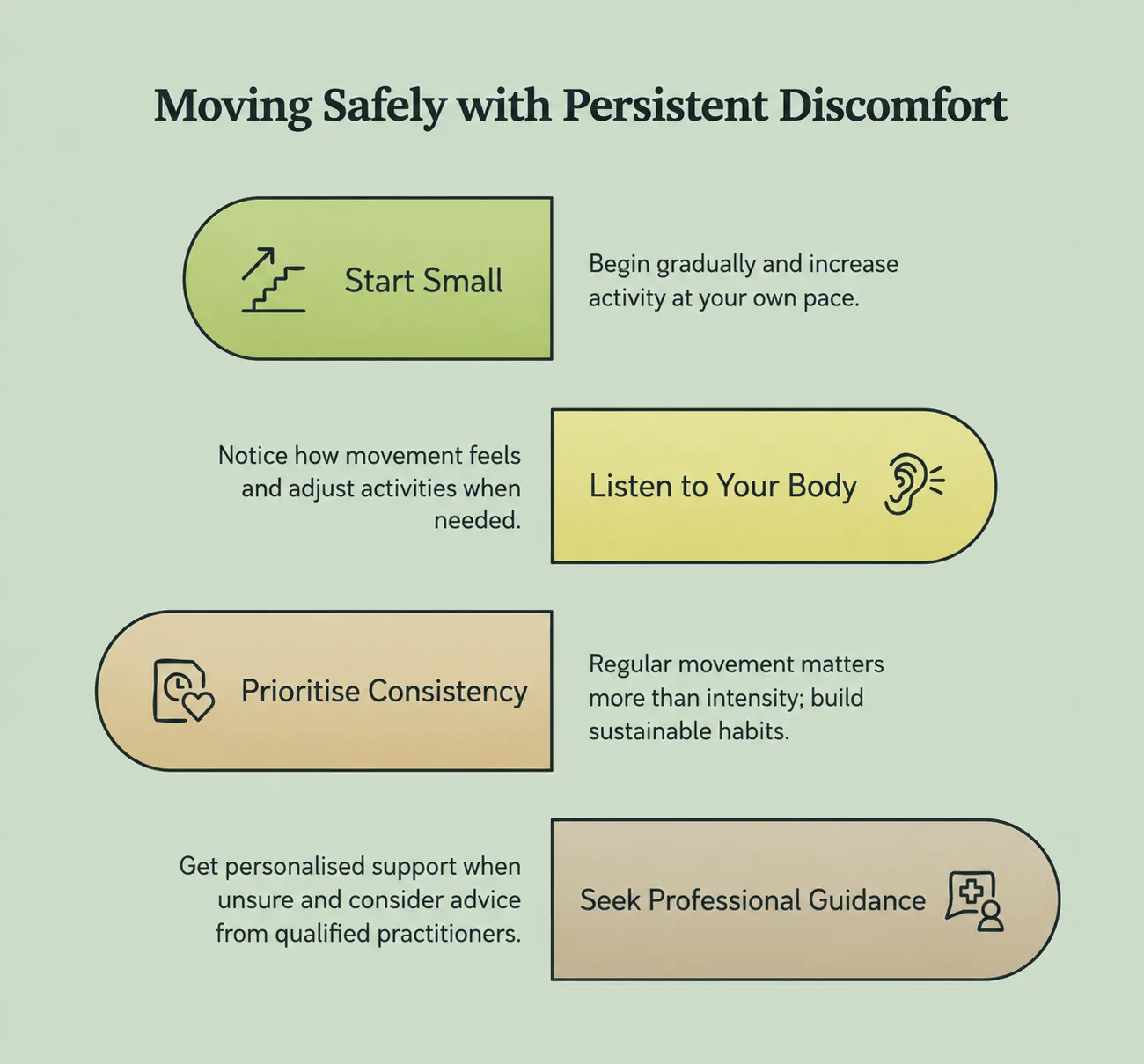
If discomfort has been around for a while, a cautious, structured approach to movement tends to work better than diving in or avoiding activity entirely.
A few practical principles to keep in mind:
- Start small and let your body set the pace. A sudden jump from doing very little to doing a lot is usually where problems creep in, so easing into it matters more than people expect.
- Listen to what your body may be communicating. A bit of effort is normal, even expected, but pain that sharpens or lingers afterward is your cue to back off rather than push on.
- Aim for sessions you can repeat, not ones that wipe you out. A short walk three times a week, kept up for months, tends to do more for comfort than one intense session followed by two weeks of recovery.
And if you’re unsure where to start, that’s exactly when a professional makes the difference. Physiotherapists and accredited exercise physiologists can map out a pace that actually fits your body, rather than a generic plan that assumes everyone’s starting point is the same.
This last point matters more than it might seem. According to the Australian Physiotherapy Association, physiotherapists help guide people with persistent pain through carefully paced exercise programs, addressing common concerns that movement could aggravate discomfort.
Exercise Right Australia, the public initiative run by Exercise & Sports Science Australia, similarly points to low-impact activity such as walking, cycling, or swimming as generally safe for people managing joint-related discomfort, when introduced thoughtfully.
When to See a Practitioner Before Starting Movement
While gentle movement is appropriate for many people, there are times when seeking professional guidance before starting can be beneficial.
Consider consulting a qualified practitioner if you experience:
- Sharp, sudden, or worsening pain during everyday movement
- Swelling, heat, or visible changes around a joint
- A recent injury, surgery, or flare-up of an existing condition
- A diagnosed chronic condition where exercise tolerance is unclear
- Uncertainty about which activities are appropriate for your situation
None of these signs means movement is off the table. They simply mean a practitioner, such as a GP, physiotherapist, or accredited exercise physiologist, can help map out what’s appropriate before you begin, rather than guessing.
Professional Guidance and Support
Gentle movement goes further with the right guidance behind it. A practitioner can look at what you’re dealing with and help map out which activities make sense, how quickly to build up, and what signs to watch for, as you progress, something a generic exercise routine may not be able to provide.
True Well Clinic offers gentle exercise and wellbeing support for people whose discomfort has stuck around longer than they’d like. If that sounds familiar, it’s worth visiting True Well Clinic to see what’s available, or getting in touch directly to talk through what might suit your situation.
Disclaimer: This information is general in nature and not personalised advice. Individual suitability for exercise depends on health status, existing conditions, and other factors. Consult a GP, physiotherapist, or accredited exercise physiologist before starting a new movement routine.
Sources referenced:
- Healthdirect Australia – Cardiovascular exercise: https://www.healthdirect.gov.au/cardiovascular-exercise
- Healthdirect Australia – Health benefits of yoga and Pilates: https://www.healthdirect.gov.au/health-benefits-of-yoga-and-pilates
- Healthdirect Australia – Health benefits of swimming: https://www.healthdirect.gov.au/health-benefits-of-swimming
- Healthdirect Australia – Physical activity guidelines for older people: https://www.healthdirect.gov.au/physical-activity-guidelines-for-older-adults
- Australian Physiotherapy Association – Physio-led exercise best for chronic pain management: https://australian.physio/media/physio-led-exercise-best-chronic-pain-management
- Exercise & Sports Science Australia / Exercise Right: https://www.essa.org.au/Web/Web/About/About-ESSA/Initiatives/Exercise-Right.aspx
- Australian Government Department of Health, Disability and Ageing – 24-hour movement guidelines: https://www.health.gov.au/topics/physical-activity-and-exercise/physical-activity-and-exercise-guidelines-for-all-australians