

For many Australians, the path to an ADHD assessment begins not with a GP referral but with a quiet moment of recognition – a list of symptoms that sounds like a description of their entire adult life, or a teacher’s note sent home about a child who “could try harder.”
Understanding what a formal ADHD assessment actually involves, who conducts it, how long it takes, what it costs, and what happens afterwards helps people make informed decisions about their healthcare. This guide covers all of it.
What Is an ADHD Assessment?
An ADHD assessment is a structured clinical evaluation carried out by a qualified, AHPRA-registered health practitioner – typically a psychiatrist, clinical psychologist, or specially trained GP – to determine whether a person’s symptoms and history meet the diagnostic criteria for Attention Deficit Hyperactivity Disorder as defined in the Diagnostic and Statistical Manual of Mental Disorders, Fifth Edition, Text Revision (DSM-5-TR).
It is important to understand what an ADHD assessment is not. The self-assessment tools widely available online – including the WHO ADHD Self-Assessment (ASRS), ADHD self-assessment questionnaires, and the ADHD self-assessment test – are screening instruments. They help identify people who may benefit from a formal clinical assessment. They do not constitute a diagnosis. A screen and a diagnosis are clinically and legally distinct.
A formal ADHD assessment includes a structured clinical interview, a detailed review of developmental and personal history, validated rating scales completed by the patient and often by someone who knows them well, a differential diagnosis process to identify or rule out other conditions with overlapping symptoms, and a written report documenting findings and recommendations.
For adults, the full assessment process typically requires one to three clinical appointments, each lasting 45 to 90 minutes, for a total of two to four clinical hours. For children, additional teacher and parent rating scales extend the process but not necessarily the number of appointments.
ADHD in Australia – Prevalence and Context
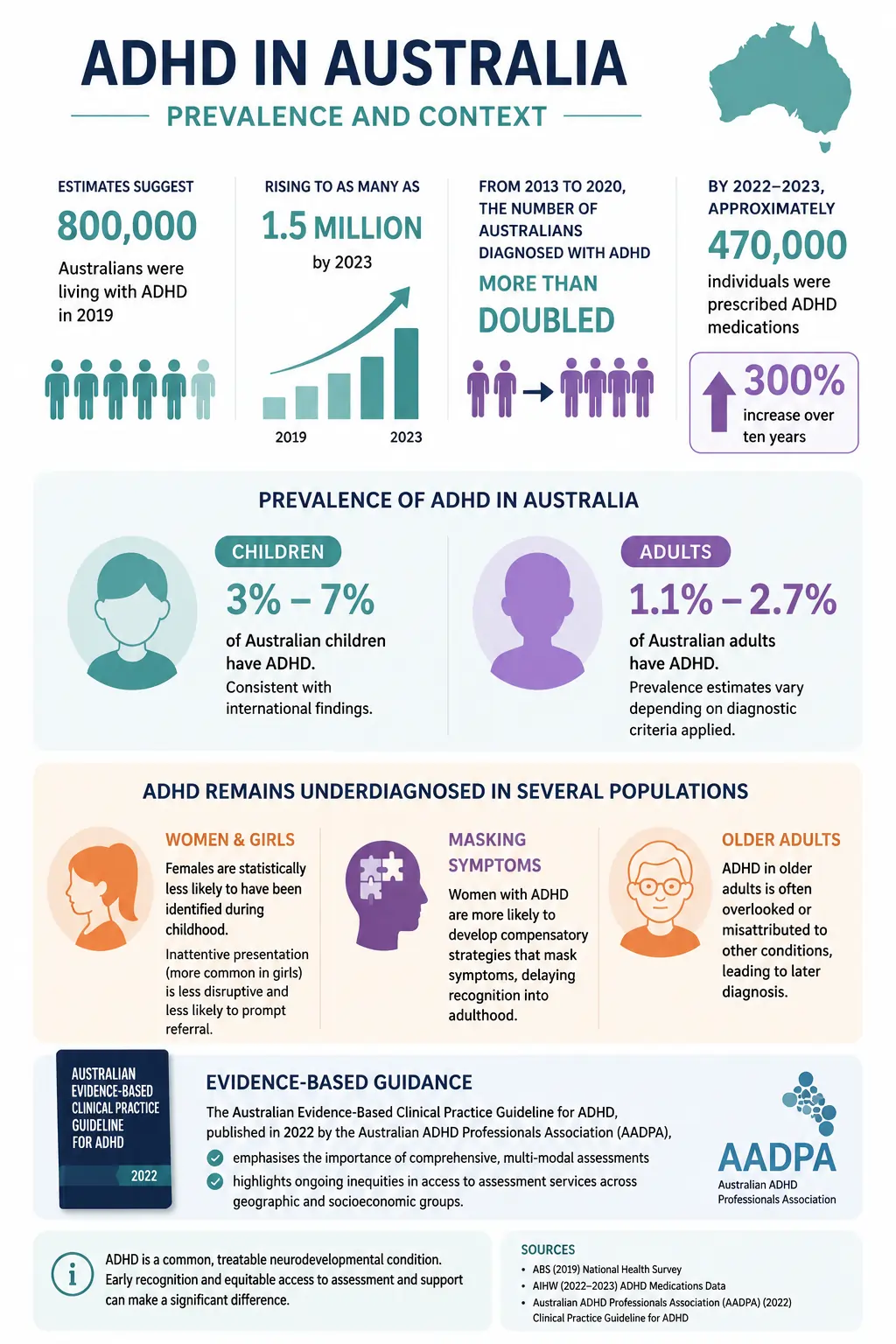
Estimates suggest 800,000 Australians were living with ADHD in 2019, rising to as many as 1.5 million by 2023. From 2013 to 2020, the number of Australians diagnosed with ADHD more than doubled, and by 2022–2023, approximately 470,000 individuals were prescribed ADHD medications – an increase of around 300% over ten years.
Research indicates that the prevalence of ADHD among Australian children ranges from 3% to 7%, consistent with international findings. In adults, prevalence estimates range from 1.1% to 2.7% depending on the diagnostic criteria applied.
Despite the significant rise in awareness and diagnoses, ADHD remains underdiagnosed in several populations – particularly women, girls, and older adults. Research consistently shows that females are statistically less likely to have been identified during childhood, in part because the inattentive presentation of ADHD – more common in girls – is less disruptive and therefore less likely to prompt referral. Women with ADHD are also more likely to develop compensatory strategies that mask symptoms, delaying recognition into adulthood.
The Australian Evidence-Based Clinical Practice Guideline for ADHD, published in 2022 by the Australian ADHD Professionals Association (AADPA), emphasises the importance of comprehensive, multi-modal assessments and highlights ongoing inequities in access to assessment services across geographic and socioeconomic groups.
Who Can Be Assessed for ADHD?
ADHD can be assessed at any age. The diagnostic criteria require that symptoms have been present since childhood – even if they were never identified at the time – and that they cause meaningful impairment in at least two settings or domains of daily life (for example, work and relationships, or school and home).
Adult ADHD Assessment
Adult ADHD assessment evaluates current symptoms of inattention, hyperactivity, and impulsivity alongside a retrospective account of childhood functioning. Because many adults were never assessed as children, the clinical interview must establish when symptoms first appeared and how they have manifested and evolved across different life stages.
Conditions that commonly co-occur with ADHD in adults – or that can produce similar symptoms – include anxiety disorders, depression, bipolar disorder, autism spectrum disorder, trauma responses (including PTSD and complex trauma), sleep disorders, and thyroid dysfunction. A thorough adult ADHD assessment includes a differential diagnosis process that considers each of these possibilities.
Adults seeking an ADHD assessment in Australia are typically referred by their GP and seen by either a psychiatrist or a clinical psychologist, depending on their circumstances and whether medication prescribing is an immediate consideration.
Childhood ADHD Assessment
A childhood ADHD assessment determines whether a child’s pattern of inattention, hyperactivity, or impulsivity goes beyond what is developmentally typical for their age and is interfering with their learning, relationships, or daily functioning in multiple settings.
For paediatric assessments, information from parents and teachers is an essential component – not optional. A child’s behaviour is assessed across home, school, and social contexts. The assessment typically includes rating scales completed by parents and classroom teachers alongside a clinical interview with the child and their caregivers.
Paediatric ADHD assessments are conducted by paediatricians, child psychiatrists, or clinical psychologists with training in childhood neurodevelopmental conditions.
Childhood ADHD Assessment by Location
Families across Australia often search for services in their local area. Paediatric ADHD assessment services are available in major metropolitan areas including Melbourne, Sydney, Brisbane, Perth, Adelaide, Canberra, Hobart, the Gold Coast, the Sunshine Coast, Newcastle, Wollongong, Geelong, Ballarat, Bendigo, and Cairns, as well as through telehealth platforms that serve regional, rural, and remote areas including Western Australia (WA), Tasmania, Queensland (QLD), New South Wales (NSW), and the Northern Territory.
Wait times for paediatric assessments vary significantly by region. Metropolitan public services frequently have waiting periods of six months or longer. Private paediatric assessors typically have shorter waiting periods.
ADHD and Autism Combined Assessment (ASD/ADHD Co-Assessment)
ADHD and autism spectrum disorder (ASD) co-occur at high rates. Research suggests that up to 50% of people with autism also meet diagnostic criteria for ADHD, and a significant proportion of people assessed for ADHD are found to also have autistic traits warranting further assessment.
A combined ADHD and autism assessment – also referred to as an ASD and ADHD assessment, or an autism and ADHD assessment – evaluates for both conditions within a coordinated clinical process. This avoids the need for separate referral pathways and reduces the burden of repeated clinical interviews. Both conditions are assessed against current DSM-5-TR and ICD-11 criteria.
Combined assessments are available from psychiatrists and clinical psychologists with training in both ADHD and autism across Australia, including via telehealth platforms for adults and children in regional areas.
The ADHD Assessment Process – Step by Step
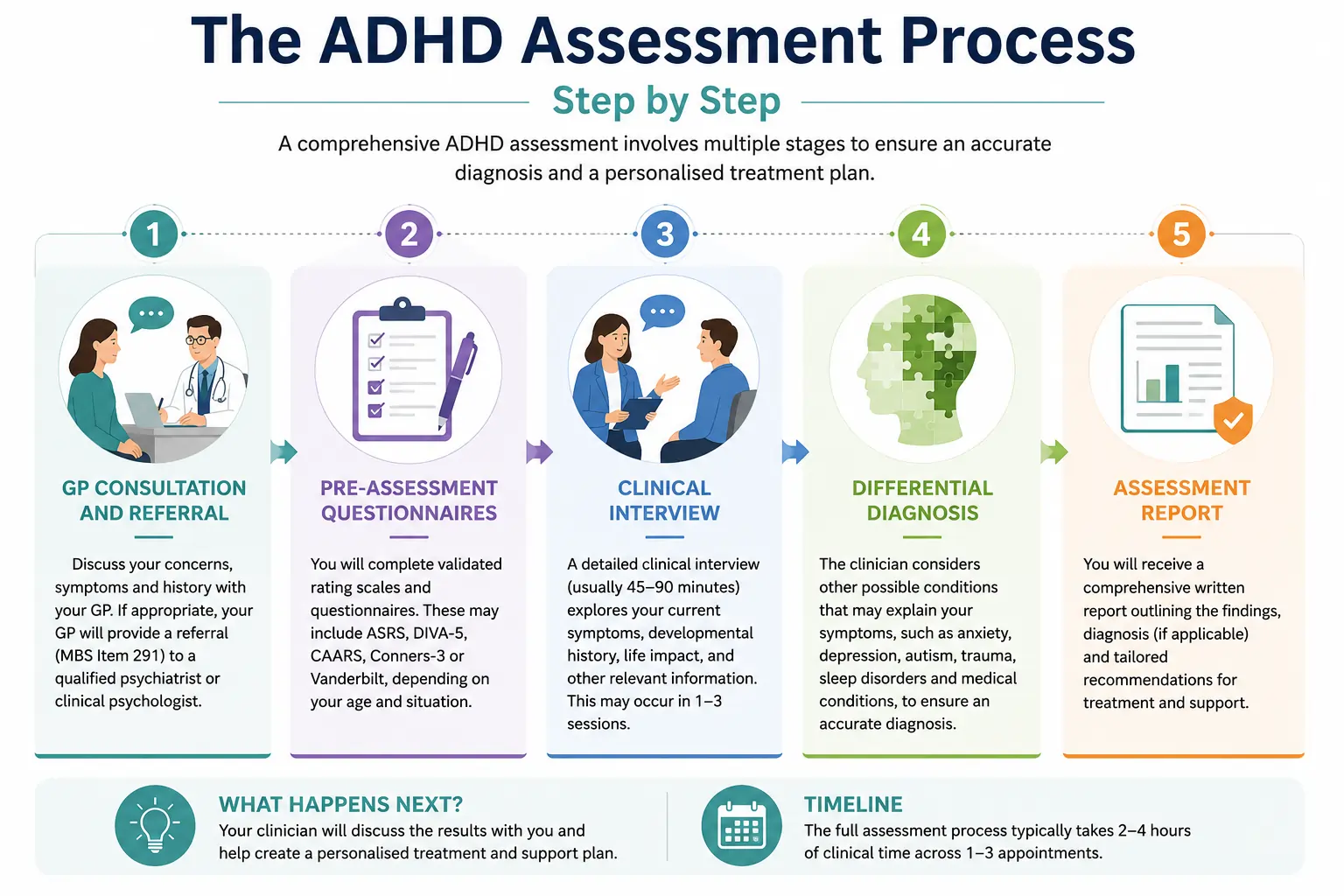
Step 1: GP Consultation and Referral
The first practical step for most Australians seeking an ADHD assessment is a consultation with their GP. The GP will discuss the presenting concerns, rule out medical conditions that can produce ADHD-like symptoms (including thyroid dysfunction, anaemia, and sleep disorders), and provide a referral to the appropriate specialist.
A GP referral under MBS Item 291 is the mechanism that unlocks Medicare rebates for specialist consultations. The difference in Medicare rebates between attending a psychiatrist with a valid GP referral (Item 291: $304.85) versus without one (Item 296: approximately $139.15) is approximately $165. Always obtain a GP referral before booking a specialist ADHD assessment.
The referral is valid for twelve months and should be addressed to a psychiatrist or registered psychologist depending on the clinical pathway being pursued.
GPs themselves can also conduct ADHD assessments and, in some circumstances, prescribe ADHD medications for adults. A GP-led ADHD assessment is typically conducted using structured tools such as the ASRS-v1.1 and the DIVA-5, and may be a more accessible and affordable pathway for adults whose presentation is relatively straightforward.
Step 2: Pre-Assessment Questionnaires
Once an assessment is booked, the assessor will typically provide a set of validated questionnaires to be completed before the first clinical appointment. These help the assessor understand the range and severity of the patient’s symptoms before the interview begins and ensure clinical time is used efficiently.
Common pre-assessment questionnaires used in Australia include the ASRS-v1.1 (Adult ADHD Self-Report Scale), the DIVA-5 (Diagnostic Interview for ADHD in Adults), and the Conners Adult ADHD Rating Scale (CAARS) for adults. For children, parents and teachers complete separate rating scales – most commonly the Conners-3 and, in some services, the Vanderbilt ADHD Assessment.
Completing these questionnaires honestly and thoroughly – including the developmental history sections – significantly improves the quality of the assessment report.
Step 3: Clinical Interview
The clinical interview is the core of any ADHD assessment. It involves a detailed, structured conversation between the assessor and the patient (and, for children, their parents or caregivers) covering:
- Current symptoms across multiple life domains – work, study, relationships, daily tasks, emotional regulation, financial management
- Developmental history – how the person functioned at school, at home, and socially as a child, including academic records where available
- Family history of ADHD and related neurodevelopmental or mental health conditions
- Co-occurring conditions – anxiety, depression, autism traits, learning difficulties, trauma history, substance use
- Functional impairment – the degree to which symptoms interfere with quality of life and daily functioning
The DIVA-5 (Diagnostic Interview for ADHD in Adults, Fifth Edition) is a widely used gold-standard structured interview for adult ADHD assessments in Australia. It is aligned with DSM-5-TR criteria and evaluates both childhood and adult symptoms across multiple life domains systematically. The DIVA-5 is considered by many practitioners to be preferable to unstructured interviews because it ensures a comprehensive and reproducible assessment.
For telehealth ADHD assessments, the clinical interview is conducted via secure video call. The format of the interview is identical to an in-person assessment – the clinical process does not change based on whether the consultation is conducted in person or remotely.
Step 4: Differential Diagnosis
A responsible ADHD assessment does not simply confirm ADHD. It considers the full range of conditions that can produce inattention, impulsivity, emotional dysregulation, and difficulty sustaining effort – and determines whether the symptoms are best explained by ADHD, by another condition, or by both occurring together.
Conditions commonly considered in differential diagnosis include:
- Anxiety disorders – generalised anxiety disorder (GAD), social anxiety, OCD
- Mood disorders – depression, bipolar disorder, dysthymia
- Autism spectrum disorder – particularly relevant in adults who masked symptoms during childhood
- Trauma-related conditions – PTSD, complex trauma, childhood adversity
- Sleep disorders – obstructive sleep apnoea, delayed sleep phase disorder
- Thyroid dysfunction – hypothyroidism in particular can mimic inattentive ADHD
- Learning difficulties – dyslexia, dyscalculia
- Substance use disorders
The Australian Evidence-Based Clinical Practice Guideline for ADHD (AADPA, 2022) recommends that all formal ADHD assessments include a systematic differential diagnosis process. This is one of the most important distinctions between a formal clinical assessment and an online screening questionnaire.
Step 5: Assessment Report
Following the clinical process, the assessor produces a written report documenting the assessment findings, diagnostic conclusions, and clinical recommendations. This report is the formal record of the assessment and is used by GPs, specialists, educational institutions, employers, and the NDIS.
A comprehensive ADHD assessment report typically includes a summary of presenting concerns, the assessment tools used and results obtained, the diagnostic formulation, any co-occurring conditions identified, and recommendations for management – which may include medication review, psychological treatment, educational or workplace accommodations, and follow-up appointments.
Assessment reports should be retained by the patient, as they may be required for NDIS applications, disability support services, workplace reasonable adjustment requests, and university disability access plans.
ADHD Assessment Tools Used in Australia
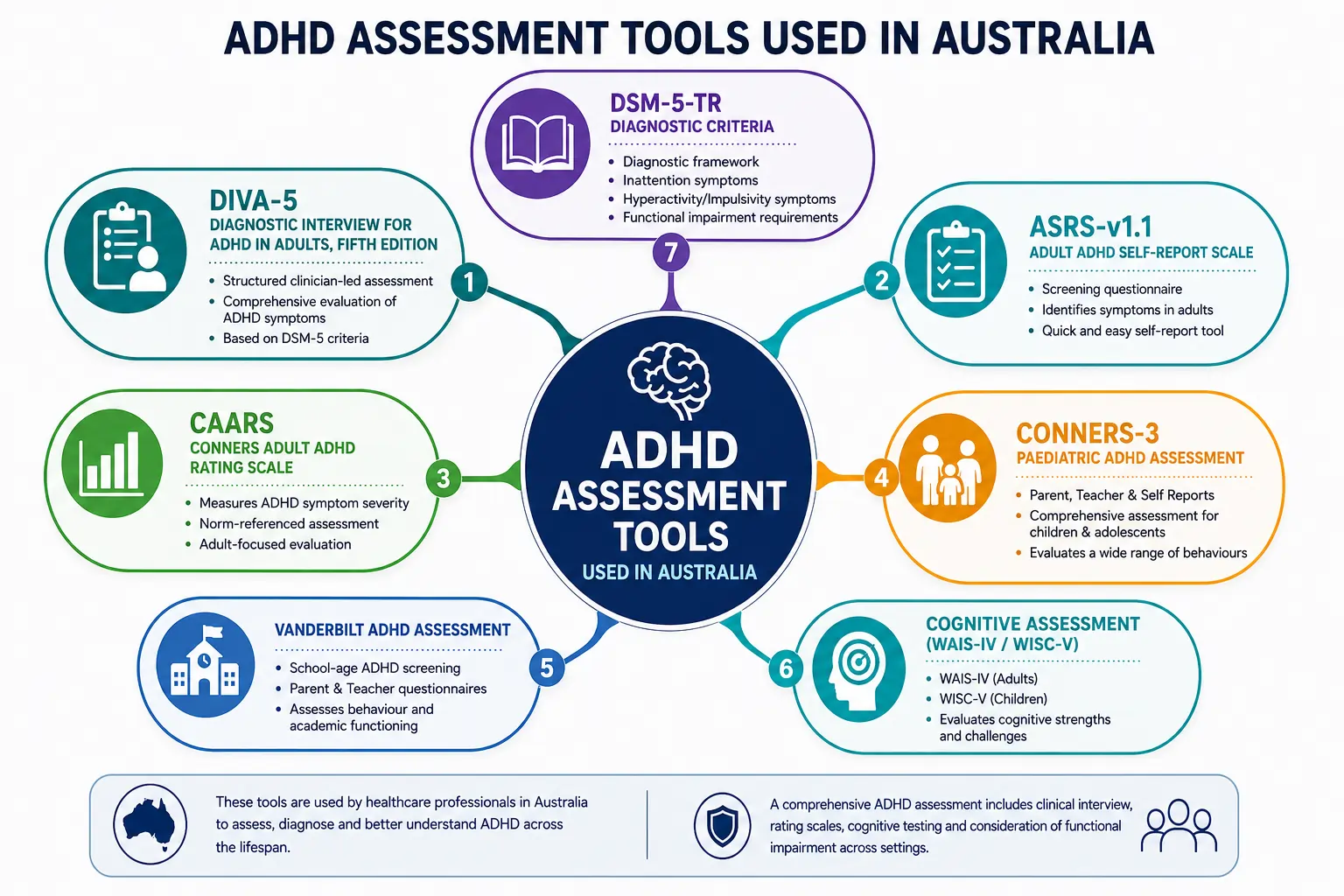
DIVA-5 (Diagnostic Interview for ADHD in Adults, Fifth Edition)
The DIVA-5 is the structured clinical interview most commonly used for adult ADHD assessment in Australia. Developed specifically to align with DSM-5 criteria, it systematically evaluates 18 ADHD symptoms across both childhood and adulthood in multiple life domains. It is based on the DSM-5-TR and is considered by many practitioners to be the most thorough and standardised tool available for adult ADHD diagnosis.
ASRS-v1.1 (Adult ADHD Self-Report Scale)
Developed by the World Health Organisation, the ASRS-v1.1 is an 18-item self-report scale evaluating DSM-5 ADHD symptom criteria. It is widely used as a pre-assessment screening tool and as a component of the formal assessment process. The WHO ADHD self-assessment (ASRS) is freely available and is often the first validated tool a person uses before seeking a formal assessment.
Conners Adult ADHD Rating Scale (CAARS)
The CAARS is a multi-rater scale completed by the patient and, where possible, by a partner, parent, or colleague who knows them well. It provides a corroborated picture of ADHD symptoms from multiple perspectives – important because individuals with ADHD may underestimate or overestimate the impact of their symptoms.
Conners-3 (Paediatric)
Used in paediatric ADHD assessments, the Conners-3 is completed separately by parents and teachers. It evaluates ADHD symptoms and co-occurring concerns including anxiety, conduct problems, and academic difficulties across both home and school settings.
Vanderbilt ADHD Assessment
The Vanderbilt – including its parent and teacher rating versions – is commonly used in paediatric assessments, particularly for school-aged children. The Vanderbilt ADHD assessment covers inattentive, hyperactive-impulsive, and combined ADHD presentations as well as common co-occurring conditions.
Cognitive Assessment (WAIS-IV / WISC-V)
A comprehensive cognitive assessment is not required for the majority of ADHD diagnoses. The WAIS-IV (adults) and WISC-V (children) are intelligence tests used when there is a specific clinical reason to assess cognitive profile – such as a suspected learning disability, significant discrepancies between academic performance and apparent ability, or when NDIS functional capacity evidence is required. The AADPA Clinical Practice Guideline confirms that cognitive testing is not a routine component of ADHD assessment.
DSM-5-TR Diagnostic Criteria
All formal ADHD assessments in Australia use the DSM-5-TR diagnostic criteria, which require that:
- Six or more symptoms of inattention and/or hyperactivity-impulsivity are present (five or more for adults aged 17 and older)
- Symptoms have been present since before age 12
- Symptoms are present in two or more settings (e.g. home and school, or work and relationships)
- Symptoms cause clear functional impairment
- Symptoms are not better explained by another mental disorder
Telehealth ADHD Assessment in Australia
Telehealth ADHD assessments became a permanent feature of Australian healthcare following the COVID-19 pandemic, during which the framework for Medicare-subsidised telehealth was expanded and made ongoing.
A telehealth ADHD assessment conducted by an AHPRA-registered practitioner follows exactly the same clinical process as an in-person assessment – the same structured interviews, the same validated rating scales, the same differential diagnosis process, and the same written report format. The Medicare rebates that apply to in-person specialist consultations (MBS Items 291, 296, and associated items) also apply to equivalent telehealth consultations, subject to standard Medicare eligibility conditions.
Telehealth ADHD assessments are particularly relevant for:
- Adults and children in regional, rural, and remote areas of Australia – including those in Modified Monash categories MM2 through MM7 – where local specialist access is limited or waitlists are very long
- Adults in metropolitan areas who face long waitlists for in-person specialists
- Individuals with mobility limitations, caring responsibilities, or work schedules that make in-person attendance difficult
- Patients in Western Australia, Tasmania, the Northern Territory, and other areas where the density of specialist practitioners is lower than in major cities
For a telehealth ADHD assessment, patients typically need a smartphone, tablet, or computer with a camera and microphone, and a stable phone or internet connection. Most platforms provide a video link by SMS or email at the time of the appointment – no specialist software or download is required.
ADHD Assessment Cost in Australia (2026)
The cost of an ADHD assessment in Australia varies depending on the type of practitioner, the number of sessions required, the state or territory, and whether the assessment is conducted in-person or via telehealth.
Medicare Rebates
The primary Medicare item numbers relevant to ADHD assessments are:
- MBS Item 291 – Referred consultation with a psychiatrist, 45 minutes or longer: rebate of $304.85 (with valid GP referral)
- MBS Item 296 – Unreferred consultation with a psychiatrist: lower rebate of approximately $139.15
- MBS Item 358 – Consultation with a clinical psychologist: rebate of approximately $141.85 per session
- MBS Item 2712 – GP mental health treatment plan consultation (used by GPs conducting ADHD-related consultations under a mental health plan)
The difference in Medicare rebates between attending a psychiatrist with a valid GP referral versus without one is approximately $165. This is why obtaining a GP referral (MBS Item 291) before any specialist ADHD assessment is strongly recommended.
Typical Private Assessment Costs Before Rebate
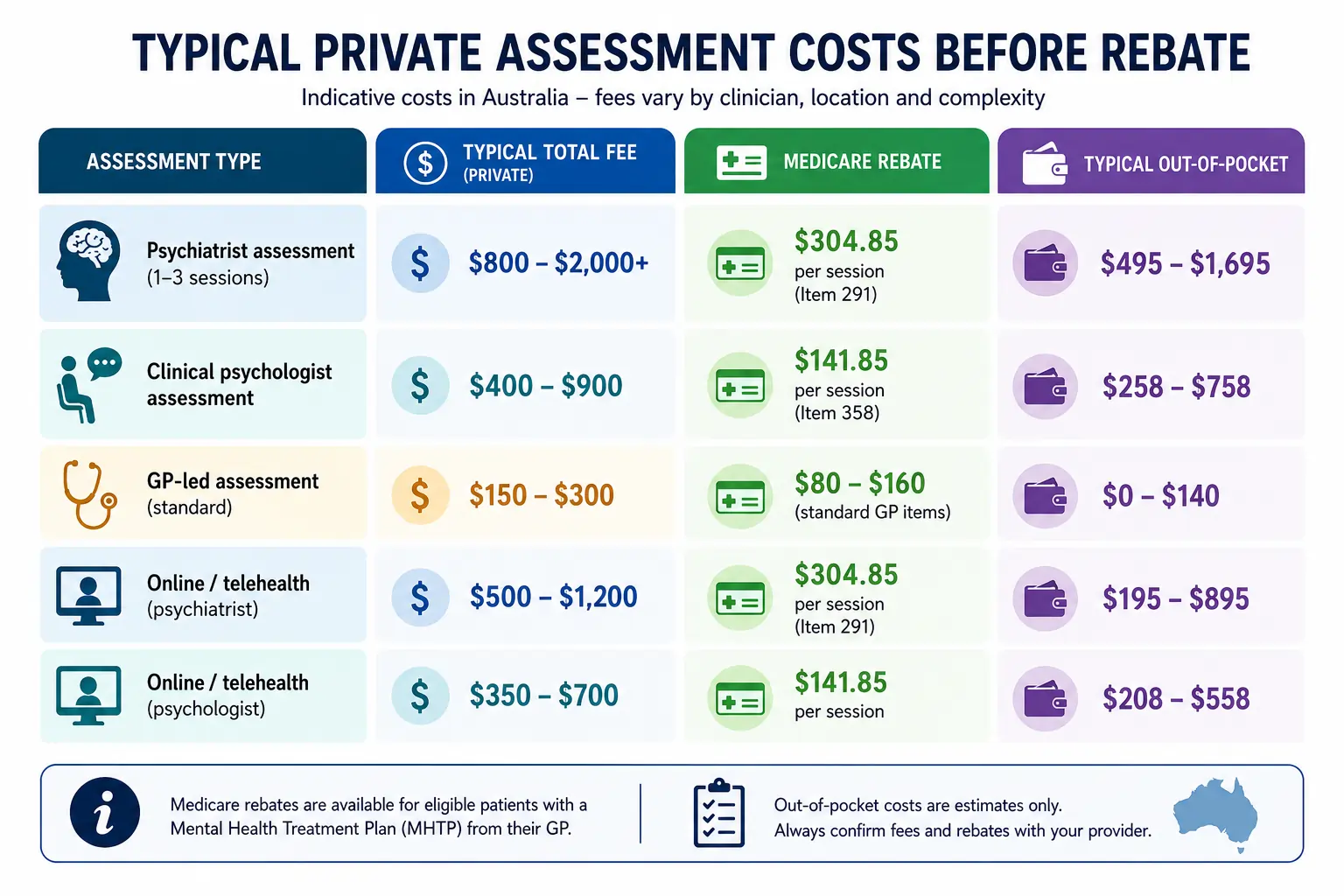
| Assessment Type | Typical Total Fee (Private) | Medicare Rebate | Typical Out-of-Pocket |
|---|---|---|---|
| Psychiatrist assessment (1–3 sessions) | $800 – $2,000+ | $304.85 per session (Item 291) | $495 – $1,695 |
| Clinical psychologist assessment | $400 – $900 | $141.85 per session (Item 358) | $258 – $758 |
| GP-led assessment (standard) | $150 – $300 | $80 – $160 (standard GP items) | $0 – $140 |
| Online / telehealth (psychiatrist) | $500 – $1,200 | $304.85 per session (Item 291) | $195 – $895 |
| Online / telehealth (psychologist) | $350 – $700 | $141.85 per session | $208 – $558 |
These figures reflect typical private market ranges in 2026. Costs vary by provider, location, and number of sessions required. Always confirm fees with the provider before booking.
ADHD Assessment Cost by City
To help benchmark expected costs across Australia’s major cities:
| City | Typical Psychiatrist Fee | Out-of-Pocket |
|---|---|---|
| Melbourne | $800 – $1,400 | $495 – $1,095 |
| Sydney | $900 – $1,600 | $595 – $1,295 |
| Brisbane | $700 – $1,200 | $395 – $895 |
| Perth | $700 – $1,100 | $395 – $795 |
| Adelaide | $650 – $1,000 | $345 – $695 |
| Canberra | $750 – $1,200 | $445 – $895 |
| Hobart | $650 – $950 | $345 – $645 |
| Gold Coast | $700 – $1,100 | $395 – $795 |
| Sunshine Coast | $680 – $1,050 | $375 – $745 |
| Newcastle | $680 – $1,000 | $375 – $695 |
| Geelong | $650 – $950 | $345 – $645 |
Out-of-pocket figures assume one Item 291 rebate per session. Multi-session assessments will attract multiple rebates.
Bulk Billed ADHD Assessment in Australia
Fully bulk billed ADHD assessments – meaning no out-of-pocket cost to the patient – are available in limited circumstances in 2026:
Public mental health services: Public hospital outpatient services and community mental health teams in some states offer bulk billed psychiatric assessments, including ADHD assessment. These services are typically prioritised for patients with higher-acuity mental health needs, and waiting periods of six to eighteen months or longer are common.
Rural and remote area incentives: Medicare provides additional bulk billing incentives for specialist services – including psychiatrist telehealth consultations – provided to patients in rural and remote areas (Modified Monash categories MM2–MM7). Patients in these regions may be able to access bulk billed or significantly reduced cost telehealth ADHD assessments.
Bulk billed ADHD assessment by location: Bulk billed ADHD assessment services have been reported in Brisbane, Melbourne, Sydney, Adelaide, Perth, the Gold Coast, and online across Australia, but availability changes frequently. Contacting the provider directly to confirm current bulk billing availability and eligibility is essential before booking.
Low-cost and affordable ADHD assessment: Some community health centres, university psychology clinics, and not-for-profit mental health services offer low-cost or affordable ADHD assessments for individuals on low incomes or holding concession cards. These vary significantly by state and region.
The Medicare Safety Net
The Extended Medicare Safety Net (EMSN) provides additional financial protection for families with high out-of-pocket Medicare costs across a calendar year. For 2025–2026, the EMSN threshold is $2,615.50 for general families and $834.50 for concession card holders and eligible families. After reaching the threshold, Medicare rebates 80% of out-of-pocket costs for eligible out-of-hospital services.
For families managing assessment costs for multiple family members – for example, a parent and child who are both being assessed – the Safety Net can provide meaningful financial relief in the second half of the calendar year.
NDIS ADHD Assessment
If an ADHD assessment is being conducted for the purpose of supporting an NDIS application or plan review – for example, to establish evidence of functional impairment – the cost of the assessment report may be included in an NDIS plan under Capacity Building – Improved Daily Living (CB-DL) supports, subject to the participant’s plan and the NDIA’s assessment of reasonable and necessary supports. Families and individuals should discuss NDIS-funded assessments with their NDIS planner or Local Area Coordinator.
ADHD Assessment Waiting Times in Australia
One of the most consistent concerns raised by Australians seeking ADHD assessment is waiting time. Public sector wait times for adult psychiatric assessment – including ADHD – range from six to eighteen months in metropolitan areas and can be longer in regional and rural regions.
Private psychiatrist appointments for ADHD assessment in major cities typically involve waiting periods of two to six months, though this varies considerably between practitioners and fluctuates with demand.
Telehealth ADHD assessment services generally have shorter waiting periods than in-person specialists – typically one to four weeks from receipt of a GP referral for straightforward adult presentations. This reflects both the broader geographic reach of telehealth providers and the structural flexibility of online scheduling.
Waiting time is one of the most commonly cited reasons Australians explore private and telehealth pathways for ADHD assessment.
ADHD Assessment for Adults – Specific Considerations
Women and ADHD
ADHD in women and girls has been systematically underidentified for decades. Research consistently shows females are more likely to present with the inattentive subtype, which is less disruptive than the hyperactive-impulsive presentation and therefore less likely to prompt teacher referrals or parental concern during childhood.
Women with ADHD also tend to develop stronger compensatory strategies – perfectionism, excessive preparation, and over-reliance on reminders – that mask the underlying difficulties until a significant life stressor removes those scaffolds. University, parenthood, relationship breakdown, and workplace demands are common inflection points where previously compensated ADHD becomes apparent.
An ADHD assessment for women should include specific attention to masking, compensatory strategies, and the way ADHD symptoms interact with hormonal fluctuations across the menstrual cycle, perimenopause, and menopause – all of which can significantly affect ADHD symptom severity.
ADHD Assessment for Older Adults
ADHD in older adults is significantly underresearched and underdiagnosed. Many adults reaching their 50s, 60s, and beyond are only now encountering the concept of ADHD – either through a child’s diagnosis or through increased public awareness – and recognising lifelong patterns in themselves.
Differential diagnosis in older adults requires careful consideration of cognitive changes associated with ageing, early dementia presentations, depression, and the long-term mental health consequences of unmanaged ADHD across decades. Assessors experienced with adult ADHD across the lifespan are recommended.
ADHD and Workplace Impact
Research consistently links unmanaged ADHD in adults with lower occupational attainment relative to intellectual ability, higher rates of underemployment, difficulties with time management and sustained effort, and elevated rates of job change. An ADHD assessment report – where a diagnosis is established – can support a workplace reasonable adjustment request under the Disability Discrimination Act 1992 (Cth).
What Happens After an ADHD Assessment?
The assessment report is the beginning, not the end. Depending on the findings, the recommended pathway may include:
If ADHD Is Diagnosed
Medication review: In Australia, stimulant medications for ADHD (including methylphenidate and mixed amphetamine salts) are Schedule 8 controlled drugs. They can only be initiated by a psychiatrist or, in some states, a paediatrician, with prescribing authority delegated to a GP once the medication and dose are established. Your GP receives a delegation letter from the diagnosing specialist enabling them to continue prescribing.
Psychological treatment: Cognitive behavioural therapy (CBT) adapted for ADHD, ADHD coaching, and skills-based interventions addressing time management, organisation, and emotional regulation are evidence-based psychological treatments that can be accessed through a GP’s Mental Health Care Plan (up to ten sessions per calendar year with a Medicare rebate).
Workplace and educational accommodations: An ADHD diagnosis from an AHPRA-registered practitioner supports requests for reasonable workplace adjustments under the Disability Discrimination Act 1992 and disability support plans at universities and TAFE institutions.
NDIS: ADHD can support an NDIS access request where it is associated with substantial functional impairment. The assessment report forms part of the evidence required.
If ADHD Is Not Diagnosed
A finding that ADHD criteria are not met does not mean the difficulties that prompted the assessment are not real. The differential diagnosis process conducted during assessment often identifies contributing conditions – anxiety, depression, autism, or a learning difficulty – that are clinically important and warrant treatment in their own right. A thorough assessment report should address these findings clearly regardless of whether ADHD is diagnosed.
How to Get Assessed for ADHD in Australia – A Practical Pathway
Step 1 – Use a validated screening tool Complete the WHO ADHD Self-Assessment (ASRS-v1.1) or an ADHD self-assessment questionnaire. This documents your concerns before your GP appointment and provides a useful baseline.
Step 2 – Book a GP appointment Request a standard or long GP consultation specifically for your ADHD concern. Bring your screening results and be specific about how your symptoms affect daily life. Ask for a referral under MBS Item 291.
Step 3 – Choose your assessment pathway Decide between a psychiatrist, clinical psychologist, or GP-led assessment based on your circumstances. If medication is an immediate consideration, a psychiatrist assessment is typically the most direct pathway.
Step 4 – Book your assessment and complete pre-assessment forms Complete all questionnaires sent before your appointment fully and honestly, particularly the developmental history sections.
Step 5 – Attend your clinical interview Prepare a brief written summary of your main concerns and specific examples of how symptoms affect your daily life. Be specific and honest. Bring any relevant documents – school reports, previous psychological assessments, a list of current medications.
Step 6 – Receive and use your report Your written report is typically delivered within one to three weeks of your final clinical appointment. Share it with your GP, relevant specialists, and any institutions or employers where accommodations may be needed.
ADHD Assessment by Australian State and Region
ADHD assessment services are available across Australia through a combination of public mental health services, private psychiatric and psychological practices, and telehealth platforms. The following lists common search contexts and their assessment availability:
- ADHD assessment Melbourne / ADHD assessments Melbourne: Multiple private psychiatry and psychology clinics operate across metropolitan Melbourne and inner suburbs including Hawthorn, Carlton, Doncaster, and Cheltenham. Telehealth services cover the broader Melbourne metropolitan area and regional Victoria including Geelong, Ballarat, Bendigo, Shepparton, and Mildura.
- ADHD assessment Sydney / adult ADHD assessment Sydney: Available across metropolitan Sydney and surrounding areas including the Central Coast, Wollongong, Newcastle, Penrith, Hornsby, Liverpool, and the Sutherland Shire. Telehealth extends coverage to regional NSW.
- ADHD assessment Brisbane / bulk billed ADHD assessment Brisbane: Brisbane and surrounding areas including the Gold Coast, Sunshine Coast, Ipswich, and Thornlands. Bulk billed services at public mental health centres. Telehealth services extend to regional QLD.
- ADHD assessment Perth / ADHD assessments Perth / ADHD assessment Perth child: Perth metropolitan area and regional WA including Bunbury, Albany, and Kalgoorlie. Limited bulk billed services available; telehealth extends coverage.
- ADHD assessment Adelaide / child ADHD assessment Adelaide / adult ADHD assessment Adelaide: Adelaide metropolitan services and regional SA including Mildura (border region).
- ADHD assessment Canberra / adult ADHD assessment Canberra: ACT-based services including adult and paediatric assessments. Telehealth services cover the ACT and surrounding NSW region.
- ADHD assessment Hobart / ADHD assessment Tasmania: Hobart-based private services and telehealth options for regional Tasmania including Launceston and Burnie.
- ADHD assessment online Australia / telehealth ADHD assessment / online ADHD assessment Australia: Telehealth ADHD assessments are available nationally, subject to standard Medicare eligibility and GP referral.
References
- Australian ADHD Professionals Association (AADPA). Australian Evidence-Based Clinical Practice Guideline for ADHD, 2022. Available at: aadpa.com.au/guideline
- University of Wollongong – The Stand. A 12-month wait and a $1,400 bill: ADHD diagnosis in Australia. June 2026. Available at: uow.edu.au/the-stand/2026
- Coghill D, Crunelle CL, Cortese S, et al. DIVA-5: Diagnostic Interview for ADHD in Adults. English translation. Amsterdam: Diva Foundation, 2019.
- Sciberras E, Streatfeild J, Ceccato T, et al. Social and economic costs of attention-deficit/hyperactivity disorder across the lifespan. Journal of Attention Disorders. 2022;26(1):72–87. doi:10.1177/1087054720961828
- Ostinelli EG, Schulze M, Zangani C, et al. Comparative efficacy and acceptability of pharmacological, psychological, and neurostimulatory interventions for ADHD in adults: a systematic review and component network meta-analysis. Lancet Psychiatry. 2025;12:32–43. doi:10.1016/S2215-0366(24)00272-5
- Graetz BW, Sawyer MG, Hazell PL, Arney F, Baghurst P. Prevalence of DSM-IV disorder in a nationally representative sample of Australian children. Journal of the American Academy of Child and Adolescent Psychiatry. 2001;40(12):1380–1387.
- Adamou M, Fullen T, Jones SL. EEG for diagnosis of adult ADHD: a systematic review with narrative analysis. Frontiers in Psychiatry. 2020;11:871.
- Services Australia. Medicare Benefits Schedule – Item 291. Available at: mbsonline.gov.au
- Services Australia. Medicare Safety Net – Threshold amounts 2025–2026. Available at: servicesaustralia.gov.au/medicare-safety-net
- Australian Health Practitioner Regulation Agency (AHPRA). Guidelines for advertising a regulated health service. Available at: ahpra.gov.au/Publications/Advertising-hub/Advertising-guidelines-and-other-guidance/Advertising-guidelines.aspx
- Advance Study. How Many People Have ADHD in Australia? December 2025. Available at: advancestudy.org/how-many-people-have-adhd-in-australia
- Medical Journal of Australia. Adult attention deficit hyperactivity disorder in Australia: how its current commercial model for diagnosis and treatment is encouraging misdiagnosis. 2025;223(8). Available at: mja.com.au
Last reviewed: June 2026 | This article is for general informational purposes only. It does not constitute clinical advice, diagnosis, or treatment. All health decisions should be made in consultation with a qualified, AHPRA-registered health professional. If you are experiencing a mental health crisis, contact Lifeline on 13 11 14 or Beyond Blue on 1300 22 4636. In an emergency, call 000.